
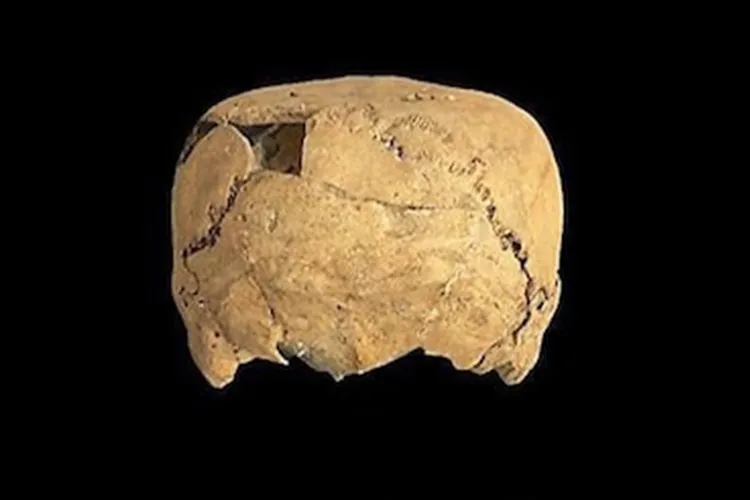

Researchers in Mexico have uncovered a cube-shaped human skull belonging to a man who lived in the region more than 1,000 years ago — a discovery that could offer fresh insight into an ancient custom known as “intentional cranial deformation.”
Archeologists say the skull likely belonged to a man over 40 who lived in the Sierra Madre Oriental mountain range during the Mesoamerican Classic period (400–900 A.D.), according to a translated press release from Mexico’s National Institute of Anthropology and History.
:max_bytes(150000):strip_icc():focal(599x0:601x2):format(webp)/Cube-Shaped-Skull-Found-in-Mexico-121825-1-643eeaa50b5a4150a79691921016d3e7.jpg)
The discovery adds new evidence that cranial deformation was practiced by people in the area during that time, the release states.
Intentional reshaping of a child’s skull typically took place during the “first years of life,” using boards, bandages, caps, and cradles, according to the Institute. The goal was to alter a person’s appearance — often to better highlight headdresses and ornaments — creating a look that would later help distinguish them within their community.
“Not only was intentional cranial deformation identified for the first time for this type of site, but also a variant [was found] with respect to the models recognized in Mesoamerica not reported until now in the area,” anthropologist Jesús Ernesto Velasco González said, according to the release.
:max_bytes(150000):strip_icc():focal(499x0:501x2):format(webp)/Cube-Shaped-Skull-Found-in-Mexico-121825-00eb1b37af1c4ffc97b7207a191c04cf.jpg)
He added that this particular form of cranial deformation “causes the head to show a more square shape,” rather than the more commonly documented conical shape.
Researchers also noted that the finding may support theories of cultural and historical connections between ancient communities in the mountainous northern Huasteca region and Mesoamerican peoples of the Gulf Coast Lowlands — as well as groups from northern Mexico and “even from the territory that is now the southern United States.”


