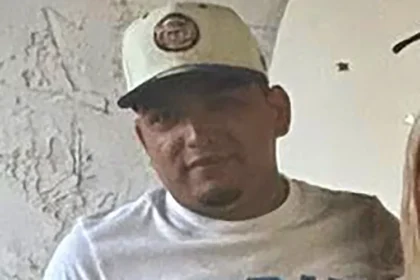
A young father of two is living with the devastating effects of locked-in syndrome after suffering a massive stroke—yet his wife holds hope that a specialized treatment could help restore his “independence and dignity.”
Gareth Bayley, 38, began experiencing daily headaches in April 2022. The construction worker from Bexley, a suburb of London, initially attributed the pain to stress. But after calling his wife Karen to say he wasn’t feeling well, she rushed to his job site—only to find out he had collapsed and suffered a seizure, according to Daily Mail.
On the way to the hospital, Gareth continued having seizures. The following day, doctors confirmed he had experienced a stroke in his brain stem, a rare and life-altering event that triggered locked-in syndrome—a condition where someone is fully conscious but unable to move or speak. As the Stroke Association explains, it’s a rare outcome, typically caused by brain stem strokes.
:max_bytes(150000):strip_icc():focal(749x0:751x2):format(webp)/gareth-bayley-072825-4-abe3d68bfe2a456bba1d57ad80e89f61.jpg)
“He is still him — he’s fully there and remembers everything. It’s just he can’t speak or move. It’s like he’s trapped in his own body,” Karen said. “Doctors told us he would likely never move again, apart from slight eye movements.”
Despite the grim outlook, Gareth has made slow but meaningful progress.
“Gareth is a fighter. Over the past three years, he has regained some movement: he smiles, he laughs, and his expressions have returned in ways we were told might never happen,” Karen shared.
That progress has given the family hope—and motivated Karen to raise funds for a functional electrical stimulation (FES) bike. The personalized stationary device uses electrical pulses to stimulate paralyzed muscles, potentially helping them regain function, according to the Christopher and Dana Reeve Foundation.
Karen initially applied for funding through the care facility where Gareth now lives, but it was denied due to the high cost.
“It wasn’t deemed an ‘essential piece of equipment.’ But to us, it is essential,” Karen explained. “If I can get him this bike, it will be amazing.”
:max_bytes(150000):strip_icc():focal(749x0:751x2):format(webp)/gareth-bayley-072825-2-dd9a676f8ff5452cafc0d8add0dea7d9.jpg)
She has launched a GoFundMe campaign to raise money for the device. “Gareth is a fighter,” she wrote on the fundraiser page. “He has regained some head movement, he smiles, he laughs, and his expressions have returned in ways we were told might never happen. Every small step forward has given us hope that more recovery is possible… Every day, Gareth wakes up determined to keep fighting.”
Karen, who shares two children—Brooke and Jesse—with Gareth, added that the bike could significantly improve his quality of life. “It would help increase his muscle strength, prevent pressure sores, improve the movement range with his arms and legs, help his joint mobility, and help his muscle spasms,” she told Daily Mail. “It could give Gareth the best possible chance at further recovery, independence, and dignity.”
Though Gareth remains in a care home for now, Karen said the family’s ultimate goal is clear: “My husband has expressed that he wants to come home and be with me and the children again. The goal is to have him back home.”