
For nearly a decade, Americans have been mired in the chaos of “Russiagate”—a scandal that, at its core, can be summed up in a single sentence: Democrats lied, and half the country believed them.
On Thursday, 24 pages of newly declassified documents revealed in stark detail how the Clinton campaign helped manufacture the false narrative that Donald Trump was colluding with Russia during the 2016 presidential race.
One email allegedly shows Leonard Benardo, a vice president at the George Soros-backed Open Society Foundation, writing in July 2016: “Julie [sic] says it will be a long-term affair to demonize Putin and Trump,” before adding, “Now it is good for a post-convention bounce. Later the FBI will put more oil into the fire.”
“Julie” is Julianne Smith, who at the time served as a foreign policy adviser to Hillary Clinton. And yes, that FBI.
Just two days after that message, Benardo allegedly sent another email: “HRC approved Julia’s idea about Trump and Russian hackers hampering U.S. elections,” it reads. “That should distract people from her own missing email, especially if the affair goes to the Olympic level.”
In another note, Benardo allegedly states—crucially—“The point is making the Russian play a U.S. domestic issue,” and continues, “In absence of direct evidence, Crowdstrike and ThreatConnect will supply the media…”
These revelations align with a key passage from an annex to John Durham’s recently released probe into the Russia narrative. The report notes: “During the first stage of the campaign, due to lack of direct evidence, it was decided to disseminate the necessary information through the FBI-affiliated ‘attic-based’ technical structures that are involved in cybersecurity… from where the information would then be disseminated through leading US publications.”
The Clinton team was well aware that sympathetic media outlets would eagerly accept and amplify their claims—no matter how unsubstantiated. That’s exactly what happened.
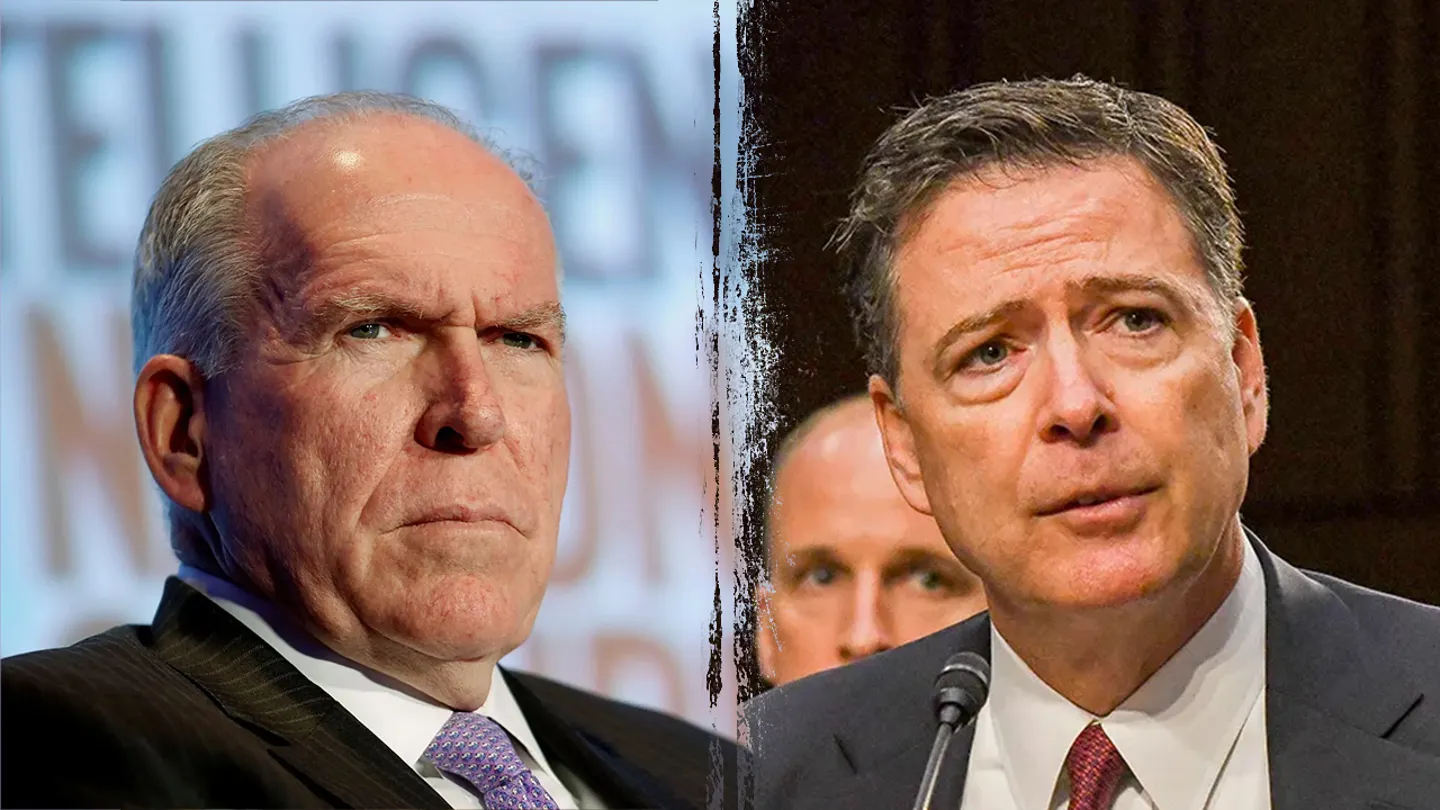
What the public didn’t see at the time was the internal dissent within the CIA. Field officers reportedly pushed back on these unfounded claims but were overruled by leadership. Then-CIA Director John Brennan justified this by saying “it rings true.”
That unorthodox standard—“rings true”—was then used to renew FISA warrants targeting Trump associates. In effect, it allowed a federal surveillance effort to masquerade as legitimate investigation, fanning the flames of suspicion without real fire.
By December 2016, as the Obama administration was winding down, intelligence reports were being curated and manipulated to maintain the illusion that Trump had won with help from the Kremlin.
This manipulation ultimately led to the launch of Robert Mueller’s special counsel investigation—an ordeal that lasted years, cost over $30 million, and failed to prove collusion. Trump was exonerated, but the damage was already done.
Perhaps most tragic were the personal tolls. Lives were upended. Families were devastated. Legal bills piled up. For many, the process itself became the punishment.
One of those affected is longtime Trump associate Michael Caputo, who spoke with me on Friday.
“It is precious little comfort knowing we were right. We need accountability, but even accountability doesn’t feed the bulldog,” Caputo told me—emphasizing that the harm done to his family can’t be undone by truth alone.
Accountability can take many forms. Caputo may never see former Democratic officials in handcuffs, but the exposure of this political fabrication is, in itself, a form of reckoning.
A 2018 Suffolk poll found that “Forty-six percent are convinced that there was collusion between the Trump campaign and the Russians, while 29 percent said there was no such coordination, and 19 percent weren’t sure.”
Today, people across the political spectrum now admit what the evidence clearly shows: the Russian collusion narrative was a lie. But they must also acknowledge that millions of Americans believed it—because it was told so convincingly.
The words of Sir Walter Scott still echo powerfully: “Oh what a tangled web we weave, when first we practice to deceive.” In this case, deception wasn’t an accident. It was the strategy. Democrats built a web so complex and so overwhelming that the truth seemed irretrievable.
Yet the truth did emerge—just as Shakespeare once wrote, “The truth will out.” But it came only after a nation was deeply divided and many lives were unfairly shattered.
No matter what else comes from ongoing investigations into the Russiagate affair, one conclusion is beyond debate: the Russian collusion narrative was a calculated lie, conceived by Democrats and sold to the American public with help from federal institutions and media allies.
To those responsible, this is your legacy. You sought to deceive the American people—and tried to destroy the president they elected. That will not be forgotten.