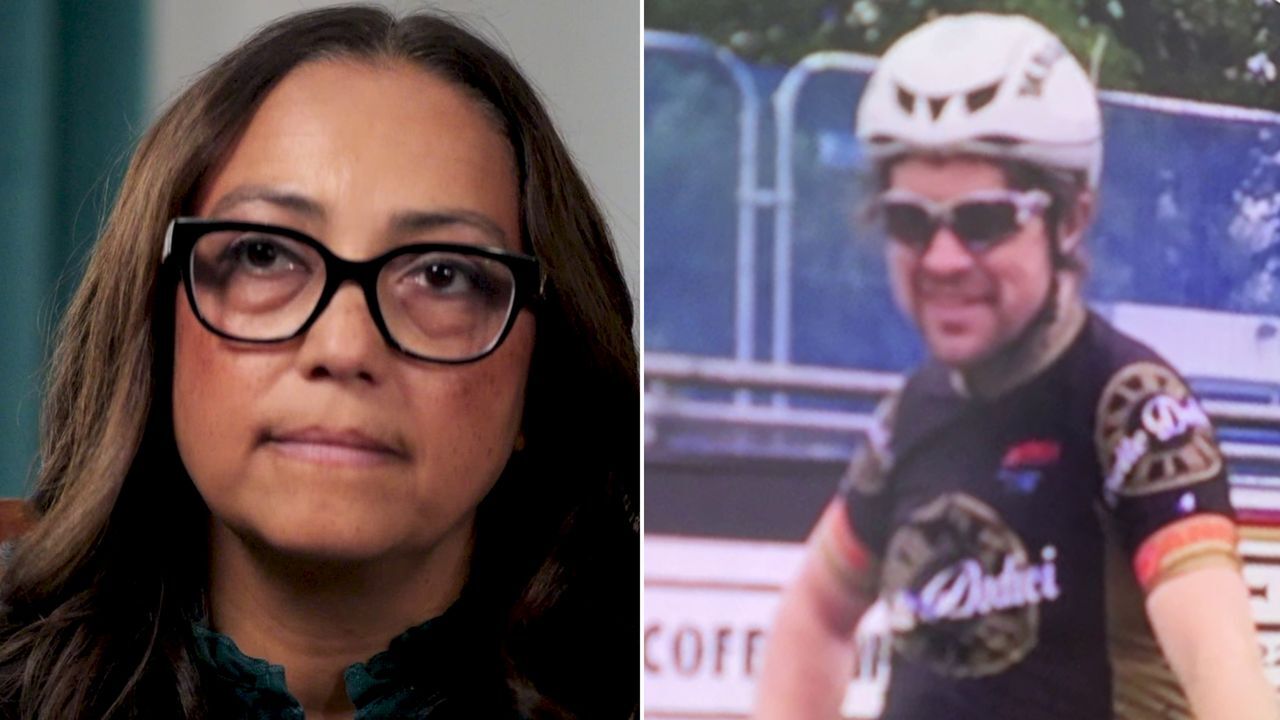

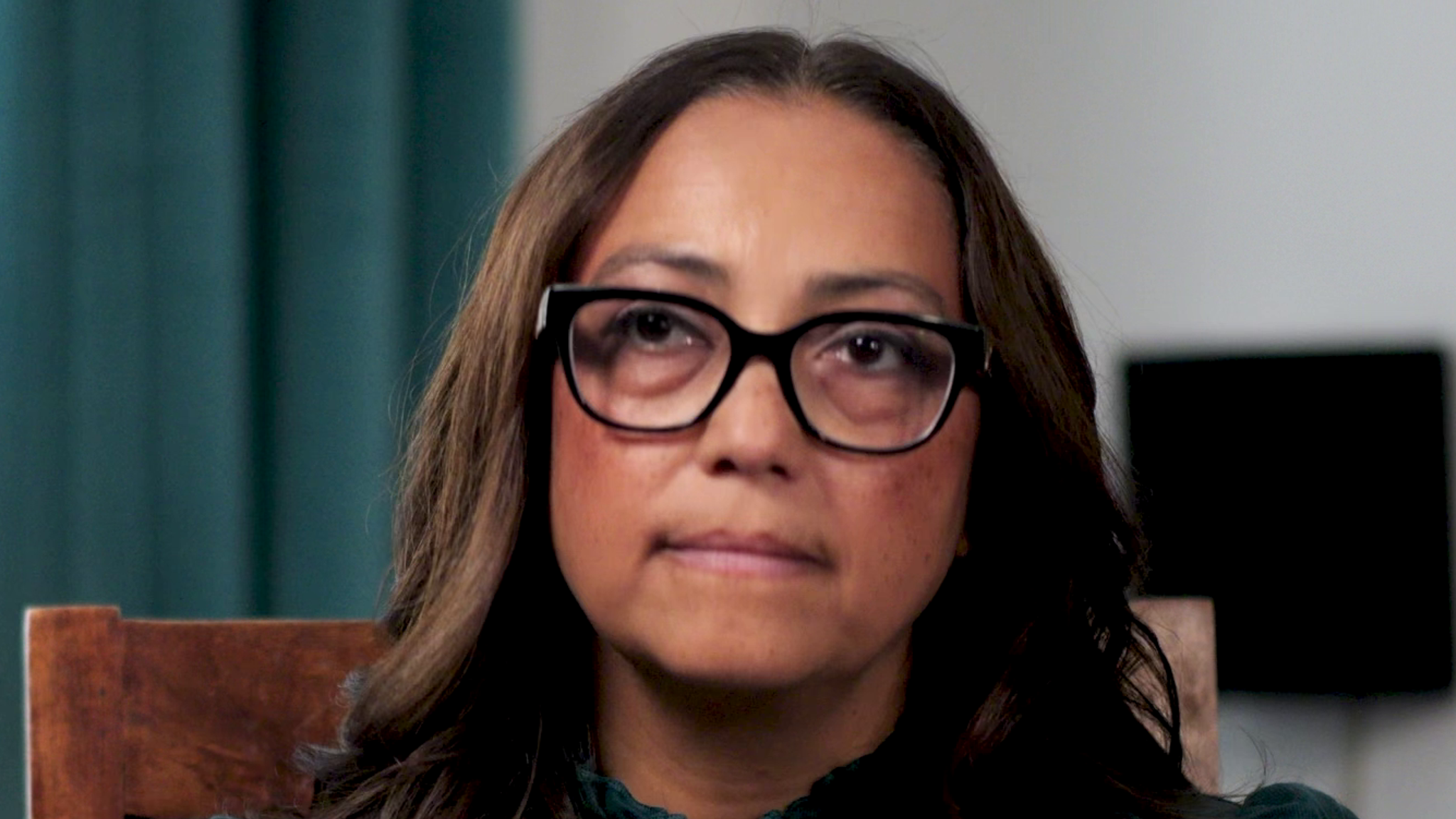
Diane Gall’s husband, Martyn, was out on a winter morning bike ride with friends in November 2020 when his life was tragically cut short by a reckless driver.
What followed for Diane and her daughters was nearly three years of waiting for the case to reach court — a wait filled with delays and emotional turmoil.
The case was postponed three times, often with little notice.
“You just honestly lose faith in the system,” Diane said. “You feel there’s a system that should be there to help and protect victims, to be victims’ voices, but the constant delays really take their toll.”
The first trial, originally scheduled for April 2022, was cancelled on the day and rescheduled for four months later. That new date was also cancelled just one day before proceedings due to a barristers’ strike. It was delayed again in November 2022 before finally being heard in June 2023.

“Each time you build yourself up, preparing for what you’re going to hear, reliving the trauma,” Diane said. “It’s retraumatising.”
Her experience is sadly far from unique. Diane’s case highlights the strain thousands of victims and families are under as the UK’s court system struggles with a growing backlog.
As of March 2025, 76,957 cases were waiting to be heard in Crown Courts across England and Wales.
In response to the crisis, an independent review led by Sir Brian Leveson proposed a series of sweeping changes. His recommendations included creating an intermediate division of the Crown Court composed of a judge and two magistrates, and giving defendants the option of trial by judge alone — measures he said were essential for real reform.
However, exclusive data gathered for Sky News by the Law Society shows widespread scepticism among legal professionals.
Before Leveson’s review was released, 545 criminal lawyers were surveyed. Sixty percent expressed doubt that an intermediate court would meaningfully reduce the backlog.
“It’s just shifting the problem — like moving deck chairs on the Titanic,” said Stuart Nolan, chair of the Law Society’s criminal law committee. “The real issue is the lack of resources — or the will to provide them.”
Nolan stressed that staffing alone won’t solve the problem. “You need experienced, trained professionals. That doesn’t come quickly or cheaply.”
Many lawyers also raised concerns that creating a new type of court might undermine the quality of justice.
Chloe Jay, senior partner at Shentons Solicitors, said a division without juries would be a step backward.
“The strength of the Crown Court lies in its separation of responsibilities — the jury determines facts, the judge handles the law,” she said. “In an intermediate court, three individuals would be making both legal and factual decisions, potentially compromising impartiality.”
A significant concern emerging from the survey is the risk to jury trials. Seventy-three percent of criminal lawyers said they were worried about offences no longer being heard by juries.
Casey Jenkins, president of the London Criminal Court Solicitors’ Association, pointed to the risks of bias when cases are decided without a jury.
“There’s a real risk that people from minority backgrounds could be unfairly treated,” Jenkins said. “A jury brings in a broader range of life experience. It’s a vital safeguard.”
Rather than moving cases into a new Crown Court tier, the lawyers surveyed suggested that some cases could be redirected to magistrates’ courts instead.
Under Leveson’s proposals, offences like dangerous driving, possessing an offensive weapon, and theft could be handled outside Crown Courts.
Richard Atkinson, president of the Law Society, said the system needs comprehensive investment to function properly.
“It’s as essential as the NHS or education,” he said. “If it crumbles, the consequences will be catastrophic.”
Jenkins echoed that concern: “Everyone deserves justice — this is not the way to fix the problem. The system is suffering from chronic, long-term under-investment.”
She called for funding across the entire justice chain — from local services and probation to police and legal aid. “Only by investing from the ground up can we ensure fair, timely justice.”
In response to Sky News’ findings, Sarah Sackman KC MP, minister for courts and legal services, said:
“We inherited a record and rising court backlog, leaving many victims facing unacceptable delays to see justice done.
We’ve already boosted funding in our courts system, but the only way out of this crisis is bold and ambitious reform. That is why we are carefully considering Sir Brian’s bold recommendations for long-term change.
I won’t hesitate to do whatever needs to be done for the benefit of victims.”
The driver who killed Diane’s husband was eventually convicted. But for Diane, the experience has left a deep mark.
She hopes decision-makers will remember the real people behind every case.
“You just feel like a cog in a machine that’s completely out of your control,” she said. “Because you know — justice delayed is justice denied.”