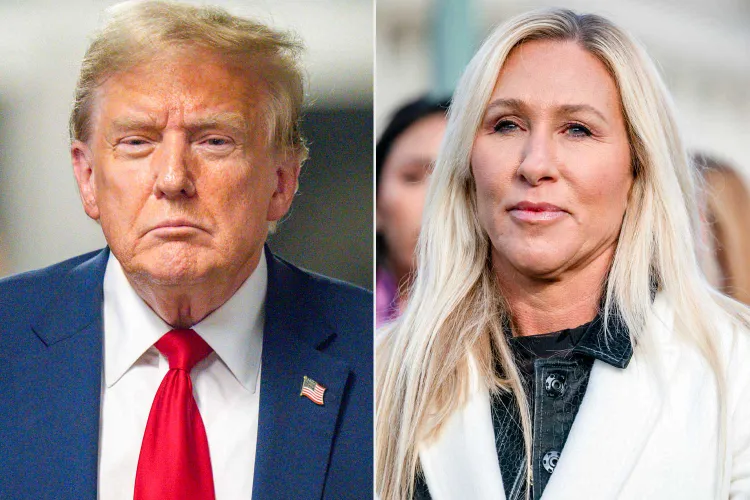

President Donald Trump is welcoming Rep. Marjorie Taylor Greene’s decision to leave Congress, calling her announcement a win for the country.
On Friday, Nov. 21, Greene said she plans to step down as the representative for Georgia’s 14th congressional district in 2026. Speaking to ABC News soon after the news broke, Trump praised the move.
“I think it’s great news for the country. It’s great,” he said on a phone call.
Asked by reporter Rachel Scott whether he had any advance notice, Trump brushed that off, adding, “Nah, it doesn’t matter, you know, but I think it’s great. I think she should be happy.”
Greene stated that her resignation will take effect on January 5, 2026. In her message, she pointed to Washington gridlock and rising partisanship as key reasons she no longer believes she can make meaningful progress on her agenda.
:max_bytes(150000):strip_icc():focal(990x448:992x450):format(webp)/Marjorie-Taylor-Greene-resigns-112125-47d472ff932e45888ca9eb29dd3309c1.jpg)
She also criticized fellow Republicans over their role in what she described as the longest government shutdown in U.S. history, while highlighting her conservative record on issues such as gun rights, abortion, border security, and her opposition to what she called “COVID tyrannical insanity.”
Greene suggested she has no interest in spending the next election cycle defending Trump, who announced a week earlier that he was withdrawing his endorsement of her. She said she didn’t want her district to be dragged into a bruising primary fight backed by the president.
“I have too much self respect and dignity, love my family way too much, and do not want my sweet district to endure a hurtful and hateful primary against me by the President we all fought for, only to fight and win my election while Republicans will likely lose the midterms,” Greene said.
Her departure comes after months of escalating tension between the two. On Nov. 10, Greene criticized Trump’s focus on foreign policy during his White House meeting with Ahmad al-Sharaa, the president of Syria’s interim government. Trump responded that same day by saying she had “lost her way,” and argued that the presidency requires a global, not local, focus.
:max_bytes(150000):strip_icc():focal(999x0:1001x2):format(webp)/Donald-Trump-111925-c5177a8396a94e7b804b556309163a72.jpg)
The friction intensified again on Nov. 16, when Trump referred to Greene as a “traitor” while dismissing reports that she had been receiving death threats. “Marjorie ‘Traitor’ Greene. I don’t think her life is in danger, I don’t think,” he told reporters. “Frankly, I don’t think anybody cares about her.”
Their rift has played out repeatedly this year. In June, Greene broke with her party to oppose artificial intelligence provisions in Trump’s “Big Beautiful Bill,” later acknowledging she hadn’t read the legislation. She also publicly objected to Trump’s decision that month to strike three Iranian nuclear sites, writing on X that she was tired of U.S. funding going overseas and wanted spending focused on domestic priorities.
More recently, Greene pushed for the release of the Epstein files, despite Trump’s earlier opposition to making them public. On Nov. 19, Trump said he had signed legislation ordering the files’ release, though no timeline has been announced.