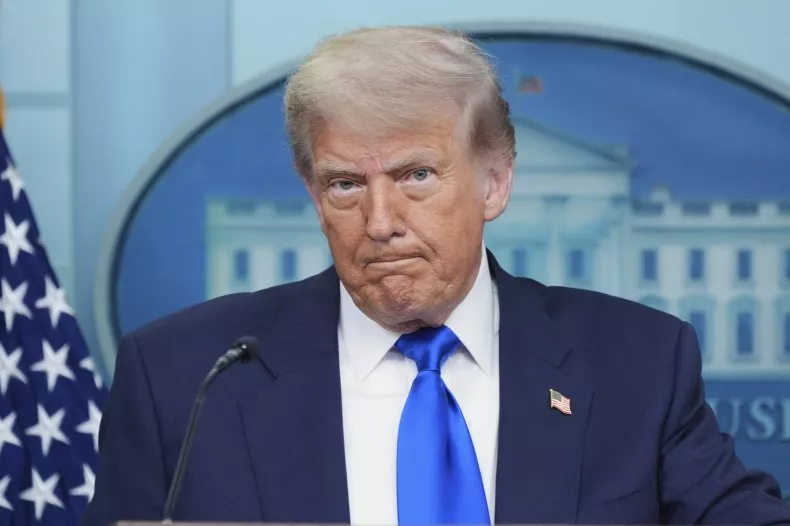

President Donald Trump is facing strong criticism after using a widely recognized antisemitic slur while speaking at a rally in Des Moines, Iowa, on Thursday, July 3. The remark was made as he promoted his newly passed “Big, Beautiful Bill” in the lead-up to the nation’s 250th anniversary of the Declaration of Independence.
During the speech, Trump, 79, said:
“No death tax, no estate tax, no going to the banks and borrowing from, in some cases, a fine banker, and in some cases, shylocks and bad people. They destroyed a lot of families, but we did the opposite.”
The term “shylock,” originating from the Jewish moneylender character in Shakespeare’s The Merchant of Venice, is widely condemned as a classic antisemitic stereotype rooted in centuries of harmful tropes.
Trump’s use of the term sparked immediate backlash from Jewish organizations and advocacy groups.
“‘Shylock’ is among the most quintessential antisemitic stereotypes,” tweeted Amy Spitalnick, CEO of the Jewish Council for Public Affairs. “This is not an accident. It follows years in which Trump has normalized antisemitic tropes and conspiracy theories — and it’s deeply dangerous.”
The Anti-Defamation League also condemned the remark in a statement:
“The term ‘Shylock’ evokes a centuries-old antisemitic trope about Jews and greed that is extremely offensive and dangerous. President Trump’s use of the term is very troubling and irresponsible. Words from our leaders matter, and we expect more from the President of the United States.”
When asked about his use of the word, Trump told reporters, “I’ve never heard it that way. To me, Shylock is somebody that’s a moneylender at high rates.” He added, “You view it differently than me. I’ve never heard that.”
Despite the controversy, Trump went on to sign the “Big, Beautiful Bill” into law shortly after the rally.
The sweeping domestic policy package includes significant changes, including:
- Deep cuts to Medicaid and SNAP (food stamps),
- Tighter eligibility requirements for social programs,
- Expanded funding for immigration enforcement and deportations,
- Rollbacks on green energy tax credits, and
- A projected increase of $3.8 trillion to the national deficit.
The bill has already drawn criticism from members of Trump’s own party. Georgia Rep. Marjorie Taylor Greene, who voted for the bill, admitted she didn’t fully review it.
“Full transparency, I did not know about this section on pages 278–279 of the OBBB that strips states of the right to make laws or regulate AI for 10 years,” Greene tweeted. “I am adamantly OPPOSED to this and it is a violation of state rights. I would have voted NO if I had known this was in there.”
The backlash over both Trump’s language and the contents of the legislation comes as his administration faces renewed scrutiny heading into the 2026 election season.