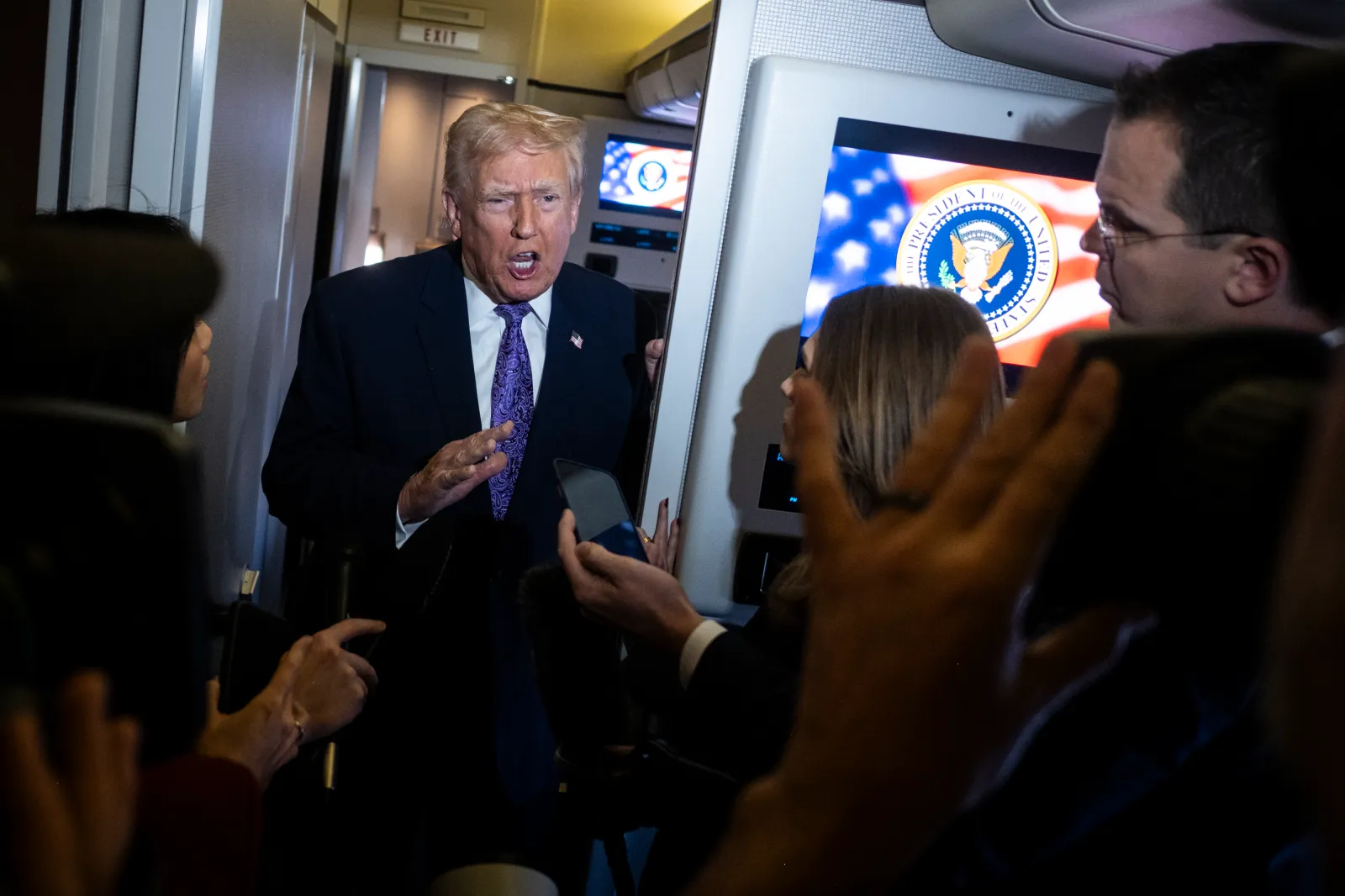

Senate Minority Leader Chuck Schumer warned in a Senate floor speech Monday that he will “immediately” introduce a bipartisan war powers resolution to block the use of American ground troops in Venezuela if President Donald Trump orders military strikes on the South American nation.
“Should a strike occur, we will force a debate in Congress and force a vote to prevent U.S. troops from being in hostilities against Venezuela,” said Schumer, a New York Democrat. “Our troops’ safety and our national security are at stake.”
Trump said Saturday on Truth Social that airlines and pilots should consider Venezuela’s airspace “CLOSED IN ITS ENTIRETY,” alarming critics who fear he may be preparing to directly target the country. His warning followed a series of U.S. strikes on boats off Venezuela’s coast that were allegedly carrying drugs.
Why It Matters
The Trump administration is under increasing scrutiny for its handling of strikes on suspected drug-smuggling vessels in the Caribbean and Pacific. It recently emerged that a second strike was launched in September on a boat that had already been hit.
Trump has maintained that he has full authority to launch such operations in order to protect the United States from cartels. But a broader escalation — particularly one that could bring the U.S. into direct conflict with Venezuela — would require Congressional authorization under the Constitution.
What To Know
In his Monday remarks, Schumer appealed directly to Republicans to join him if it becomes necessary to introduce a war powers resolution, saying Americans are “sick to their stomachs” at the prospect of another war — one he suggested Trump appears to be planning behind closed doors.
“All it takes is one lapse in judgment from either side, and suddenly our troops could find themselves in an armed conflict with Venezuela,” Schumer said.
He also sharply criticized Secretary of Defense Pete Hegseth, a former Fox News host, calling him “so obviously insecure” and accusing him of boasting about the military’s lethality without treating the job with proper seriousness.
“This man is a national embarrassment,” Schumer said of Hegseth, who has faced intense criticism for authorizing the September operation that killed survivors on a vessel already struck in the Caribbean.
Earlier Monday, White House press secretary Karoline Leavitt defended the September 2 strike after lawmakers from both parties called for congressional reviews of U.S. military operations against suspected drug-smuggling vessels in the Caribbean Sea and eastern Pacific Ocean.
“The president has the right to take them out,” Leavitt said of the alleged drug boats, if they are “threatening the United States of America.”
Leavitt did not dispute a Washington Post report that there were survivors after the initial strike in the September incident. Her remarks followed Trump’s comment a day earlier that he “wouldn’t have wanted that—not a second strike” when asked about the operation.
After the Post report, Hegseth said Friday on X that “fake news is delivering more fabricated, inflammatory, and derogatory reporting to discredit our incredible warriors fighting to protect the homeland.”
“Our current operations in the Caribbean are lawful under both U.S. and international law, with all actions in compliance with the law of armed conflict—and approved by the best military and civilian lawyers, up and down the chain of command,” Hegseth wrote.
The Trump administration says the strikes in the Caribbean are aimed at drug cartels, some of which it claims are controlled by Venezuelan President Nicolás Maduro. Trump is also weighing whether to extend the campaign by ordering strikes on targets inside Venezuela itself.
Schumer on Monday demanded greater transparency from the administration if there is, as officials claim, nothing to hide.
Last week, Schumer issued a similar warning about Trump’s approach to Venezuela. In a post on X, he wrote: “President Trump’s reckless actions towards Venezuela are pushing America closer and closer to another costly foreign war. Under our Constitution, Congress has the sole power to declare war — not the President — and Congress has not authorized the use of military force against Venezuela.”
What Happens Next
Leavitt confirmed that Trump would meet with his national security team later Monday to review ongoing operations in the Caribbean Sea and discuss potential next steps against Venezuela — developments that could set up a direct clash between the White House and Congress over war powers if the situation escalates.