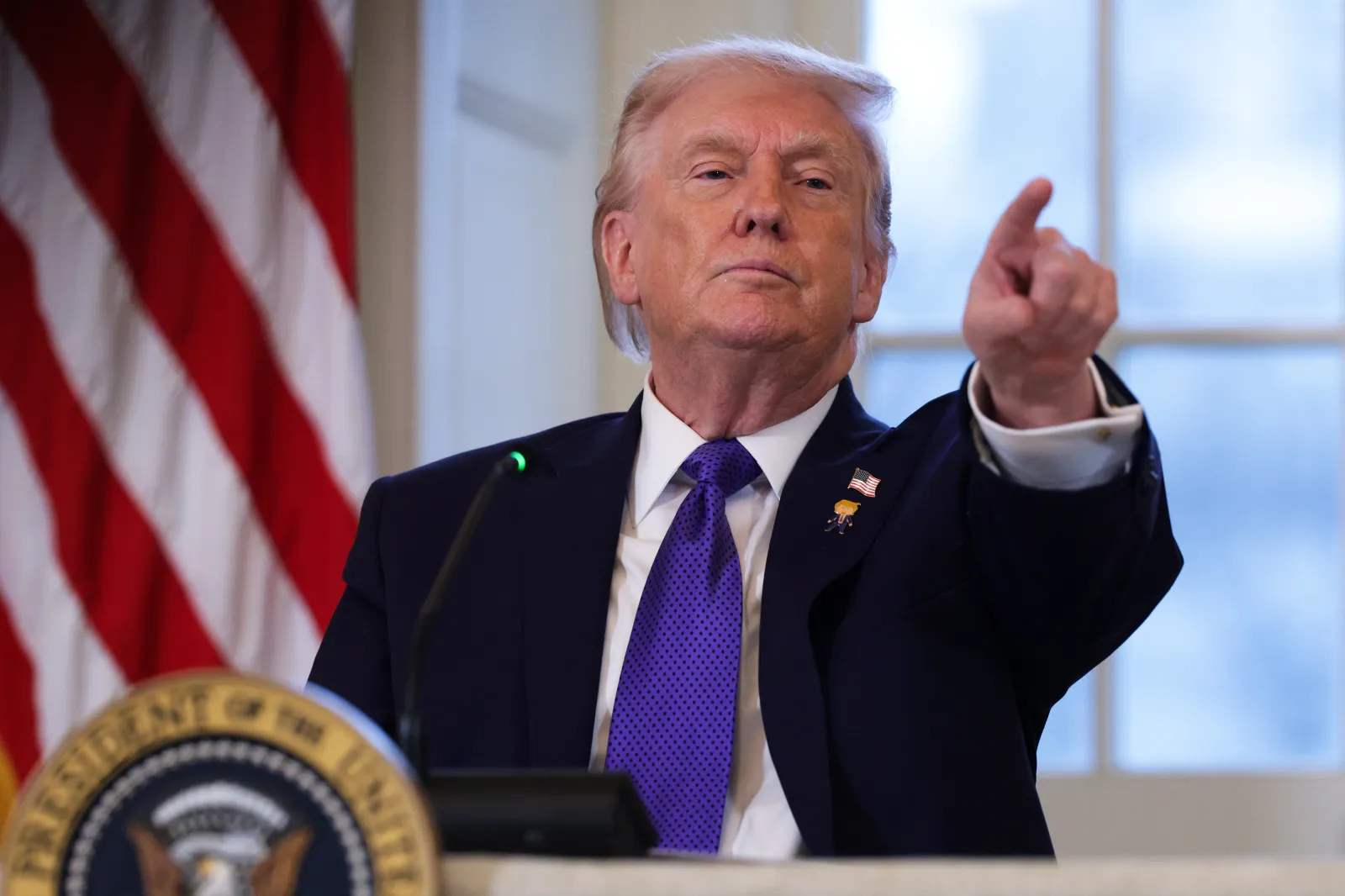

President Donald Trump encountered two legal setbacks on Friday, after separate federal judges issued rulings involving election-related funding and federal support for childcare and other social services.
In one case, a U.S. district judge blocked the Trump administration from using the threat of withheld federal election funding to pressure states. In another, a federal judge in New York temporarily halted an effort to freeze about $10 billion in federal funding for social services affecting five Democratic-led states.
Asked to comment on both decisions, the White House said of the election-funding ruling: “President Trump cares deeply about the integrity of our elections,” adding that the administration believes “this is not the final say on the matter” and expects to prevail.
Why It Matters
Together, the rulings represent a double legal blow for the Trump administration.
In the elections case, the judge concluded the administration’s funding threat was an attempt to apply unconstitutional pressure on states.
In the social-services case, the court’s order comes amid heightened political tension and protests as the administration moves to pause funding it says is tied to suspected fraud within Minnesota’s social safety net programs.
Trump has pointed to fraud investigations in Minnesota involving the Somali-American community to justify immigration raids, including an operation during which an Immigration and Customs Enforcement (ICE) agent shot and killed an unarmed protester in Minneapolis.
Ruling on Vote-by-Mail States
U.S. District Judge John Chun blocked the Trump administration from enforcing most of a March executive order on elections as applied to the vote-by-mail states of Washington and Oregon.
The order included a requirement that voters provide documentary proof of citizenship when registering. It also warned that states could risk federal funding if mail ballots were not received by Election Day. Officials in Washington and Oregon—where ballots postmarked by Election Day may be counted even if they arrive afterward—argued the change could disenfranchise voters.
Chun, a Seattle-based judge appointed under President Joe Biden, found the administration’s threat to pull Election Assistance Commission funding amounted to unconstitutional coercion, noting the president does not control how states administer elections.
He wrote that the move “exceeds the President’s statutory and constitutional authority,” adding that the president cannot unilaterally impose new conditions on federal funds or override congressional appropriations.
Washington Attorney General Nick Brown called the ruling a “huge victory” for voters in the two states, according to the Associated Press. White House spokesperson Abigail Jackson said the administration expects to ultimately win, according to Politico.
Order Blocking Freeze of Social Program Funds
In the second case, Judge Arun Subramanian, a federal judge in New York, temporarily blocked the Trump administration from freezing roughly $10 billion in federal funding for childcare and social services intended for New York, California, Minnesota, Illinois, and Colorado.
A day earlier, the five states filed suit, arguing the freeze would harm families with young children.
The administration suggested the pause was prompted by allegations of fraud in Minnesota’s social safety net programs, but it has not publicly presented evidence of similar problems in the other four states. Trump has also referenced Minnesota fraud investigations while defending a broader crackdown on refugee-related cases.
Subramanian ordered the administration to release funding for three social-services programs it had planned to withhold while the legal challenge proceeds. New York Attorney General Letitia James described the order as a “critical victory” for families affected by what she called the administration’s cruelty.
Key Quotes
White House spokesperson Abigail Jackson: “President Trump cares deeply about the integrity of our elections and his executive order takes lawful actions to ensure election security. This is not the final say on the matter and the Administration expects ultimate victory on the issue.”
U.S. District Judge John Chun: “The President has no authority to unilaterally impose new conditions on federal funds.”
Washington Attorney General Nick Brown, via Politico: “The court enforced the long-standing constitutional rule that only States and Congress can regulate elections, not the Election Denier-in-Chief.”
What Happens Next
Friday’s ruling is the latest setback for Trump’s March executive order targeting state election processes. Two earlier rulings have already been appealed by the administration, and the White House response suggests this decision is also likely to face an appeal.
The social-services order is temporary, and the court fight is expected to continue as the states’ lawsuit proceeds.