
The Trump administration has absorbed four notable legal setbacks in the span of a week, as federal and state courts in multiple jurisdictions pushed back on its efforts involving immigration enforcement, deportation authority, protections for migrants, voting-related policy, and the deployment of the National Guard.
Taken together, the rulings underscore how judges are closely examining the administration’s adherence to legal procedures, its interpretation of statutes, and the scope of the executive branch’s claimed powers.
Below is a breakdown of each ruling.
1. Procedural Error Threatens Administration’s Highest-Profile Deportation Case
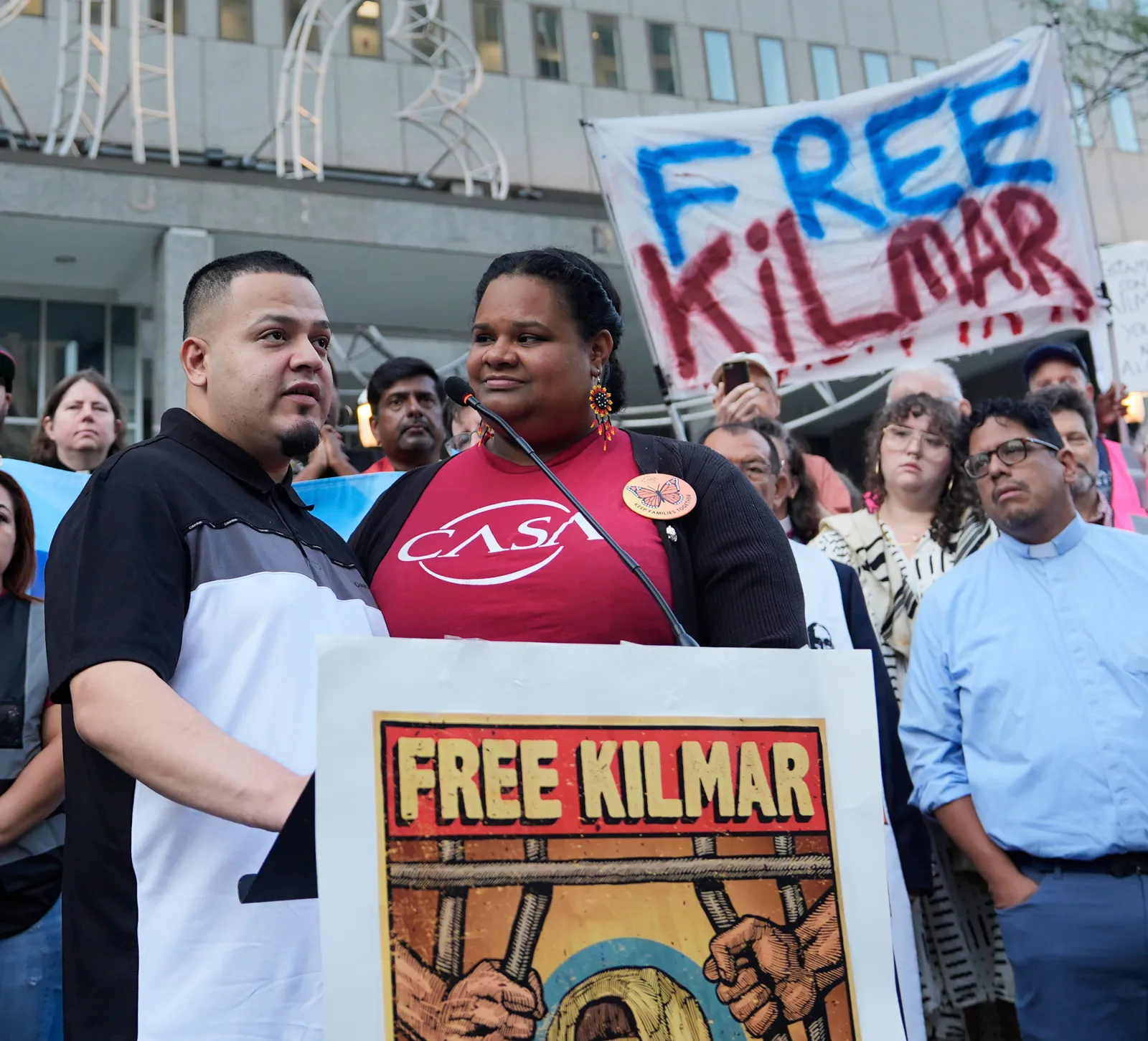
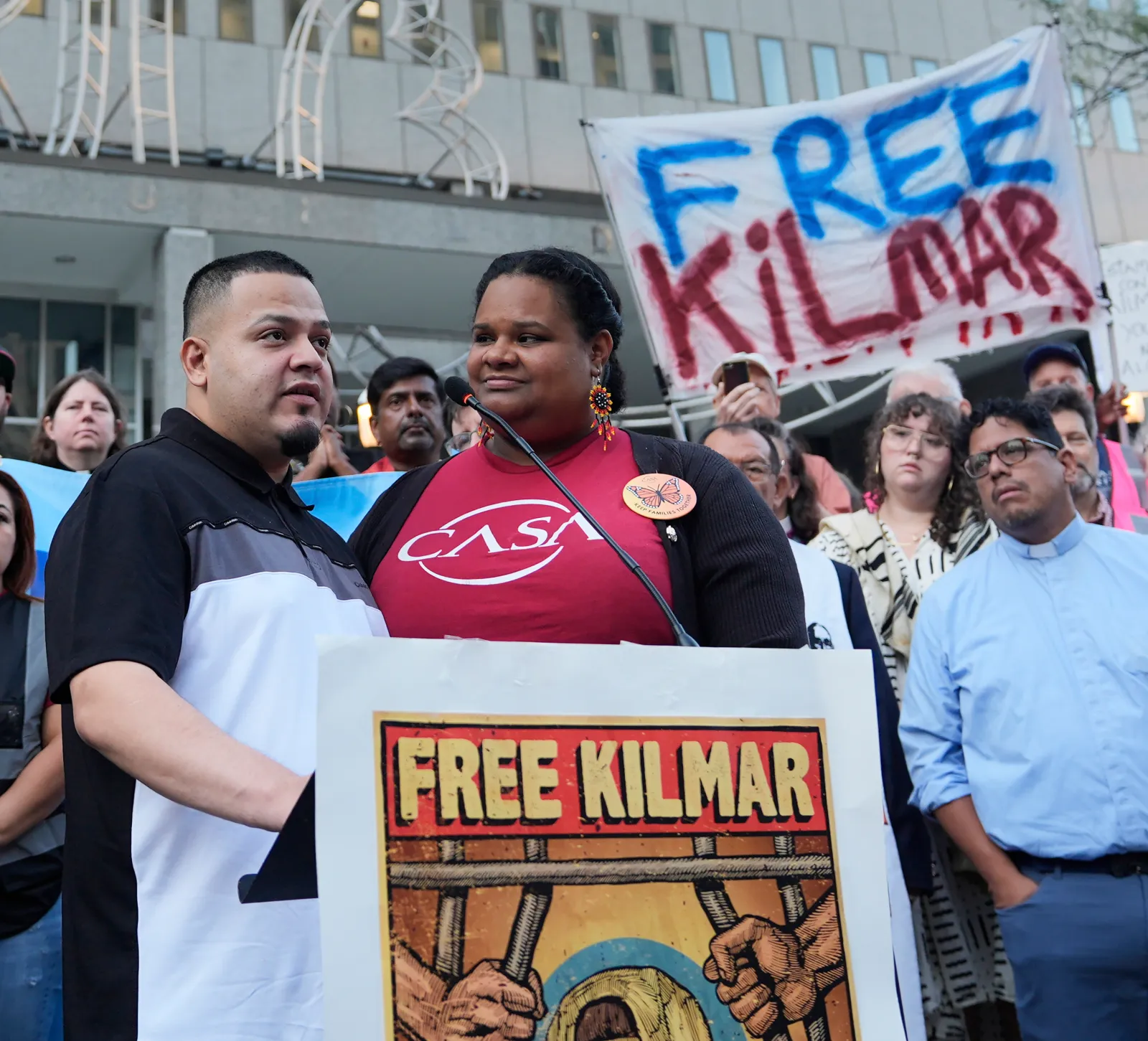
The administration’s marquee deportation case against Salvadoran national Kilmar Abrego Garcia was thrown into doubt after a major procedural issue came to light: his underlying 2019 immigration case lacks a formal order of removal.
In that 2019 decision, Immigration Judge David Jones granted Abrego withholding of removal after finding credible evidence that members of the Barrio 18 gang had threatened him and his family over business-related disputes in San Salvador.
The ruling detailed a pattern of extortion, threats, and harassment directed at Abrego and his siblings and concluded that he faced a grave risk of persecution if returned to El Salvador.
However, while the decision blocked his removal to El Salvador, it did not include a formal order of removal to any country. That omission is now central to the ongoing litigation.
At a November 20 hearing in the District of Maryland, U.S. District Judge Paula Xinis repeatedly questioned government lawyers about the missing order.
“There is no order of removal in the docket, in the record… You can’t fake it ’til you make it,” she said, stressing that a valid removal order is the legal backbone of detention and deportation proceedings.
Abrego’s attorney, Andrew Rossman, argued that without such an order, the administration’s case collapses: “It would be an obvious due process violation to remove someone without a final order of removal,” he told the court.
The administration has tried to deport Abrego to several third countries—including Uganda, Eswatini, Ghana, and now Liberia—after he initially agreed to be removed voluntarily to Costa Rica. Under questioning, Immigration and Customs Enforcement (ICE) officials struggled to explain why Costa Rica was never pursued or why the list of potential third countries changed repeatedly.
The absence of a formal removal order now calls into question whether the government can legally deport Abrego at all and invites further scrutiny of a case already tied to criminal proceedings in Tennessee, where prosecutors are pursuing human-smuggling charges and plan to introduce extensive other-acts evidence against him.
For the administration, the Maryland hearings mark a serious blow: a six-year-old procedural gap now threatens to unravel one of its most publicized enforcement efforts.
2. Judge Orders Resumption of Deferred Action for Special Immigrant Juveniles
In New York, the administration was dealt another major setback when U.S. District Judge Eric Komitee ordered U.S. Citizenship and Immigration Services (USCIS) to restart deferred-action protections for recipients of Special Immigrant Juvenile Status (SIJS), effectively restoring deportation safeguards for certain vulnerable young migrants.
USCIS had ended the SIJS deferred-action program in June 2025, cutting off automatic consideration for work authorization and blocking renewals.
Judge Komitee granted a stay of that rescission and partial injunctive relief.
His ruling compels USCIS to resume making deferred-action determinations and, for some recipients, to again process applications for employment authorization.
With more than 150,000 SIJS beneficiaries stuck in a visa backlog, the decision has immediate, nationwide effects for young immigrants and amounts to one of the most significant recent judicial restraints on the administration’s immigration agenda.
Without deferred action, these individuals could lose work permits and become vulnerable to deportation.

3. Court Halts End of Temporary Protected Status for Syrians
A separate decision from the Southern District of New York blocked the administration’s attempt to terminate Temporary Protected Status (TPS) for more than 6,100 Syrian nationals.
Seven Syrians, along with advocacy groups, challenged the move, arguing that the decision was arbitrary, insufficiently explained, and tainted by impermissible considerations.
The court sided with the plaintiffs at this stage, holding that they were likely to succeed on the merits and that ending TPS now would expose beneficiaries to substantial risk.
The ruling prevents the administration from carrying out the policy while litigation proceeds, preserving both deportation protections and work authorization for Syrians who have lived in the United States for years under TPS.
Although the administration may appeal, the decision joins a growing list of judicial interventions that have limited efforts to pare back humanitarian relief programs.
4. Tennessee Judge Blocks National Guard Deployment to Memphis
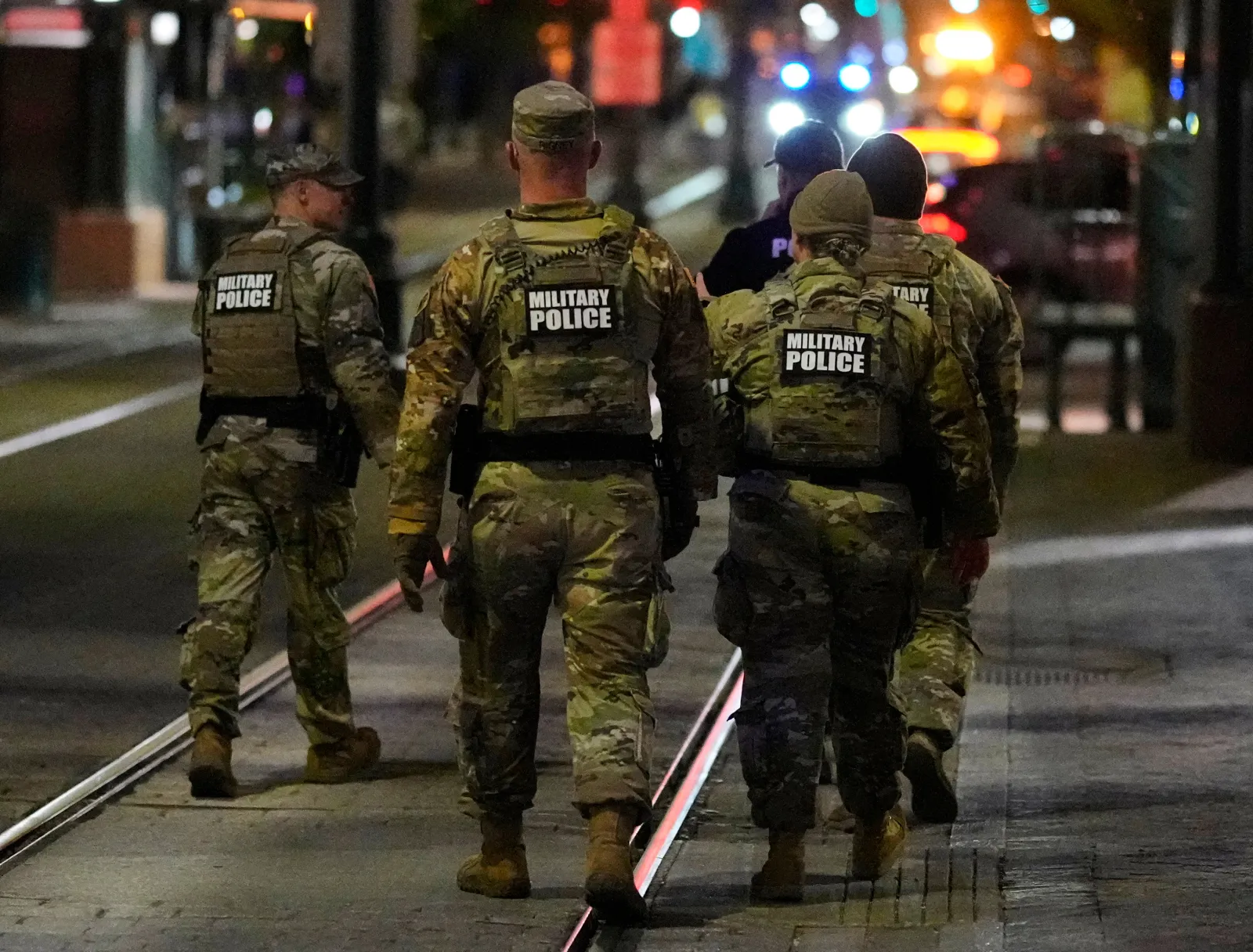
Capping off the week, a Tennessee state court enjoined the deployment of the Tennessee National Guard to Memphis.
The troops had been called up under a presidential memorandum establishing the “Memphis Safe Task Force,” aimed at reinforcing federal and local law-enforcement operations.
Davidson County Chancellor Patricia Head Moskal ruled that the activation likely violated state constitutional rules governing when and how the National Guard can be deployed.
Plaintiffs—including local officials and state legislators—contended that the governor did not have authority to approve the deployment without input from the legislature and that conditions in Memphis did not meet the statutory standard of a “grave emergency.”
The injunction bars Governor Bill Lee and Major General Warner Ross II from continuing the activation.
The ruling mirrors concerns already surfacing in federal courts, where judges reviewing similar deployments in Oregon and Illinois have questioned whether the administration exceeded the limits set out in 10 U.S.C. § 12406.