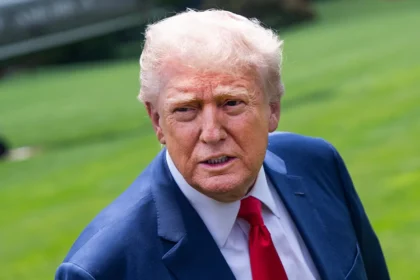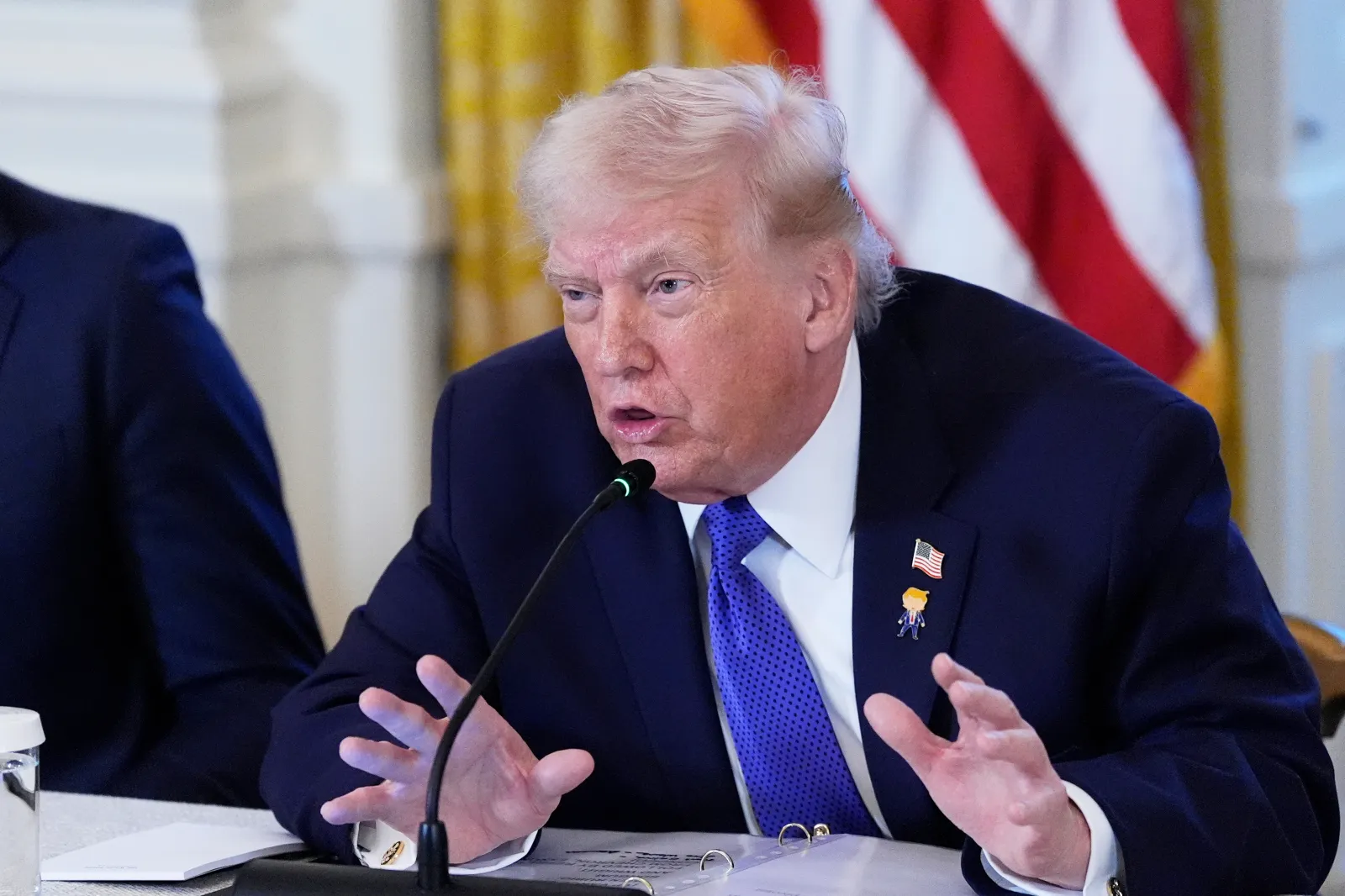

President Donald Trump on Sunday delivered a blunt message to Cuba’s leadership, saying the island should expect “zero” oil or money from Venezuela and urging officials to “make a deal before it’s too late,” in a Truth Social post that marked a sharper turn in U.S. rhetoric toward Havana.
“Cuba lived, for many years, on large amounts of OIL and MONEY from Venezuela,” Trump wrote in an early-morning post. “In return, Cuba provided ‘Security Services’ for the last two Venezuelan dictators, BUT NOT ANYMORE!”
“THERE WILL BE NO MORE OIL OR MONEY GOING TO CUBA — ZERO! I strongly suggest they make a deal, BEFORE IT IS TOO LATE,” he added.
Newsweek emailed the Cuban president’s office and the White House for comment Sunday morning.
Why It Matters
Trump’s warning comes soon after Venezuela’s president, Nicolás Maduro, was captured in a U.S. operation, and as Washington voices intensifying support for political change in Havana. Together, the developments point to a broader shift in U.S. policy in the Western Hemisphere, signaling a willingness to apply harder pressure, disrupt long-standing regional alignments, and potentially reshape diplomatic and economic dynamics.
Cuba’s economy has long depended on subsidized Venezuelan oil. A sudden cutoff, as Trump threatened, could have major consequences for everyday life on the island and further strain Washington–Havana relations.
What To Know
Cuba’s economy is already under severe stress, contracting by roughly 15 percent over the past six years, including a 4 percent drop in 2025 alone, according to government figures. The country never fully recovered from the collapse of the Soviet Union. While tourism and exports such as nickel, rum, and tobacco supported modest growth in the early 2000s, the pandemic and expanded U.S. sanctions under Trump’s second term deepened the downturn.
With Venezuelan oil shipments—historically around 35,000 barrels per day—now in question, analysts warn that a full cutoff could mean prolonged blackouts, worsening food and fuel shortages, and increased migration. Between 2020 and 2024, about 1.4 million Cubans left the country.
Trump’s remarks also echo aggressive signals from senior U.S. figures in recent days. Earlier in January, South Carolina Republican Senator Lindsey Graham said aboard Air Force One, after Maduro’s capture, that Cuba’s “days are numbered,” warning that U.S. attention would soon shift to Havana. Secretary of State Marco Rubio told NBC that the administration is “not big fans of the Cuban regime,” adding that Cuba’s leadership should be uneasy about what comes next.
Trump also appeared to entertain talk of Rubio leading Cuba. In a separate Truth Social post Sunday, Trump wrote “sounds good to me!” alongside a screenshot of an X post claiming “Marco Rubio will be president of Cuba,” followed by a laughing-face emoji.
The president posted a series of similar reactions—screenshots responding to an X post from conservative commentator Marc Thiessen that read: “The Cuban regime has survived every president since [Dwight D.] Eisenhower. Wouldn’t it be something if that streak ended with Donald Trump?”
Those posts broadly welcomed the idea of political change in Havana.
Even so, the notion of Rubio becoming Cuba’s president remains constitutionally and politically far-fetched. Cuba’s constitution restricts the presidency to a citizen by birth who holds no other citizenship, and the post is selected by Cuba’s National Assembly from within the Communist Party’s leadership.
Trump’s posture stands in contrast to former President Joe Biden’s more cautious engagement. Under Trump, the administration has reaffirmed Cuba’s designation as a state sponsor of terrorism, reinstated sanctions, and imposed tighter travel and business restrictions—steps that reflect a renewed push to isolate the Cuban government and increase economic pressure.
What People Are Saying
President Donald Trump said on January 4: “Cuba looks like it’s ready to fall. I don’t know how they if they’re going to hold out. But Cuba now has no income. They got all of their income from Venezuela, from the Venezuelan oil. They’re not getting any of it. And Cuba literally is ready to fall. And you have a lot of great Cuban-Americans that are going to be very happy about that.”
South Carolina Senator Lindsey Graham, a Republican, told reporters aboard Air Force One: “Cuba is a communist dictatorship that’s killed priests and nuns. They’ve preyed on their own people. Their days are numbered.”
Secretary of State Marco Rubio told NBC News last weekend: “If I lived in Havana and I was in the government, I’d be concerned.”
Michael Galant, a senior researcher at the Center for Economic and Policy Research, told AP earlier this week: “This sort of besiegement of Cuba is very intentional. Will it work from their perspective? I think that the Cuban people have experienced suffering for a very long time, and the Cuban government is very well versed in how to handle these situations…
“I think it’s very difficult to predict what will and will not spark actual regime instability. From the perspective of Rubio, it’s a sort of wait them out. There’s always a breaking point.”
Jorge Duany at the Cuban Research Institute of Florida International University told the AP: “An indefinite shutdown of the electrical system, which is no longer so impossible to imagine, can be envisioned under a total suspension of oil shipments from Venezuela, which seems to be the current strategy of the American government…It would lead us to imagine the possibility of mass protests.”
What Happens Next
With new sanctions, potential oil pressure, and increasingly hardline messaging from Washington, Cuba faces a period of heightened economic and political uncertainty—especially if Venezuelan shipments are reduced or halted and domestic shortages deepen.