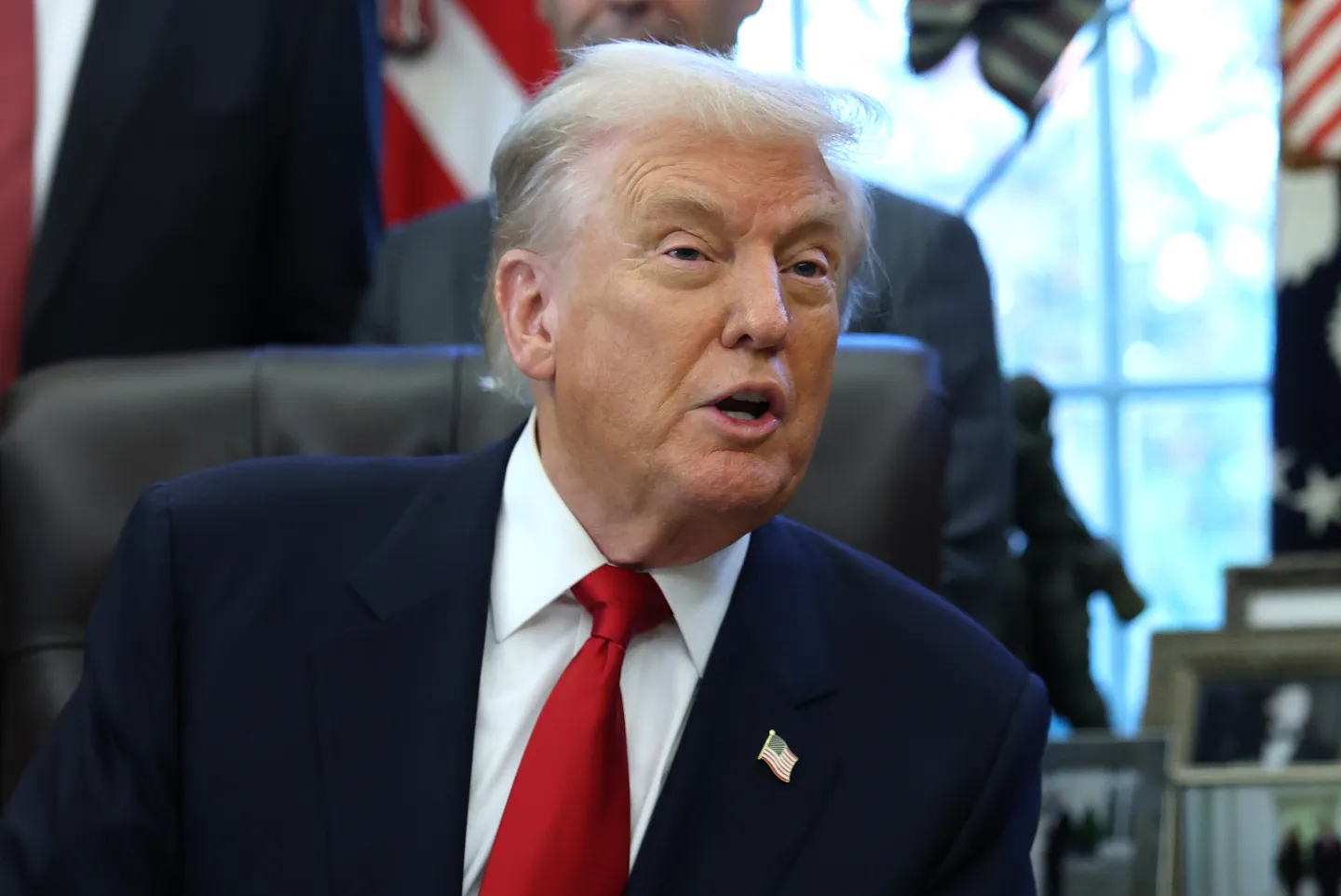

Approximately 150 million Americans may qualify for $2,000 rebates if the Trump administration’s proposed tariff-funded dividends become law.
Former President Donald Trump has promoted a plan to return tariff revenue directly to citizens as relief from higher prices linked to import duties.
“A dividend of at least $2000 a person (not including high income people!) will be paid to everyone,” Trump wrote on Truth Social.
Why It Matters
Tariffs can raise the cost of consumer goods, and the proposed payments would aim to help low- and moderate-income households who continue to feel the effects of inflation.
The program, which Trump and Treasury Secretary Scott Bessent have discussed, would still require approval from Congress before any money is distributed.
Eligibility and Cost Concerns
Bessent has indicated that families earning under $100,000 would qualify—an estimated 150 million people.
“At $2k each, you’re looking at a $300 billion price tag,” Michael Ryan, finance expert and founder of MichaelRyanMoney.com, told Newsweek.
He added that tariff revenue falls short of that amount: “Even with record customs duties around $195 billion gross, the actual net money available is closer to $90 billion after legal challenges and tax offsets. That’s a $200 billion hole.”
The payments would be modeled after pandemic stimulus checks, but funded specifically by tariff income collected from importers.
During the COVID-19 crisis, more than 476 million payments totaling $814 billion provided nationwide financial assistance, with each distribution round reaching over 160 million people, according to the Pandemic Oversight organization.
So far, the administration has reported collecting over $220 billion in tariff revenue. A CNN estimate suggests $2,000 payments could cost about $326 billion.
What People Are Saying
Bessent told Fox News: “You know, it could be just the tax decreases that we are seeing on the president’s agenda. You know, no tax on tips, no tax on overtime, no tax on Social Security, deductibility of auto loans.”
Ryan shared a cautionary view with Newsweek: “Tariffs are essentially a tax Americans pay at the checkout counter. So while a $2,000 check might sound good, tariffs on imports drive up prices on everything from groceries to clothes. Part of that ‘dividend’ gets clawed back through higher costs.”
Kevin Thompson, CEO of 9i Capital Group and host of the 9innings podcast, told Newsweek: “A lot of people are assuming this will look like the pandemic-era stimulus, but I don’t see that as being the case.
“If anything does pass, it will be symbolic. Hard checks aren’t happening. That goes directly against the Republican agenda of debt reduction, and they’re not going to reverse that stance with a new round of payments. Long term, this isn’t another COVID-style injection of cash into the economy. It’s more of a policy adjustment than a true stimulus.”
What Happens Next
Ryan noted that no legal authority currently exists for such payments.
“Officials are already floating alternatives like tax breaks on tips instead of actual checks, which is politically easier,” he said.
“If it does happen: You’d likely see a short-term bump in spending and a real squeeze on inflation. But tariffs themselves push prices up and slow productivity, so it’s not a sustainable growth strategy.”