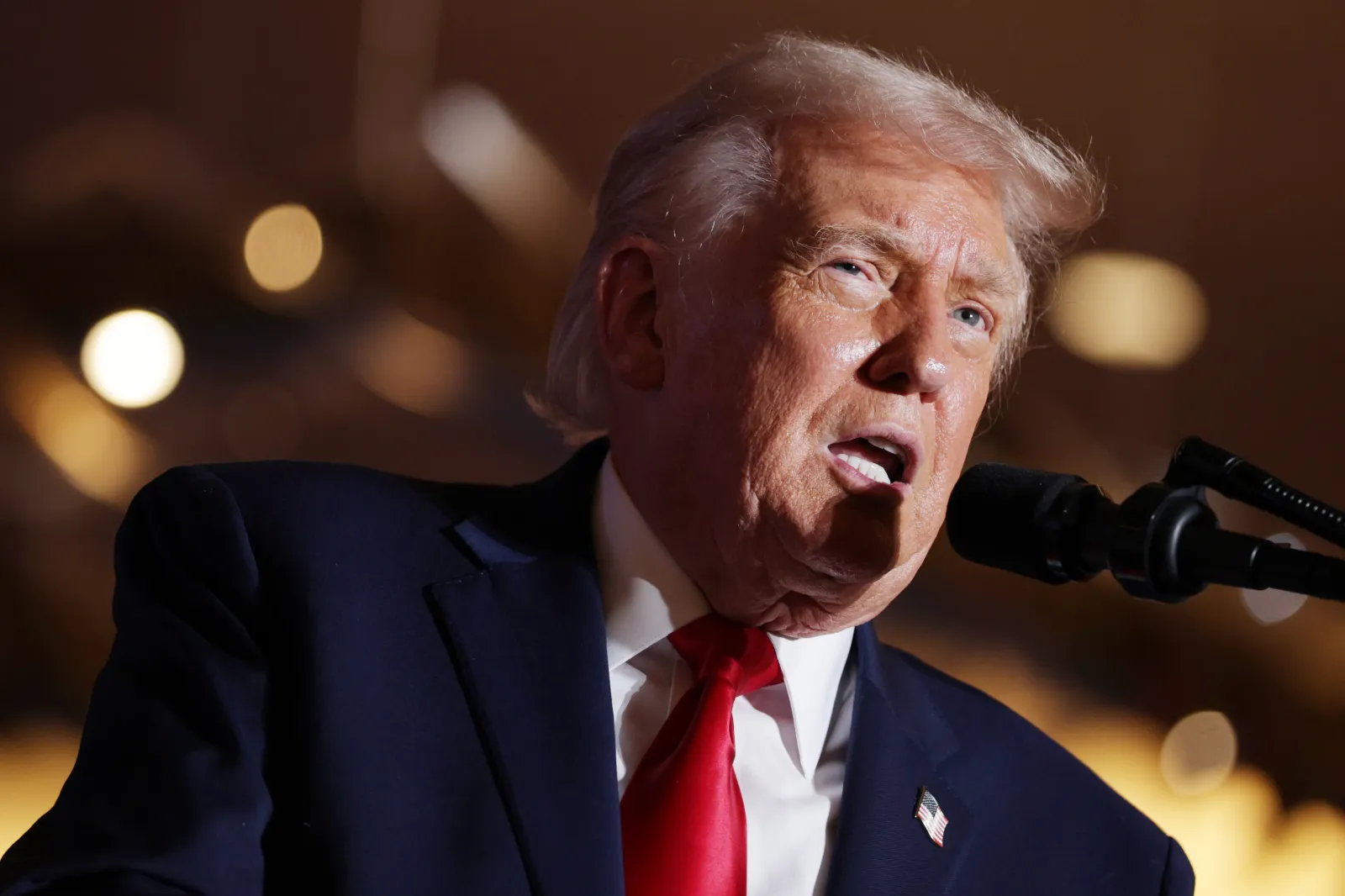

President Donald Trump’s approval rating has seen a notable change among urban voters, according to recent polling.
Why It Matters
The shift comes as Trump’s political standing has moved up and down in recent months, shaped in part by high-profile economic decisions—such as contentious tariffs—and stricter immigration enforcement.
With affordability and economic uncertainty still dominating voter concerns, even a modest change in sentiment inside major cities could carry weight for national politics and the next round of elections.
What To Know
New numbers from Quantus Insights point to a clear increase in Trump’s support among city voters over the past month.
In November 2025, Quantus’s urban sample put Trump’s approval at 37 percent, with 60 percent disapproving—net approval of -23 points. By December 2025, his approval among urban voters climbed to 43 percent, while disapproval fell to 53 percent, narrowing his net disapproval to -10 points.
The survey—based on 1,000 registered voters with a ±3.3 percentage point margin of error—shows an approval gain of more than 6 points and a 7-point decline in disapproval among urban respondents in just one month.
The results also add context to how city voters are responding. Urban respondents were still more likely than suburban or rural voters to strongly disapprove of Trump, but the December poll recorded a sharp drop in the “strongly disapprove” category: 42 percent in December, down from 51 percent in November—an improvement of 9 points.
Even with that movement, “strongly disapprove” remained the single largest category in both months. At the same time, “strongly approve” continues to register as a meaningful share, reflecting a highly polarized electorate.
The poll also suggests the issues driving attitudes remain familiar. Economic pressure and immigration policy continue to dominate what voters say they’re thinking about.
Cost of living—including groceries, housing, and gas—was cited as the biggest problem by 36 percent of Americans. That was followed by broader economic concerns (17 percent) and corruption (14 percent).
While Trump’s stances on tariffs and stepped-up urban immigration enforcement have drawn criticism, the latest urban numbers suggest those policies may also be strengthening his position in cities that have typically leaned against him.
What People Are Saying
Kristen Soltis Anderson, a Republican pollster, wrote in the The New York Times: “What’s crucial to understand about Trump’s poor approval numbers is that, unlike during his last time in the White House, people now disapprove of him because of the economy, not in spite of it. During his first term, concerns about him centered more on his style and approach, and his approval was lowest on issues like response to Covid-19.
“However, his job approval on the economy was typically a bright spot in his polling, and in my view, it was that brand attribute—a belief that, for all the baggage, Mr. Trump might be worth having as president again if he could just fix the economy—that ushered him back to power.”
What Happens Next
Trump’s approval—especially in urban areas—will likely remain unstable in the weeks ahead. Key pressure points include the continuing fight over federal tariffs, how immigration enforcement plays out city by city, and the broader national debate over inflation and the cost of living.