
A wave of consumer class-action litigation is hitting major U.S. retailers and shipping giants as Americans demand their share of an estimated $180 billion in potential tariff refunds. Following a landmark Supreme Court ruling that struck down import taxes imposed under the International Emergency Economic Powers Act (IEEPA), the battle has shifted from corporate boardrooms to federal courtrooms, where plaintiffs argue that businesses should not be allowed a “double recovery” on costs originally passed down to the public.
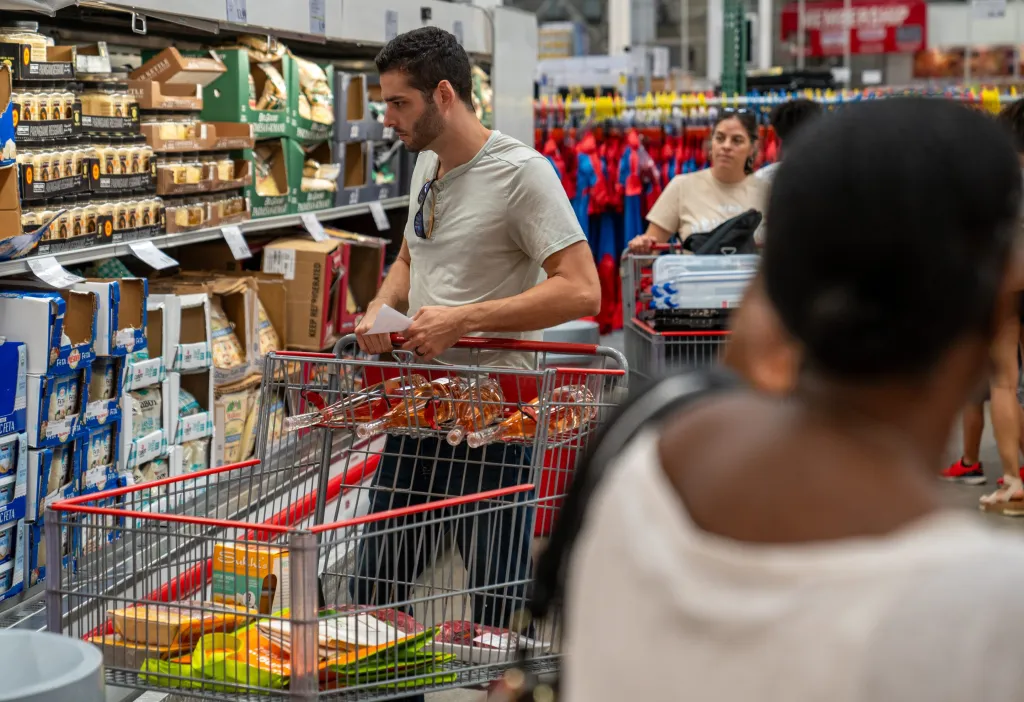
On Wednesday, Illinois resident Matthew Stockov filed a high-profile lawsuit against Costco Wholesale Corp. in the U.S. District Court for the Northern District of Illinois. The complaint alleges the big-box retailer inflated prices on electronics, hygiene products, and groceries to offset the IEEPA tariffs and is now legally obligated to pass federal refunds back to the shoppers who actually bore the financial burden.
The ‘Double Recovery’ Argument
The litigation highlights a growing tension in the wake of the Supreme Court’s February decision. While thousands of U.S. corporations sued the federal government to recover the multi-billion-dollar tax haul, consumer advocates argue that those companies are merely intermediaries.
According to the Stockov filing, Costco expanded its margins during the peak of the tariff regime by selectively raising prices. “Absent the imposition of the unlawful IEEPA tariffs, Costco would not have needed to raise prices on consumers in this way,” the complaint states, seeking to represent a class of more than 100 customers with claims exceeding $5 million.
The economic data supports the shift in burden. A report from the Federal Reserve Bank of New York found that U.S. importers paid approximately 90% of the tariff costs, with a significant portion filtered down to the point of sale. Goldman Sachs estimated these levies added 0.7% to inflation over a 10-month period, with a residual 0.1% increase projected for 2026.
Corporate Responses: From Pledges to Silence
The retail industry’s response to the refund pressure remains fragmented:
- Costco: While the company did not comment on the specific lawsuit, CEO Ron Vachris stated in a recent earnings presentation that the company intends to return recovered payments through lowered prices. However, the lawsuit argues for direct restitution rather than future price adjustments.
- FedEx: Facing a similar class-action suit in Miami, the shipping giant has been more explicit. A spokesperson confirmed to Fortune that if the government issues refunds to FedEx—which estimates its stake at nearly $1 billion—the company intends to issue refunds to the original shippers and consumers.
- Cards Against Humanity & Dame Products: Smaller, direct-to-consumer brands have taken an aggressive pro-consumer stance. Cards Against Humanity has already launched an online portal for customers to claim 100% of the recovered tariff charges.
The $700 Million Monthly Interest Clock
While Judge Richard Eaton of the U.S. Court of International Trade ruled last week that importers are entitled to the refunds, the timeline for disbursement remains a “black box.”
The Trump administration previously signaled its intent to contest the refund process, potentially tying up the funds in appellate courts for years. According to supply chain experts, a realistic window for the first checks to clear is 12 to 18 months.
The delay carries a heavy price tag for the U.S. Treasury. A report from the Cato Institute released this month reveals that the $180 billion in held revenue is accruing approximately $700 million in interest every month. Under federal regulations, this interest must be paid out alongside the principal, effectively increasing the total liability for American taxpayers the longer the litigation drags on.
What’s Next for Consumers?
Legal analysts expect the “Costco Model” of litigation to proliferate across other sectors, including automotive and heavy machinery, where tariff surcharges were often explicitly listed on invoices.
As the U.S. Treasury grapples with the logistics of reversing one of the largest trade interventions in modern history, the core question remains: Will the money return to the corporations that cut the checks to Customs, or the citizens who paid the higher prices at the register?