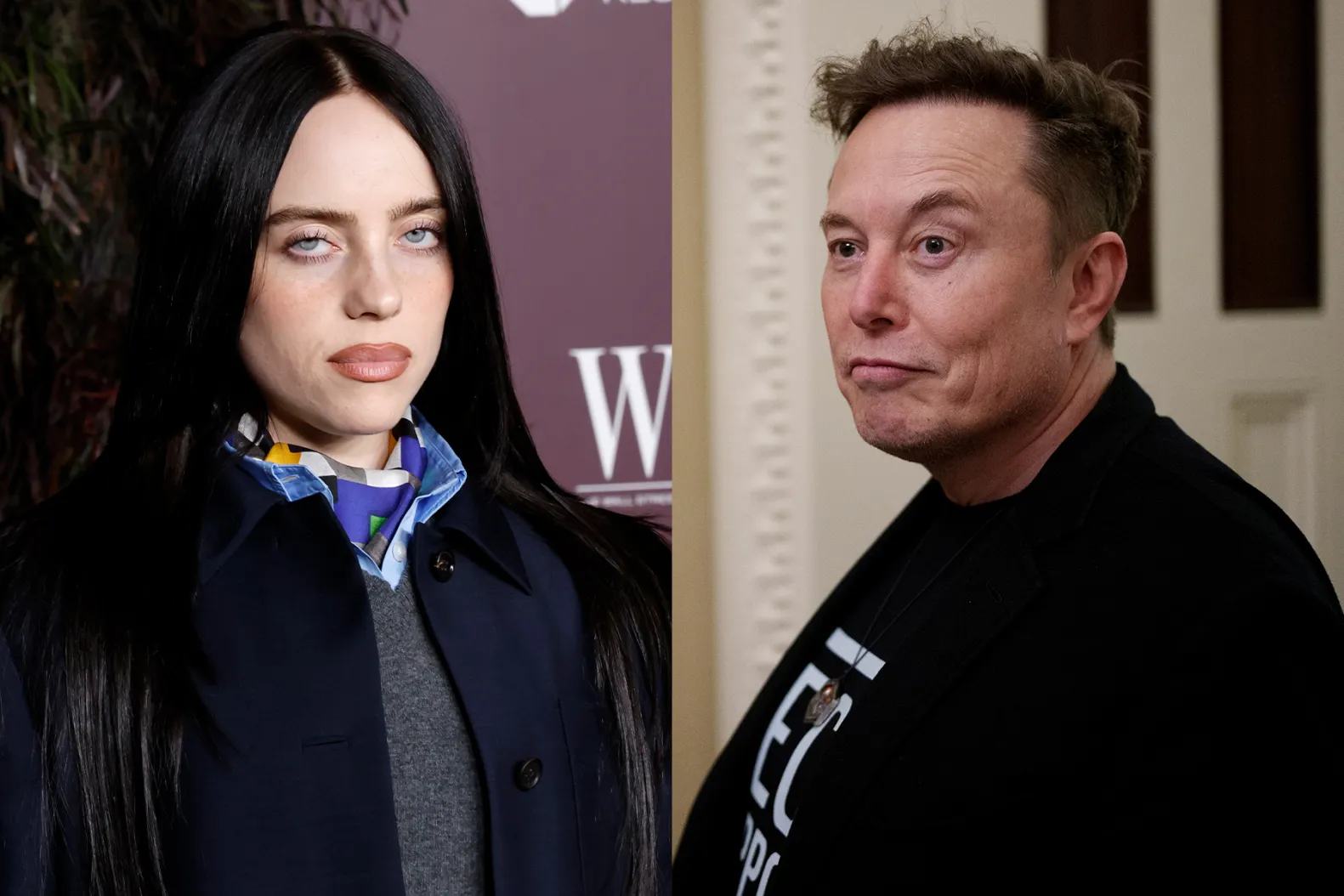

Elon Musk weighed in on the backlash surrounding comments Billie Eilish made at the Grammy Awards, calling the singer “such a hypocrite” in a short reaction that intensified an already heated debate over celebrity activism, immigration policy, and wealth.
Musk’s remark followed renewed scrutiny of Eilish’s acceptance speech at the 68th Annual Grammy Awards, where she said, “No one is illegal on stolen land,” while accepting Song of the Year for her track “Wildflower.” During her remarks, Eilish also criticized Immigration and Customs Enforcement and ended with an explicit condemnation of the agency. The moment spread quickly online and drew sharp responses from conservative commentators, politicians, and social media users.
Critics accused Eilish of virtue signaling, arguing that her message clashes with her personal fortune and real estate footprint. Some online commenters suggested that if she truly believes the land is “stolen,” she should give up her property—floating proposals ranging from transferring homes to Native American tribes to opening them to migrant families. Others framed her lifestyle as proof of hypocrisy, contrasting her political statements with the privacy, security, and exclusivity typically associated with luxury Los Angeles properties.
Several high-profile figures echoed the criticism. Conservative commentator Brandon Tatum said Eilish was insulated by “a moat of privilege,” while British journalist Julia Hartley-Brewer argued that acknowledging “stolen land” rings hollow unless it comes with personal sacrifice.
Eilish’s finances have also become a focal point. Forbes has estimated her net worth at $53 million. She bought a $2.3 million horse ranch in Glendale at age 17, a property previously owned by singer Leona Lewis. It is unclear how many additional properties she owns. Her brother and frequent collaborator, Finneas O’Connell, sold a Malibu beach house for $5.66 million in 2022.
Musk’s comment aligned with a broader line of critique: that celebrities who denounce borders, ownership, or enforcement agencies often continue to benefit from the same systems they condemn. With a single sentence, Musk amplified the argument many critics have made—pushing the controversy to an even larger audience.
The episode highlights a familiar tension when entertainers use major award stages to deliver political messages. Supporters praised Eilish for speaking out on immigration and humanitarian issues, while critics argued that the message loses credibility when delivered from a position of extraordinary wealth and influence.