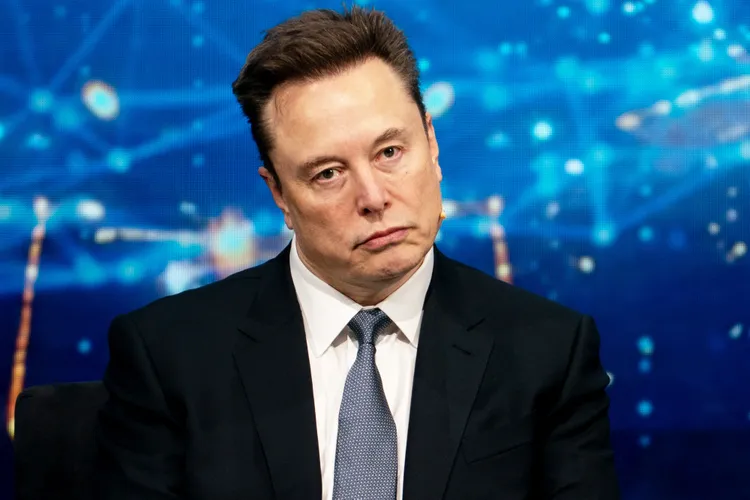

Elon Musk says he believes artificial intelligence will soon make the idea of saving for retirement largely irrelevant.
On a recent episode of the Moonshots with Peter Diamandis podcast, Musk argued that people won’t need to worry about “squirreling money away for retirement in 10 or 20 years,” because, in his view, it “won’t matter.”
“You won’t need to save for retirement,” Musk said, suggesting that in the “relatively near future” people could “have whatever you want.” Diamandis echoed the optimistic outlook, adding that in theory people could already have essentials like housing and health care, along with plenty of entertainment.
A fellow guest noted that it’s “fundamentally impossible” to predict precisely what AI will or won’t be capable of, but Musk doubled down on his confidence, saying he believes that by 2030 AI will exceed the combined intelligence of all humans.
Still, experts urged caution. According to Business Insider, seven specialists interviewed about Musk’s comments agreed that most people should not change their retirement plans based on ambitious forecasts.
“Most Americans should absolutely ignore these comments,” said Geoffrey Sanzenbacher, a research fellow at Boston College’s Center for Retirement Research, calling Musk’s speculation “dangerous and misleading.”
Ekaterina Abramova, a London Business School professor specializing in machine learning, also emphasized that even if AI transforms society over the next decade or two, that doesn’t automatically eliminate the need to save. A future with broad-based prosperity, she argued, would rely less on AI itself and more on policy choices and sustained redistribution—potentially across borders and amid social and political tension.
Musk isn’t the only billionaire to weigh in on how AI could reshape work and daily life. During an appearance on The Tonight Show Starring Jimmy Fallon last year, Bill Gates said he believes humans won’t be needed “for most things” in the future.
Gates described a shift from computing power becoming inexpensive to intelligence becoming widely available: he said that over the next decade, AI could make high-quality services—like medical guidance and tutoring—far more accessible. At the same time, he warned the path ahead is uncertain and raised a question many people share: whether society will be able to steer the technology responsibly. “It’s completely new territory,” he said, acknowledging that it can feel “a bit scary.”
Musk’s latest comments about AI also come as his company’s chatbot, Grok, faces mounting criticism.
After the backlash, a statement posted on X earlier this week said Grok will no longer edit “images of real people in revealing clothing” on the platform and will “geoblock in jurisdictions where such content is illegal.”
“We remain committed to making X a safe platform for everyone and continue to have zero tolerance for any forms of child sexual exploitation, non-consensual nudity, and unwanted sexual content,” the statement said.
That same day, California Attorney General Rob Bonta announced an investigation into the “proliferation of nonconsensual s******* explicit material produced using Grok.” UK regulator Ofcom has also launched its own investigation.
Additionally, Ashley St. Clair—who has publicly said she is the mother of Musk’s 14th child—has filed a lawsuit against xAI, amid an ongoing custody dispute over their son.