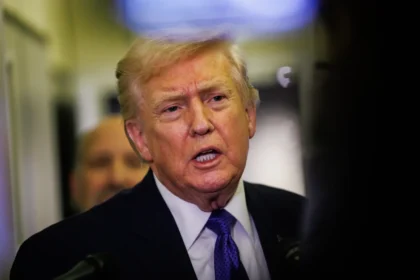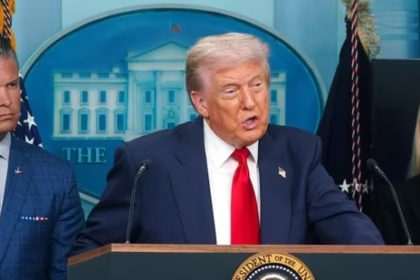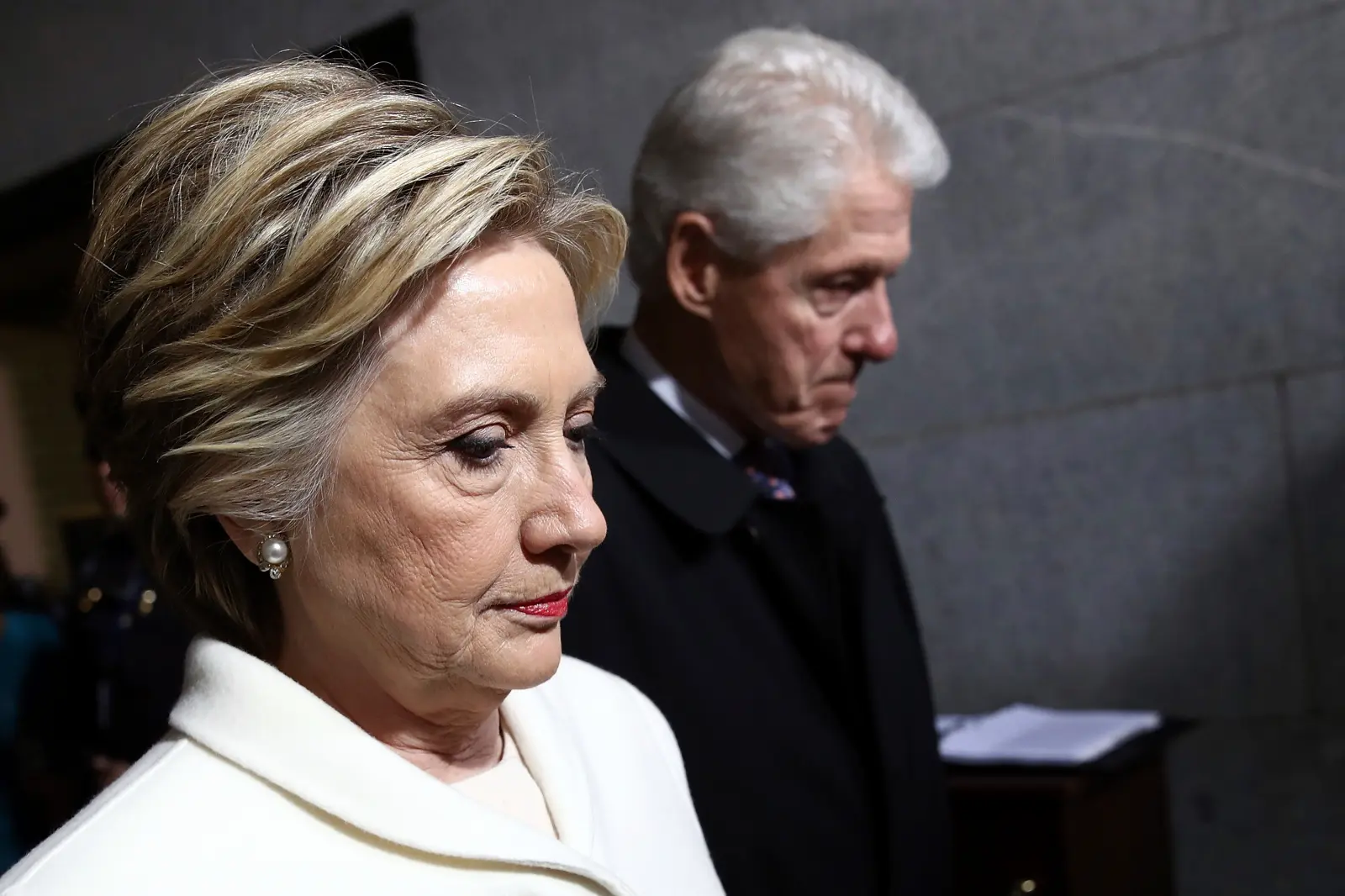

House Oversight Committee Chair James Comer said Tuesday that former President Bill Clinton and former Secretary of State Hillary Clinton may face potential criminal exposure tied to newly surfaced documents connected to Jeffrey Epstein.
“We expect to hear from Bill and Hillary Clinton,” Comer said on Just The News, No Noise. He argued that former President Donald Trump has been questioned publicly about Epstein for years and has responded, while the Oversight Committee has issued subpoenas across party lines. “We’ve subpoenaed Republicans and Democrats,” he said.
Why It Matters
Comer’s remarks highlight how the impending release of more Epstein-related records is intensifying political pressure in Washington. With both parties preparing for possible fallout, the documents are becoming a fresh battleground over transparency, accountability, and whether the Epstein case is being used for political advantage.
There is no evidence that either Bill or Hillary Clinton committed a crime. Still, Comer’s suggestion of legal risk raises the temperature around an already volatile issue—and adds another layer of scrutiny to public figures who had past contact with Epstein.
What To Know
The Justice Department said Friday that it is reviewing Epstein’s alleged connections to prominent Democrats, including Bill Clinton. Clinton has repeatedly said he had no knowledge of Epstein’s criminal activities.
Comer has issued subpoenas to the Clintons and eight other people as part of the committee’s inquiry. The move followed Congress’ release last week of more than 20,000 pages of Epstein-related documents.
Among the newly released correspondence are messages referencing Trump. One email from Epstein’s brother, Mark, mentions photos of Trump “blowing Bubba.” “Bubba” is a nickname commonly associated with Clinton, but Mark Epstein told Newsweek the reference was not to the former president. He described the exchange as joking banter between brothers that was never meant to be public or taken literally.
No survivor or associate has accused Bill Clinton of wrongdoing connected to Epstein. However, Trump has long pointed to Clinton’s travel on Epstein’s planes as suspicious. The Clinton Foundation pushed back against the renewed attention, saying the emails “prove Bill Clinton did nothing and knew nothing,” and argued the controversy is being used as a political distraction.
Flight logs that surfaced during earlier civil litigation show Clinton traveled several times on Epstein’s aircraft in 2002 and 2003. Those trips reportedly included staff and took him to multiple destinations across Asia, Africa, and Europe.
Comer said that while other Democrats have formally stated they had no involvement or knowledge of Epstein, the Clintons have not answered congressional questions or faced detailed public inquiry about their ties to him.
“Other Democrats have sent letters saying they knew nothing about Epstein, which would hold in court. If something ever comes out that they did know something, then they’ve committed perjury there,” Comer said. “But the Clintons have never responded.”
He added that he expects them to comply with subpoenas, warning that refusal could lead to contempt charges similar to those brought in previous investigations. Comer referenced Steve Bannon and Peter Navarro, both of whom were convicted of contempt of Congress after defying subpoenas from the House January 6 committee and each served four-month jail terms.
Comer also accused Democrats of focusing on the investigation in hopes of implicating Trump. “They’re just hoping and praying that there’s something in these documents… that would implicate Trump,” he said.
Democrats counter that the probe is an effort to shift attention away from Trump’s appearance in the emails. Trump was mentioned in more than 1,600 of the 2,324 email threads reviewed, according to committee figures. Rep. Robert Garcia, the Oversight Committee’s top Democrat, said Trump is trying to “deflect from serious new questions” about his relationship with Epstein. Trump has denied any wrongdoing or knowledge of Epstein’s crimes.
On Tuesday, lawmakers in both the House and Senate voted by large margins to compel the Justice Department to release its Epstein records publicly, following what legislators described as lengthy delays.
What Happens Next
Both chambers have overwhelmingly approved legislation requiring the Justice Department to publish its Epstein records within 30 days after the bill becomes law. The measure now goes to Trump’s desk, and he has indicated he plans to sign it.