
U.S. President Donald Trump has been diagnosed with chronic venous insufficiency (CVI), a vascular condition that emerged following swelling in his legs, the White House confirmed on Thursday. The diagnosis was made after Trump, 79, underwent a diagnostic vascular study and ultrasound, White House Press Secretary Karoline Leavitt told reporters.
What is Chronic Venous Insufficiency?
According to the Cleveland Clinic, CVI occurs when the leg veins are damaged and cannot efficiently return blood to the heart. This leads to blood pooling in the lower limbs, causing symptoms such as swelling, aching, or skin discoloration. While the condition is not life-threatening, it can become uncomfortable and progressively worse without treatment.
A study by the Society for Vascular Surgery estimates that around 40% of Americans suffer from some form of CVI, with men being more commonly affected than women.
How the Diagnosis Came to Light
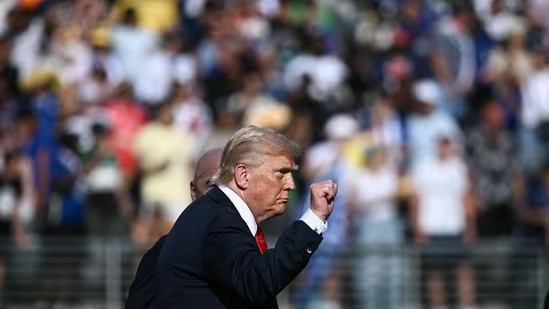
The announcement followed public concern over images of Trump at the FIFA Club World Cup finals, where observers noticed swollen ankles and bruising on his right hand. The White House clarified that the bruising was due to frequent handshaking and the use of aspirin, part of his cardiovascular health routine.
Leavitt appeared to downplay media speculation, criticizing some reports for sensationalizing the President’s appearance. “Despite the diagnosis,” she said, “the President remains in excellent health.”
How Serious Is CVI?
While chronic venous insufficiency is a permanent condition—damage to the veins cannot be reversed—it is manageable. Treatment can include compression therapy, lifestyle changes, and in some cases, minor procedures to improve circulation and reduce symptoms.
Medical evaluations, including a recent echocardiogram, showed Trump’s cardiac function and structure are normal, and the condition is currently within normal limits.
Bottom Line
Though CVI can cause discomfort, it is not considered a major impediment to daily functioning. With proper care, patients—including the President—can continue to lead active lives.