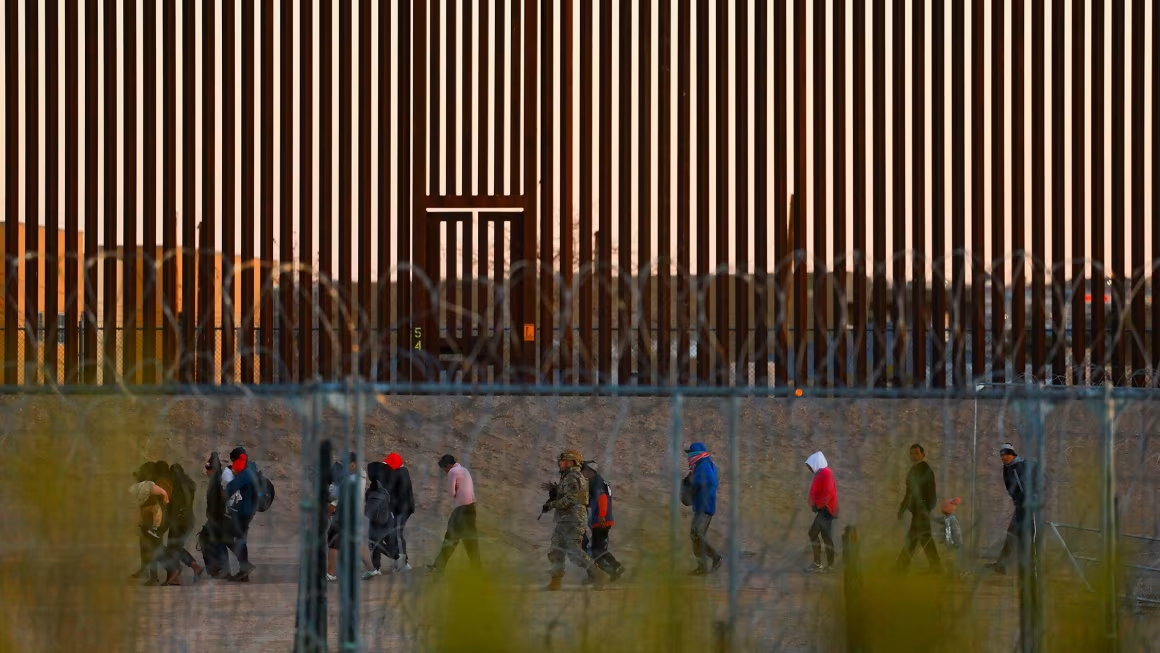

A federal judge has blocked a key Trump administration policy that barred migrants crossing the southern border from applying for asylum — delivering a major setback to former President Donald Trump’s efforts to drastically restrict immigration.
In a decision released Wednesday, U.S. District Judge Randolph Moss ruled that the administration had overreached its authority by attempting to bypass immigration laws passed by Congress.
“The President cannot adopt an alternative immigration system that overrides the statutes enacted by Congress,” Moss wrote in his opinion.
A Blow to Trump’s Border Agenda
The now-blocked rule stemmed from a presidential proclamation issued under Trump that effectively shut down asylum access at the U.S.-Mexico border. The policy had drawn legal challenges from groups like the ACLU, Las Americas Immigrant Advocacy Center, and the Florence Immigrant & Refugee Rights Project, who argued the measure endangered vulnerable people fleeing violence and persecution.
“This is a landmark victory for people fleeing danger and a reaffirmation of the rule of law,” said ACLU attorney Lee Gelernt. “The court rightly found that the president cannot override laws passed by Congress.”
Judge Moss emphasized that the Immigration and Nationality Act and the Constitution do not give the president unilateral authority to deny asylum to people who have already entered the country, regardless of how they crossed the border.
Temporary Delay and Likely Appeal
Moss’s ruling includes a 14-day stay, giving the federal government time to appeal the decision. Legal experts widely expect the Trump administration to challenge the ruling.
In response, Department of Homeland Security spokesperson Tricia McLaughlin criticized Moss as a “rogue district judge,” claiming the decision undermines national security and contradicts a recent Supreme Court warning against broad injunctions by lower courts.
“The President used every legal tool available to secure the border. Today’s decision recklessly strips those tools away,” McLaughlin told CNN.
Sharp Reactions from Trump Allies
Former White House official Stephen Miller slammed the ruling on social media, accusing the judge of trying to “circumvent the Supreme Court” and declaring that such protections for migrants would erode U.S. sovereignty.
“If we don’t restore our borders, the West will not survive,” Miller posted on X.
Courtroom Clashes
Tensions were high during oral arguments in April, where DOJ attorneys claimed the proclamation couldn’t be reviewed under existing immigration laws.
Judge Moss challenged that assertion, asking whether a hypothetical presidential order to shoot migrants would also be immune to judicial scrutiny. DOJ lawyer Drew Ensign conceded such an order would raise constitutional concerns but struggled to define the legal limits of presidential power — a hesitation that drew sharp criticism from the bench.
Impact on Migrants
The lawsuit was prompted in part by the cases of at least two migrants who had been deported under the policy despite expressing intentions to seek asylum. Government lawyers contended those individuals hadn’t demonstrated a clear and imminent intent to file formal claims — raising further concerns about how the rule was implemented and who it truly targeted.
The ruling marks one of the most significant legal defeats for Trump’s immigration agenda and could have sweeping implications for how asylum law is applied at the southern border moving forward.