
November 21 started like any other workday for Jeremiah Johnson, an immigration judge in San Francisco who was scheduled to hear three cases from immigrants seeking to remain in the United States. The routine broke when he learned that two fellow judges had been fired.
Back in his chambers, Johnson opened his email and saw a subject line that included the word “termination.” Before he could even print the letter from the Department of Justice, he was locked out of the system. After eight years on the bench, his job was gone in a matter of minutes — and the immigrants on his docket were left in limbo as their cases stalled.
“Immigration is much more than judges, it’s much more than just my job,” Johnson told Newsweek Thursday. “This is an issue that’s extremely important. It’s even now, I think, more important regarding even just the rule of law. You see the administration avoiding courts, not following the law, or apparently not following the law.”
Across the country in New York City that same day, Olivia Cassin — appointed during the Obama era — received a similar notice. In a brief paragraph, she said, Attorney General Pam Bondi informed her she was removed from her position, effective immediately.
“My strong feeling is that judges, the judges who were fired in New York, for example, who I knew very well, were fired for doing their job, for being careful, for affording people due process, a real day in court,” Cassin told Newsweek Friday.
“Every judge who was fired is a real expert in immigration law. Has a very strong background in immigration law, and reputation for fairness and for affording people a day in court.”
Immigration Judges Replaced With Deportation Judges
Cassin and Johnson were among multiple judges who, according to their accounts, received termination emails from the DOJ, which oversees immigration courts nationwide. Each judge could have carried thousands of pending cases — all within a backlog that now sits at around 3.6 million.
The Department of Justice told Newsweek the judges were not individually targeted, but said judges are continuously reviewed and expected to remain impartial.
“After four years of the Biden Administration forcing Immigration Courts to implement a de facto amnesty for hundreds of thousands of aliens, this Department of Justice is restoring integrity to our immigration system and encourages talented legal professionals to join in our mission to protect national security and public safety,” a DOJ spokesperson told Newsweek on Friday.
While judges have been removed, the Trump administration is also recruiting replacements — but with a new label. In social media posts and job descriptions, the role is being promoted as “deportation judges” rather than “immigration judges.”
“Coincidentally, those ads started, for judges that would be part of the solution of the backlog and the American problem with immigration, the day that I was fired,” Cassin said. “I woke up that morning and looked at my messages, and I saw those ads with a bunch of judges with whom we have a chat.
“People were saying, ‘Could these possibly be real? And why is the Secretary of Homeland Security advertising for jobs at a separate agency, the Department of Justice?’ Then we looked at the Department of Justice and saw the same ads.
“It validates my feeling of the dismissal of experts in immigration law, being replaced by people who are not experts.”
The recruitment push has continued in the weeks since. It remains unclear how many people have been hired so far — or what training they will receive before stepping into the growing backlog of cases.
Immigrants Are Waiting Longer for Their Day in Court
Johnson said rising U.S. Immigration and Customs Enforcement (ICE) arrests have collided with a court system stretched thin — and the wait for hearings has ballooned. He said he had recently inherited files from another judge who was let go and found himself setting hearing dates as far out as June 2029.
“If you don’t have judges, you don’t have courts. So, what happens to their cases? You have people waiting in legal limbo,” Johnson said. “So, people may decide to just simply leave the United States and not have their case heard at all, although they might have a meritorious case. So, it’s this strategy of avoiding immigration courts, [even though] the law is what’s saying: this is how you remove someone from the United States.”
Both former judges described how political priorities and enforcement pressures have long shaped court operations. Johnson said that during the first Trump administration, judges faced decision targets under a “no dark courtrooms” policy — meaning hearings and rulings were expected to keep moving.
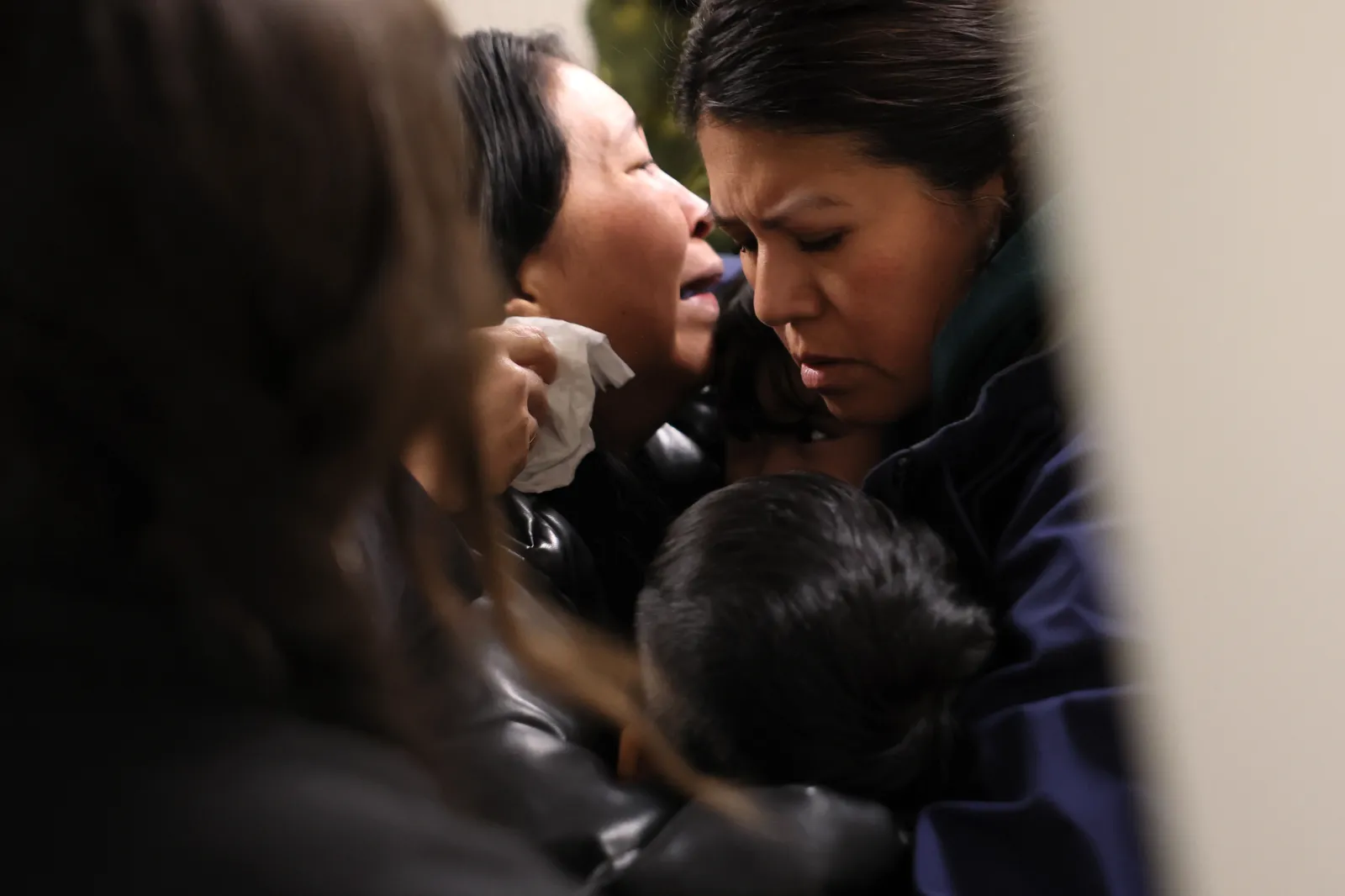
Cassin said her docket focused on unaccompanied minors — children and teenagers who arrive alone or become separated from parents and often must represent themselves. Each Tuesday, she held hearings for a small portion of the 60 to 70 minors assigned to her. In recent months, she said, some stopped appearing altogether.
“These kids stopped coming to court entirely because they heard that some of their friends, high school students in New York, were detained and sent back to their countries or detained under terrible conditions,” Cassin said.
“My heart broke, because I wanted these kids to come to court and I wanted to hear their asylum cases, I wanted to adjudicate their other applications for relief, and so many of them didn’t come. At a certain point, what a judge has to do, if somebody doesn’t come to court, you have to order them deported in absentia.”
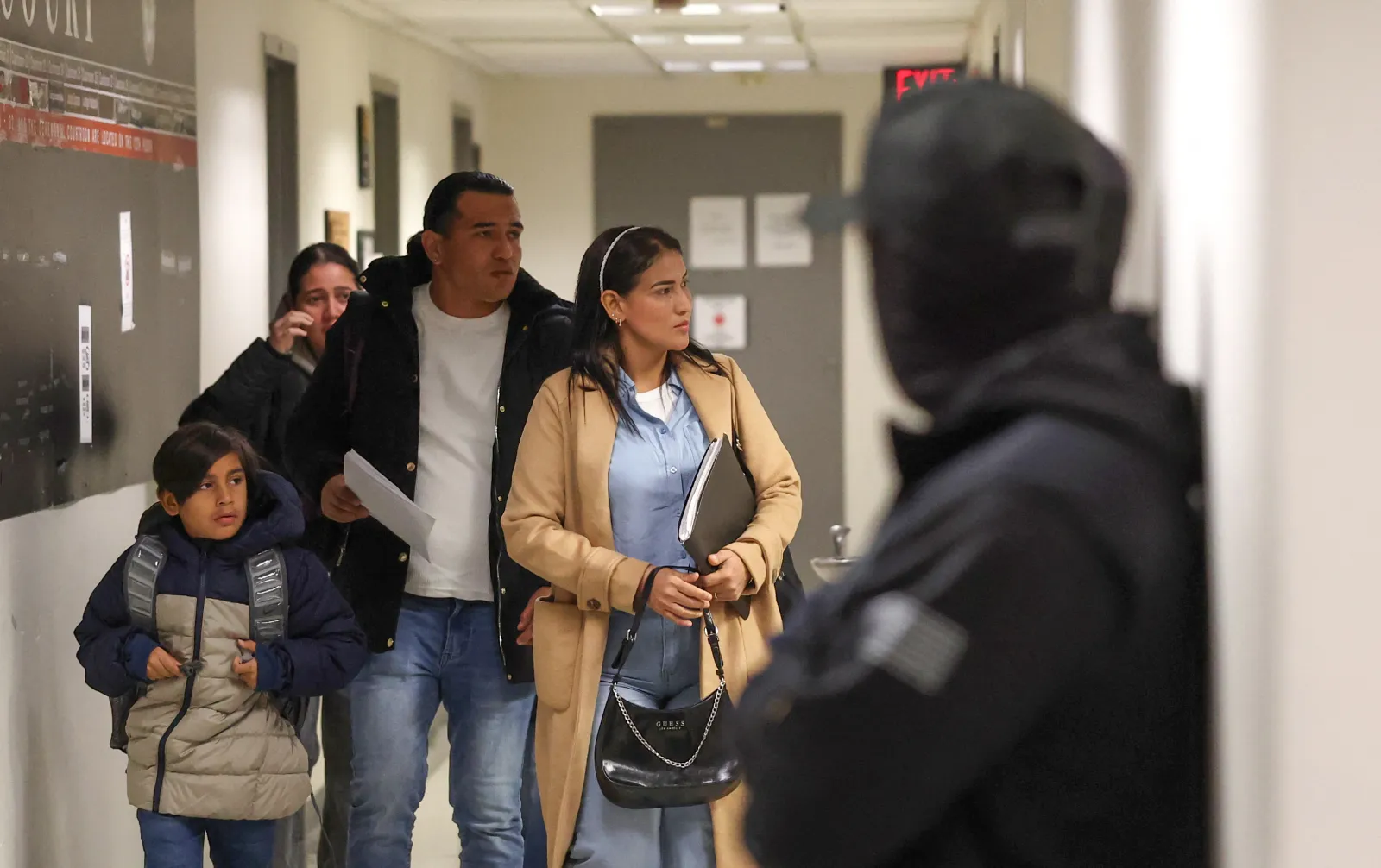
Immigration court has never been easy to navigate, but Cassin said it has grown noticeably more intimidating under the second Trump administration. She described increased law-enforcement presence in hallways and protests inside and outside government buildings — including at 26 Federal Plaza in Manhattan, near her courtroom.
Trump Changes Were “Uncomfortable From Day One”
Cassin pointed to multiple instances of ICE agents detaining immigrants after court — including people who left with deportation orders — and said other immigrants have also been targeted during visits to U.S. Citizenship and Immigration Services (USCIS) for visa and green card interviews in other government facilities.
“I have been traumatized by what has happened in the court,” Cassin said. “I would say there was a takeover of our courts, a hostile takeover, of masked ICE agents, threatening figures outside of our courtrooms, lining the hallways.
“I felt uncomfortable from day one. I made my discomfort and fear known to the higher ups. I felt fear going using the restrooms when ICE agents were lining the wall across from the restroom,” she said. “I felt fear just walking in the halls to reach my courtroom.”
She said she was met with indifference and told that if she wanted to avoid federal agents, she should remain inside her courtroom and chambers.
“I have lived in many different countries, visited many countries. I’ve never physically felt so threatened and unsafe by being there,” Cassin said. “So, you could imagine what it felt like for people who were potentially being detained.”
Johnson said he had witnessed similar fear among detained immigrants — not only about case outcomes, but about extended detention itself. He recalled a moment when a woman brought into his courtroom by ICE likely had a strong claim, but before proceedings could begin she asked to be deported because she could not endure another day in detention.
“Everyone’s always asking [immigrants], what countries did you go to or travel through when you got to America? Panama, Guatemala, they go through them all, and the DHS attorneys like, ‘Well, why didn’t you apply for asylum in Mexico? Why didn’t you apply for asylum in Costa Rica?” Johnson said.
“That’s not America. Around the world, America stands for something. Or it did. But at that time, I shut the door, I turned off the light a little bit, and it was me doing that,” he added. “It was disheartening to see an individual tell me [that]. I saw her loss of that understanding of what America is, and I fear that others may feel that same loss.”