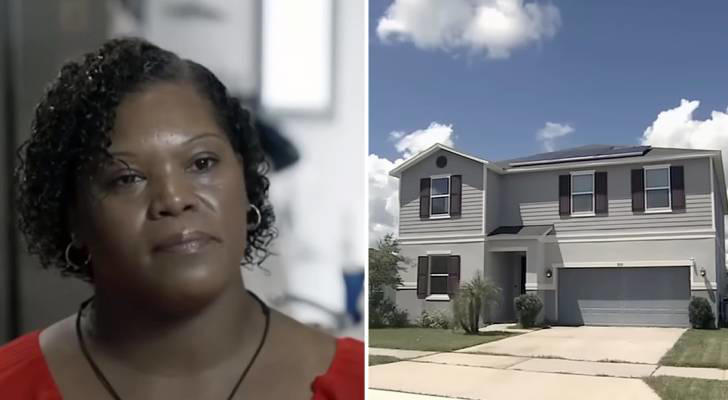

Charlotte Brown thought selling her Winter Haven, Florida, home would help her get back on solid financial footing. Instead, she says someone she didn’t know moved into the property — and has lived there rent-free for more than a year.
Brown purchased the home in 2021, drawn to the quiet setting near a stretch of forest. But her situation shifted when her fiancé developed serious health problems. As she became his full-time caregiver, expenses mounted, and by 2023 the couple decided the best option was to list the home for sale.
“I just had the opportunity to sell,” she told WFTV 9 (1). “So that was definitely a plus, especially with the increase in the market.”
Before any sale was finalized, Brown says a man she had never met moved in. She calls him a squatter and says he has remained in the house ever since without paying anything.
A deal that never closed — but the move-in still happened
After the listing went live, Brown says she found a buyer quickly: Obed Torres, a California real estate agent. According to Brown, the company handling the transaction asked for the house keys so Torres could have the carpets cleaned before moving in.
Brown says the sale soon became tangled — Torres allegedly switched title companies multiple times, and the transaction never closed. Even so, she says Torres moved into the home in spring 2024.
“It’s terrible. It’s deceitful. It’s hurtful,” Brown said.
Brown filed a report with the sheriff’s office and pursued unlawful detainer actions to remove him. But she says she didn’t fully understand the process and missed some court dates — missteps that stalled her case.
Torres, in letters to the judge, maintained he acted “in good faith” and claimed he was still working to buy the property. In another filing, he argued Brown had abandoned the home and said the dispute was causing him “duress and uncertainty.”
Why eviction wasn’t a straightforward option
Florida adjusted eviction rules in 2023 by extending notice periods and clarifying when landlords can file formal evictions. But Brown’s case doesn’t fit the usual landlord-tenant framework: she says she never rented the home to Torres, and there was no lease, agreement, or completed sale.
That’s why she had to use unlawful detainer — a separate legal pathway meant for removing someone occupying a property without permission.
At one point, Torres told the court he planned to move out. By April 2025, however, he requested more time, citing health issues.
A new law — and a shrinking timeline
WFTV 9 reporter Jeff Deal visited the property twice, first in September and again this month, attempting to speak with Torres. Each time, he heard dogs barking inside and left messages through a Ring doorbell, but no one answered. Neighbors told the station they’ve seen Torres and his family at the home.
Meanwhile, Brown says her finances have deteriorated. She couldn’t keep up with both rent and mortgage payments, and her lender has moved toward foreclosure.
Attorney Mark Lippman — who handles landlord-tenant matters, HOA issues, and real estate disputes — has taken on Brown’s case at no cost.
“His answer was garbage. The fact that he said she had abandoned the property is incorrect,” he told WFTV 9.
Brown may now have another option under Florida’s strengthened anti-squatting law, HB 621, which is designed to let law enforcement act more quickly by treating an illegal occupant as a criminal trespasser rather than a tenant. Lippman believes the tougher statute could help Brown argue that Torres is in the home without legal permission and recover the property.
What experts say can help prevent similar situations
Real estate and legal professionals stress a few basic safeguards:
- Don’t hand over keys before a sale officially closes.
- Attend every required court hearing — missing one can delay or derail a case.
- Keep detailed records of communications and documents related to the sale.
- Verify title transfers through reputable companies.
Brown’s foreclosure hearing is scheduled for January. She hopes Torres is removed and the home can be sold before time runs out.
Florida residents reported an estimated $866 million in fraud losses in 2024, according to the Federal Trade Commission (2), with real estate scams among the growing concerns.