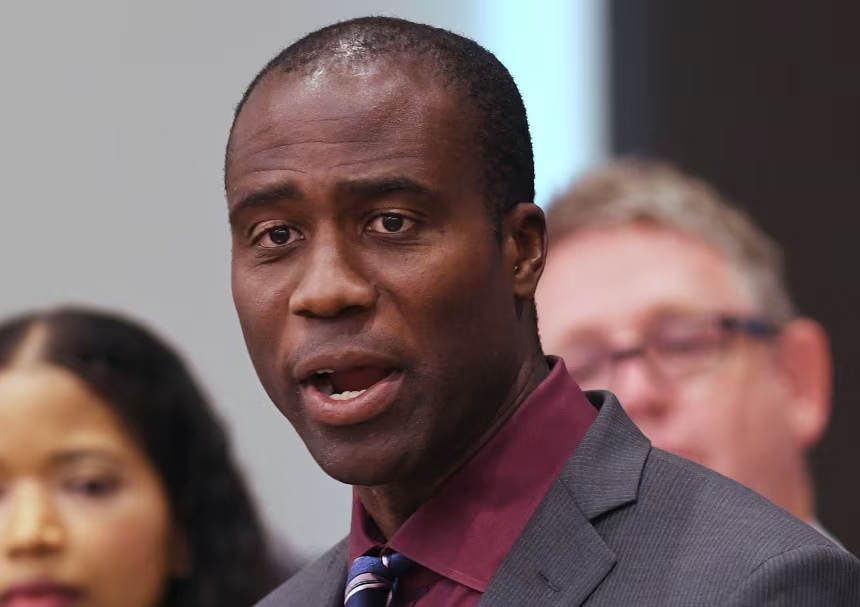

Florida Surgeon General Dr. Joseph Ladapo announced Wednesday that the state will work to end all vaccine mandates, including those required for children to attend school.
If approved, Florida would be the first state to eliminate this long-standing practice, which has been supported by the courts for decades.
Ladapo said that the Florida Department of Health will immediately end all mandates that are not required by law. Governor Ron DeSantis added that lawmakers will consider new legislation to remove any remaining vaccine rules.
Calling mandates unfair, Ladapo said, “Every vaccine mandate is wrong and drips with disdain and slavery.”
Since the 1980s, all 50 states have required schoolchildren to be vaccinated against diseases such as measles, polio, and tetanus before starting kindergarten. None of the states require the Covid-19 vaccine for school attendance.
While every state allows medical exemptions, most also permit exemptions for religious or personal beliefs. These exemptions have been increasing nationwide. Last year, a record number of kindergartners skipped required shots.
In Florida, about 5% of kindergartners had exemptions in the 2024–25 school year, according to the US Centers for Disease Control and Prevention. Nearly all were for nonmedical reasons.
Health experts worry about the risks of removing mandates.
“We are concerned that today’s announcement will put children in Florida public schools at higher risk for getting sick, which will have a ripple effect across our communities,” said Dr. Rana Alissa, president of the Florida Chapter of the American Academy of Pediatrics. She explained that vaccines make it harder for diseases to spread in classrooms and playgrounds, keeping both children and families healthier.
A CDC study found that routine childhood vaccines prevented more than 500 million illnesses, 32 million hospitalizations, and over 1 million deaths among children born between 1994 and 2003. They were also estimated to save $540 billion in direct medical costs.
Ladapo argued that vaccines should remain a personal choice.
“People have a right to make their own decisions,” he said. “What you put into your body is between you, your body, and your god. Government does not have that right.”
But other experts said personal choice must be balanced with public responsibility.
Dr. Kelly Moore, president of Immunize.org, compared vaccine requirements to safety laws like seatbelts and car seats, which are in place to protect everyone. “I believe all children in school should have the strongest defense against preventable diseases,” she said.
Ladapo noted that some mandates can be rolled back by the health department alone, but others will require lawmakers’ approval.
Experts opposing the move warned that the change is not final and could still be reversed. Since the school year has already begun, families may see the effects of lower vaccination rates.
“This timing gives leaders several months to reconsider whether this is what’s best for Florida families,” Moore said. “It’s quite likely that Floridians will have reasons to regret this decision as outbreaks disrupt learning.”
The American Medical Association also spoke out against the plan. Dr. Sandra Adamson Fryhofer, a member of the group’s board of trustees, said, “This rollback would undermine decades of public health progress and put children at higher risk for diseases such as measles, polio, and chickenpox. We urge Florida to reconsider before it leads to new outbreaks and more lives at risk.”