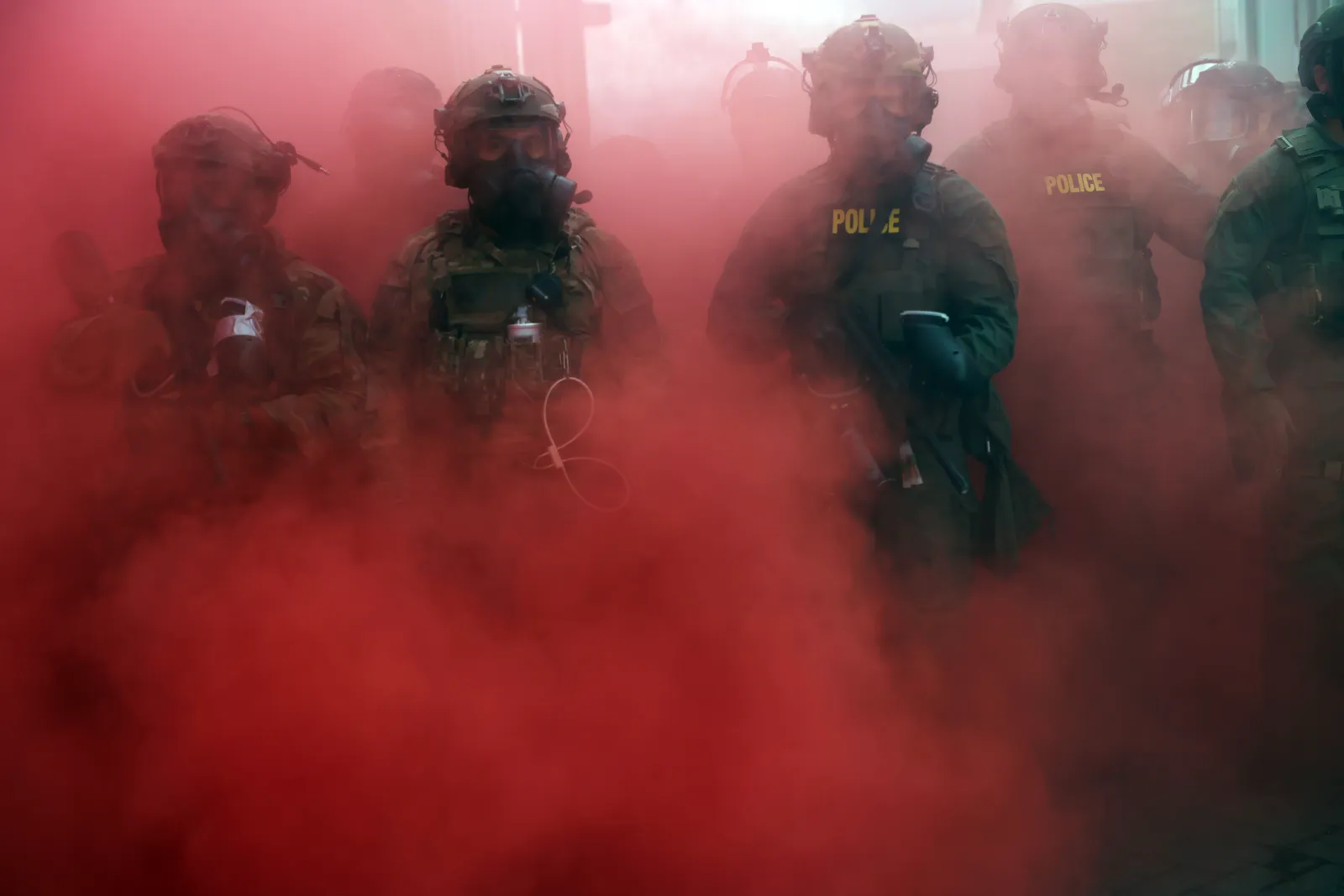

Darius Reeves, a retired immigration enforcement official who previously led ICE’s Enforcement and Removal Operations field office in Baltimore, says the tactics now being used in interior cities such as Minneapolis are a bad fit for operations far from the border—and could lead to more injuries.
“It’s going to get worse,” Reeves told Newsweek in a phone interview. “I think there are going to be a lot more people hurt.”
A spokesperson for the Department of Homeland Security, which oversees both ICE and U.S. Customs and Border Protection, defended current practices and emphasized the Border Patrol’s scope and training.
“Border Patrol’s mission includes performing sworn duties within 100 miles of U.S. borders,” the spokesperson said. “Border Patrol Agents are highly trained and required to meet the highest standards of professionalism and law enforcement capability.”
Shooting in Minneapolis sparks protests and scrutiny
The fatal shooting of 37-year-old Renée Nicole Good during a federal immigration operation in Minneapolis has set off protests nationwide and intensified demands for accountability and reform.
Good, a U.S. citizen and mother of three, was shot and killed on January 7 when ICE agent Jonathan Ross fired multiple shots into her vehicle. The Trump administration has said Good was aiming her car at the officer, while local officials say video evidence indicates she was attempting to drive away.
In the wake of the shooting, federal agencies—including ICE and the U.S. Border Patrol—have faced increased scrutiny amid additional videos and reports from Minnesota, Chicago, and Los Angeles. In several incidents, people detained during enforcement actions later said they were U.S. citizens.
The developments come as the Trump administration moves forward with a mass deportation policy that expands the role of Border Patrol in interior enforcement—raising renewed questions about oversight, training, and the likelihood of mistaken or aggressive encounters away from the border.
“A recipe for disaster”
Reeves argues that bringing Border Patrol tactics into interior cities can escalate already tense encounters.
“They brought their Border Patrol tactics with them into the interior United States, and that’s a recipe for disaster,” said Reeves, who retired in 2025.
Operations in interior cities have drawn backlash from witnesses and advocacy groups who describe heavy-handed enforcement. Reports and video footage have shown agents deploying tear gas, forcibly pulling people from vehicles, conducting frequent stops, and detaining individuals under aggressive circumstances.
Civil rights organizations have also raised allegations of racial profiling, arguing the actions disproportionately target Black, Latino, and immigrant communities.
Reeves said part of the public confusion stems from the number of federal agencies involved—and the fact that they have different missions, authorities, and training.
ICE vs. CBP: different roles, different missions
Immigration and Customs Enforcement (ICE) and Customs and Border Protection (CBP) both operate under the Department of Homeland Security, but they are separate agencies with distinct responsibilities.
ICE’s two primary law enforcement components include:
- Homeland Security Investigations (HSI): Typically focused on complex criminal investigations such as human trafficking, drug smuggling, financial crimes, and child exploitation.
- Enforcement and Removal Operations (ERO): Responsible for civil immigration enforcement in the U.S. interior, including arresting and detaining migrants with final orders of removal.
CBP is focused on border and port-of-entry security. Its largest component is the U.S. Border Patrol, which operates between official ports of entry and primarily near the U.S. border—often under different legal authorities than ICE. CBP also includes the Office of Field Operations, which staffs ports of entry such as airports and land crossings, and Air and Marine Operations (AMO), which provides aviation and maritime support.
Reeves said federal resources from agencies such as the DEA, FBI, ATF, and the U.S. Marshals Service have also been directed to assist in immigration arrests, expanding operations beyond traditional immigration enforcement lanes.
Lack of coordination can raise risk, Reeves says
Reeves warned that problems can intensify when agencies—especially Border Patrol—are used for interior immigration enforcement without clear coordination, public explanation, defined authority, and rules of engagement.
That lack of clarity, he said, can confuse the public about who is operating and increase the risk of violent encounters when Border Patrol units act deep inside the country without close coordination with ICE leadership or local law enforcement.
“They are going to operate as if they’re on the border, in the interior aspects of the United States,” Reeves said. “And you just cannot—you can’t do that.”
He added: “Any time you bring the Border Patrol from the border into the interior of the United States for any type of enforcement activity, the wheels are going to fall off.”
Reeves said ERO historically tried to avoid encounters with U.S. citizens, focusing instead on individuals with final orders of removal issued by immigration judges, fugitives from immigration court, or people wanted abroad under verified Interpol warrants.
Border Patrol agents, he said, are trained to quickly establish immigration status in border regions and may rely on tactics designed for those environments.
“Dress rehearsal” concerns and morale issues
Reeves also criticized rapid hiring across DHS—particularly within ERO—saying the push has diluted experience and professionalism. He said former colleagues describe declining morale, as well as early retirements and departures to other agencies.
“It’s taken away from our level of professionalism, it’s taken away from our level of expertise,” Reeves said.
He questioned whether a series of high-profile operations in Los Angeles, Chicago, and Minnesota could be part of a broader national strategy leading into the midterms. While he said he had no direct knowledge of internal DHS or White House discussions, he expressed concern about the direction of enforcement.
“I’ve never seen anything like this,” Reeves said. “It’s just a dress rehearsal for something else that’s coming our way.”
What DHS said in full
DHS Spokesperson told Newsweek: “Apprehensions at the U.S. border are down to a 50-year low, thanks to President Trump and Secretary Noem enforcing our nation’s immigration laws once again and empowering Border Patrol to do the job they were not allowed to do for nearly four years under the previous administration.
“Border Patrol’s mission includes performing sworn duties within 100 miles of U.S. borders. Border Patrol Agents are highly trained and required to meet the highest standards of professionalism and law enforcement capability. Many of our agents have backgrounds in the military or local law enforcement and Border Patrol agents receive extensive federal law enforcement training, at FLETC training centers, just as ICE officers do. The disgusting attempts by the media to say these agents are not trained to enforce the law is shameful and laughable.
“We are not going to risk operational security and confirm the exact number of agents, Border Patrol or otherwise, that are working across the U.S. to keep Americans safe from drug traffickers, murders, pedophiles and gang members in our communities.”