
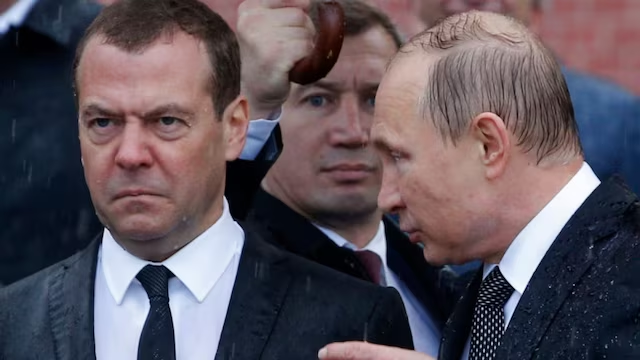

In the wake of U.S. airstrikes on three Iranian nuclear facilities, former Russian President Dmitry Medvedev warned that “a number of countries are ready to directly supply Iran with their own nuclear warheads,” escalating fears of a broader global fallout.
The U.S. strikes, conducted on Sunday, targeted Iran’s Fordo, Natanz, and Isfahan nuclear sites using B-2 bombers, 30,000-pound bunker-busting bombs, and submarine-launched Tomahawk cruise missiles. The coordinated operation, which lasted under 30 minutes, reportedly caused major structural damage including collapsed tunnels and massive craters—but a full damage assessment is still pending.
President Donald Trump claimed the facilities were “obliterated,” but recently released satellite images appear to contradict that assertion, showing signs of structural damage but no confirmation of total destruction.
Though U.S. officials insist the mission was limited to degrading Iran’s nuclear capabilities, Trump appeared to signal broader intentions. In a social media post, he suggested the idea of regime change:
“It’s not politically correct to use the term, ‘Regime Change,’ but if the current Iranian Regime is unable to MAKE IRAN GREAT AGAIN, why wouldn’t there be a Regime change??? MIGA!!!”
Despite Trump’s remarks, administration officials have downplayed the notion that toppling the Iranian government is a goal. Defense Secretary Pete Hegseth said, “The mission was not and has not been about regime change.” Vice President JD Vance echoed that message in an interview with NBC, saying, “We don’t want a regime change.”
Iran has yet to formally respond to the attack, though tension in the region remains high. In the meantime, Russia has moved quickly to position itself as a potential ally to Tehran.
Kremlin spokesperson Dmitry Peskov stated, “We have offered our mediation efforts. This is concrete. We have made our position clear, which in itself is a significant form of support for Iran. What happens next will depend on Iran’s needs.”
But it was Medvedev’s comment about nuclear weapons that drew the most alarm. While no countries were named, his assertion that states are prepared to supply nuclear warheads to Iran could mark a dangerous new phase in global nuclear proliferation.
China—another strategic partner to Iran—has remained relatively quiet. Analysts suggest Beijing may reevaluate its alliance with Tehran if oil shipments from Iran are disrupted, a critical concern amid China’s growing energy demands.
As the world waits for Tehran’s next move, fears of further escalation remain high, with diplomatic efforts hanging in the balance and new nuclear threats entering the conversation.


