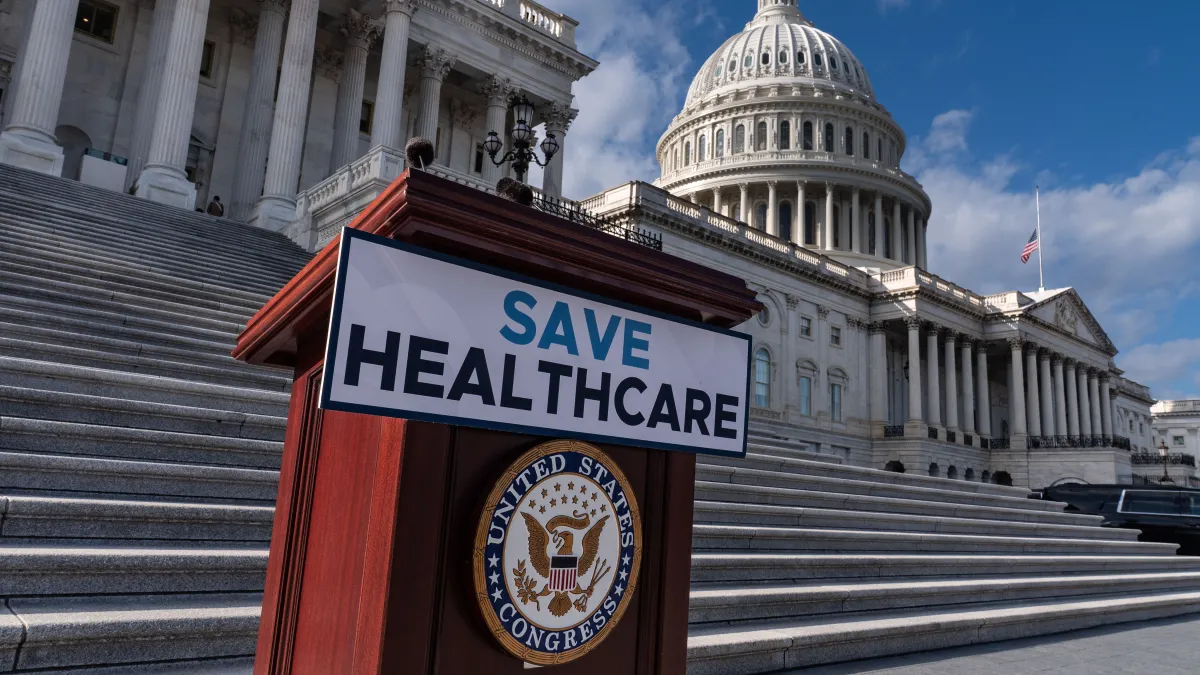

Millions of Americans are preparing for steep increases in their health insurance premiums after enhanced tax credits that helped keep coverage affordable expired at the start of the year.
The issue sparked weeks of political brinkmanship in Washington. Democrats pushed aggressively to extend the subsidies, moderate Republicans warned of electoral fallout, and President Donald Trump briefly floated a potential compromise before retreating amid conservative opposition. Ultimately, no agreement was reached before the deadline passed.
Lawmakers may get another opportunity when the House is expected to take up the issue in January, but the outcome remains uncertain.
The lapse affects a broad and diverse group of people who buy their own insurance and do not qualify for Medicaid or Medicare. That includes self-employed workers, freelancers, small business owners, farmers, and ranchers — many of whom rely on the Affordable Care Act marketplaces for coverage.
The timing is politically sensitive. With midterm elections approaching, affordability — especially health care costs — ranks among voters’ top concerns.
According to an analysis by health policy nonprofit KFF, more than 20 million subsidized Affordable Care Act enrollees are facing average premium increases of 114% in 2026.
“It really bothers me that the middle class has moved from a squeeze to a full suffocation, and they continue to just pile on and leave it up to us,” said Katelin Provost, a 37-year-old single mother whose health insurance costs are set to surge. “I’m incredibly disappointed that there hasn’t been more action.”
Families See Premiums Double — or Worse
The expanded subsidies were introduced in 2021 as a temporary pandemic-era measure and later extended, with an expiration date set for the beginning of 2026. Under the program, some lower-income enrollees paid no monthly premiums, while higher earners were capped at spending 8.5% of their income on coverage. Eligibility was also broadened for many middle-class households.
With those protections gone, rising premiums are colliding with broader increases in U.S. health care costs, pushing out-of-pocket expenses even higher.
Some enrollees are absorbing the increases. Stan Clawson, a freelance filmmaker and adjunct professor in Salt Lake City, said his monthly premium is jumping from just under $350 to nearly $500. The 49-year-old, who lives with paralysis from a spinal cord injury, said the cost is painful but unavoidable.
Others face far more dramatic increases. Provost, a social worker, said her monthly premium is climbing from $85 to nearly $750 — a jump she says is simply unsustainable.
Enrollment Impact Still Unclear
Health policy experts have long warned that letting the subsidies expire could push millions — particularly younger and healthier Americans — to drop coverage altogether. Over time, that shift could make insurance even more expensive for older and sicker enrollees who remain.
A study released last September by the Urban Institute and the Commonwealth Fund estimated that 4.8 million people could lose coverage in 2026 due to higher premiums.
However, enrollment effects are still unfolding. Open enrollment continues through Jan. 15 in most states, leaving some uncertainty about how many people will ultimately opt out.
Provost said she is hoping Congress revives the subsidies early in the year. If not, she plans to drop her own coverage and keep insurance only for her four-year-old daughter, saying she can’t afford both at current prices.
Months of Debate, Little Relief
The subsidy debate followed last year’s passage of a sweeping tax and spending bill that included more than $1 trillion in cuts to federal health care and food assistance programs. Democrats repeatedly pushed to extend the Affordable Care Act tax credits, while Republicans acknowledged the problem but delayed action.
In December, the Senate rejected two competing proposals: a Democratic bill to extend the subsidies for three years and a Republican alternative focused on expanding health savings accounts.
In the House, four centrist Republicans joined Democrats to force a vote on a three-year extension that could happen as soon as January. Even if it passes, the measure faces long odds in the Senate.
For Americans watching their premiums skyrocket, the political stalemate feels disconnected from daily reality.
Many say restoring the subsidies should be paired with deeper reforms to address the underlying cost of health care.
“Both Republicans and Democrats have been saying for years, ‘Oh, we need to fix it.’ Then do it,” said Chad Bruns, a 58-year-old Affordable Care Act enrollee in Wisconsin. “They need to get to the root cause, and no political party ever does that.”