
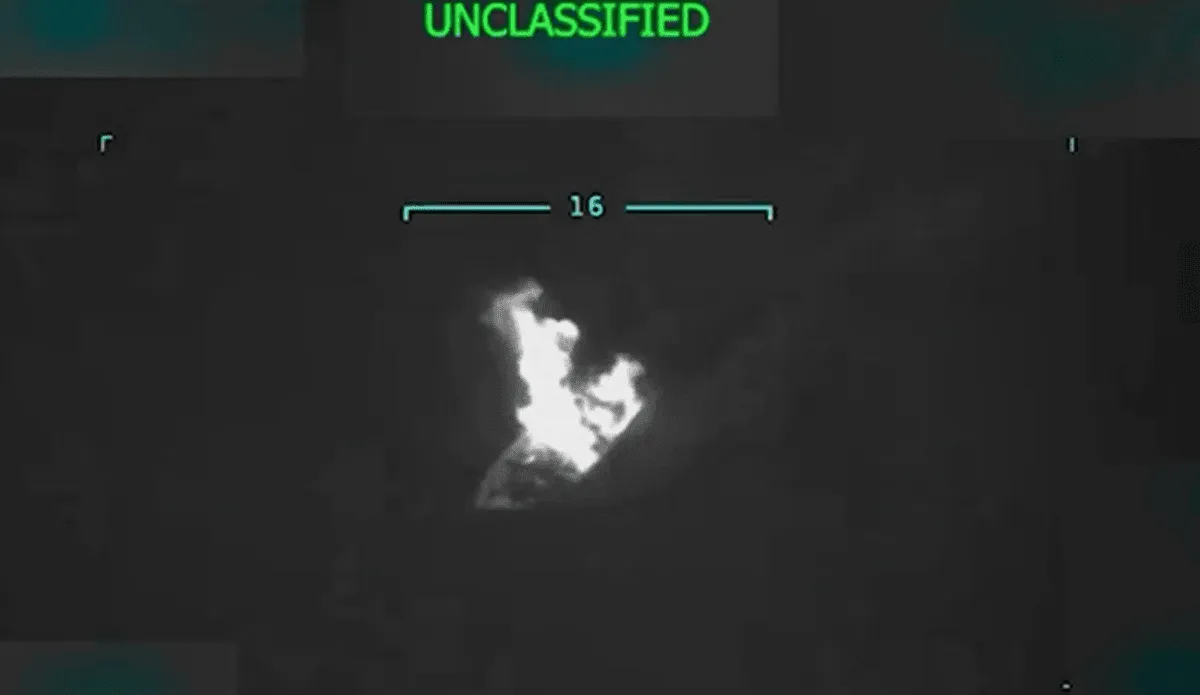

Defense Secretary Pete Hegseth’s claim that he watched the first U.S. military strike on an alleged drug boat in real time three months ago is facing renewed scrutiny, as lawmakers seek more information about a campaign that has triggered serious legal concerns and months of controversial operations.
Appearing on Fox News shortly after the September 2 strike, which was announced by President Donald Trump, Hegseth said: “I watched it live.”
Why It Matters
Hegseth’s comments have intensified questions about how directly involved he was in an operation that has drawn bipartisan interest and demands for stronger congressional oversight. Key details of how the first lethal strike in the southern Caribbean unfolded remain unclear.
The September 2 mission marked the beginning of the Trump administration’s apparent campaign against suspected narcotrafficking boats in both the southern Caribbean and the eastern Pacific. By the administration’s own figures, more than 20 strikes have been carried out, leaving at least 83 people dead.
For months, these operations have raised alarms that targeting alleged drug boats may run afoul of U.S. and international law. Some observers and former officials, including ex-military lawyers, worry that U.S. personnel could face legal exposure in the future for their roles in the strikes.
Observers have also increasingly framed the campaign as part of a broader effort to pressure — and potentially unseat — Venezuela’s leader, Nicolas Maduro. The strikes have coincided with a significant U.S. military buildup off Venezuela’s coast, and Trump has declined to rule out ground operations in the country.
What To Know
The Washington Post reported last week that Admiral Frank Bradley, now the head of U.S. Special Operations Command (USSOCOM), ordered a second strike on the first alleged drug vessel targeted by the U.S. in the southern Caribbean after an initial strike left two survivors. The outlet reported that Hegseth issued a verbal order to kill everyone on board.
Hegseth has denounced the story as “fake news” and called it “fabricated, inflammatory, and derogatory.” Trump has said he would not have supported a second strike on the vessel and that Hegseth denied ordering the deaths of the two survivors.
Shipwrecked individuals are granted specific legal protections, and there are significant concerns that survivors of the initial strike may have been legally protected from further attack.
The White House said on Monday that Hegseth had authorized Bradley to conduct the strikes and that the admiral “worked well within his authority and the law.” In a separate statement, Hegseth offered full support for Bradley, calling him “an American hero, a true professional.”
The New York Times reported on Monday that Hegseth had ordered a strike designed to kill those on the boat and destroy the vessel before the U.S. military carried out the mission. Citing five anonymous U.S. officials, the Times reported that Hegseth’s instructions did not specify what should happen if the first missile failed to sink the boat or kill everyone aboard.
According to the report, the order was not a reaction to footage showing at least two survivors from the initial strike.
Trump posted video footage, said to show the strike, on his Truth Social account on September 2, stating that all 11 people on board were killed. The 29-second edited clip does not appear to show any second strike.
Republican Senator Roger Wicker of Mississippi, who chairs the Senate Armed Services Committee, and Senator Jack Reed of Rhode Island, the panel’s top Democrat, issued a joint statement on Friday calling for “vigorous oversight” and pledging that the committee would “determine the facts related to these circumstances.”
In the House, Republican Representative Mike Rogers, who leads the Armed Services Committee, and the committee’s top Democrat, Representative Adam Smith, have likewise promised “rigorous oversight of the Department of Defense’s military operations in the Caribbean.”
Despite bipartisan concern, the Senate failed last month to impose new checks on the administration’s actions, even after lawmakers from both parties pressed for more information on the legal and strategic basis for the strikes. The administration has provided limited evidence to support its claims that it is targeting drug boats and has frequently declined to clarify who exactly was on board the vessels.
What People Are Saying
On Monday, Hegseth reiterated his backing of Admiral Bradley, saying: “I stand by him and the combat decisions he has made—on the September 2 mission and all others since.”
What Happens Next
Bradley is scheduled to brief lawmakers in a classified session on Thursday, where he is expected to face detailed questions about the strikes and the orders under which they were carried out.


