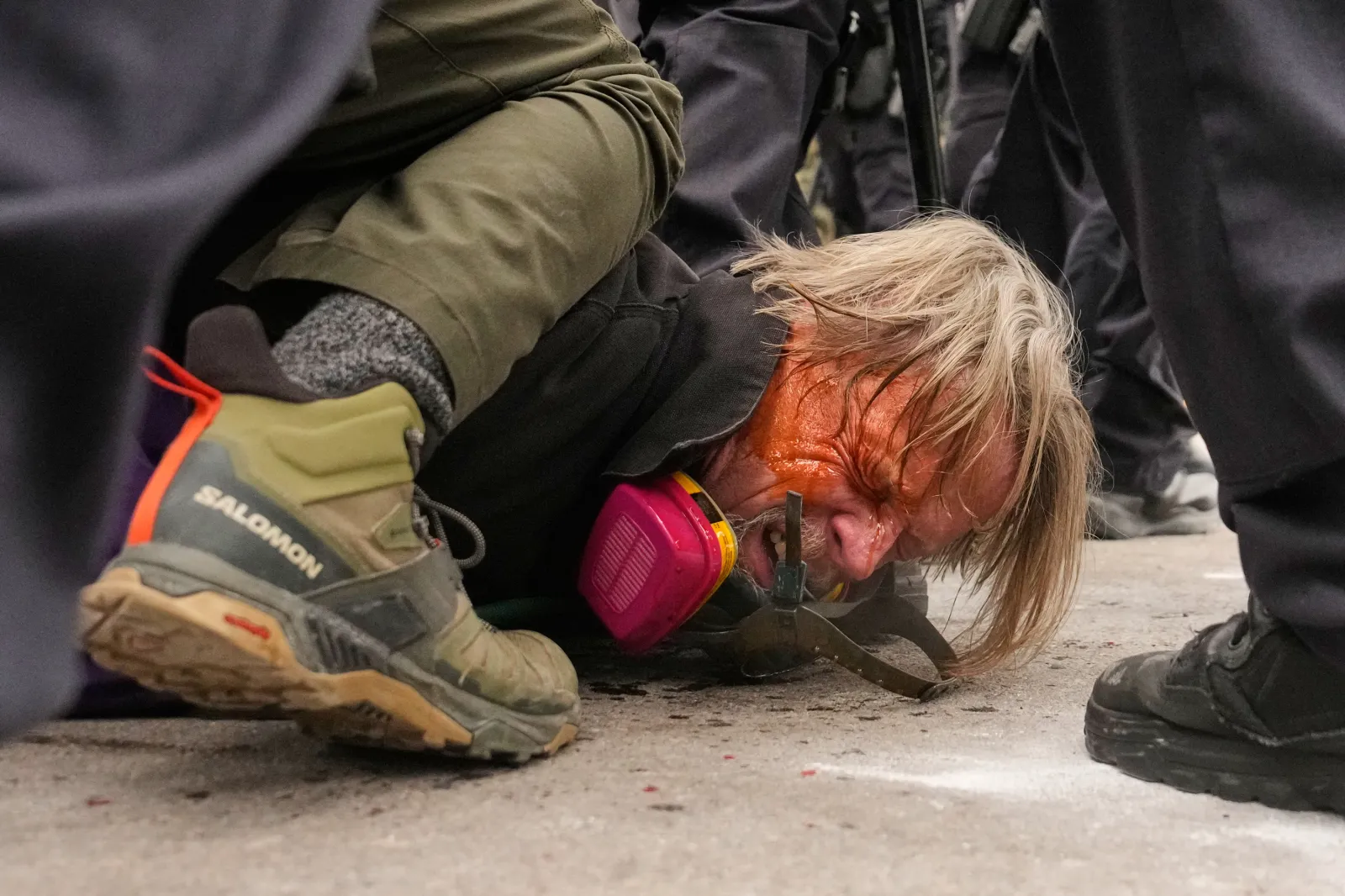

Ongoing removal operations by Immigration and Customs Enforcement (ICE) can create an “elevated risk” for state and local law enforcement officers, labor union officials said Thursday, arguing that fast-moving federal actions may blur lines of authority in the public’s eyes.
Federal immigration enforcement efforts in Minneapolis and other U.S. cities can be especially challenging for patrol officers when operations trigger “public confusion about who is acting under what authority,” New England Police Benevolent Association spokesman David Ginisi said in a statement.
“In recent months, there has been increased public tension and volatility around immigration enforcement efforts nationwide, amplified by social media and by public debate over tactics and transparency,” Ginisi said. “When federal operations are highly visible, conducted rapidly, or perceived as opaque, that tension can spill into the broader public safety environment, including toward municipal and state officers who are simply doing routine policing.”
Ginisi warned that the added threat is most acute in communities where residents may not readily distinguish local police responding to routine calls or traffic stops from federal agents carrying out targeted operations.
“That confusion is not theoretical,” he said. “It can raise the risk of confrontation, hostility or retaliatory behavior directed at local officers who are not involved in federal enforcement activity at all.”
Calls for clearer identification and coordination
Ginisi said better coordination with local departments—and clear identification by federal personnel—could reduce safety risks.
“When enforcement is conducted without clear identification, it creates space for misinformation and impersonation, both of which increase danger for everyone, including local police,” he said. “The safer standard is obvious: enforcement personnel should be clearly identifiable, operating with visible markings and recognizable authority.”
Ginisi also urged more disciplined public messaging, criticizing Philadelphia Sheriff Rochelle Bilal, who has previously denounced ICE officers as “fake, made-up law enforcement” and vowed to arrest those who act unlawfully.
“When elected officials and public figures characterize enforcement personnel in sweeping terms, particularly language that suggests ‘fake law enforcement,’ it can unintentionally increase the risk of hostility toward anyone in uniform, including patrol officers,” he said. “The disagreement over policy can be vigorous without encouraging rhetoric that undermines legitimacy, fuels confusion, or escalates resentment.”
The New England Police Benevolent Association—which represents more than 5,000 members across Massachusetts, New Hampshire, Maine, Rhode Island and Vermont—has emphasized internally that local officers should not be placed in the middle of federal policy disputes, Ginisi added.
“Politics and public debate should never endanger patrol officers who are serving their communities,” he said. “If immigration enforcement operations are carried out in ways that increase confusion, tension, or misinformation, then yes, that can increase risk for local law enforcement, and the response must be to improve transparency, coordination, and identification, not escalate rhetoric.”
Trump floats Insurrection Act as protests intensify
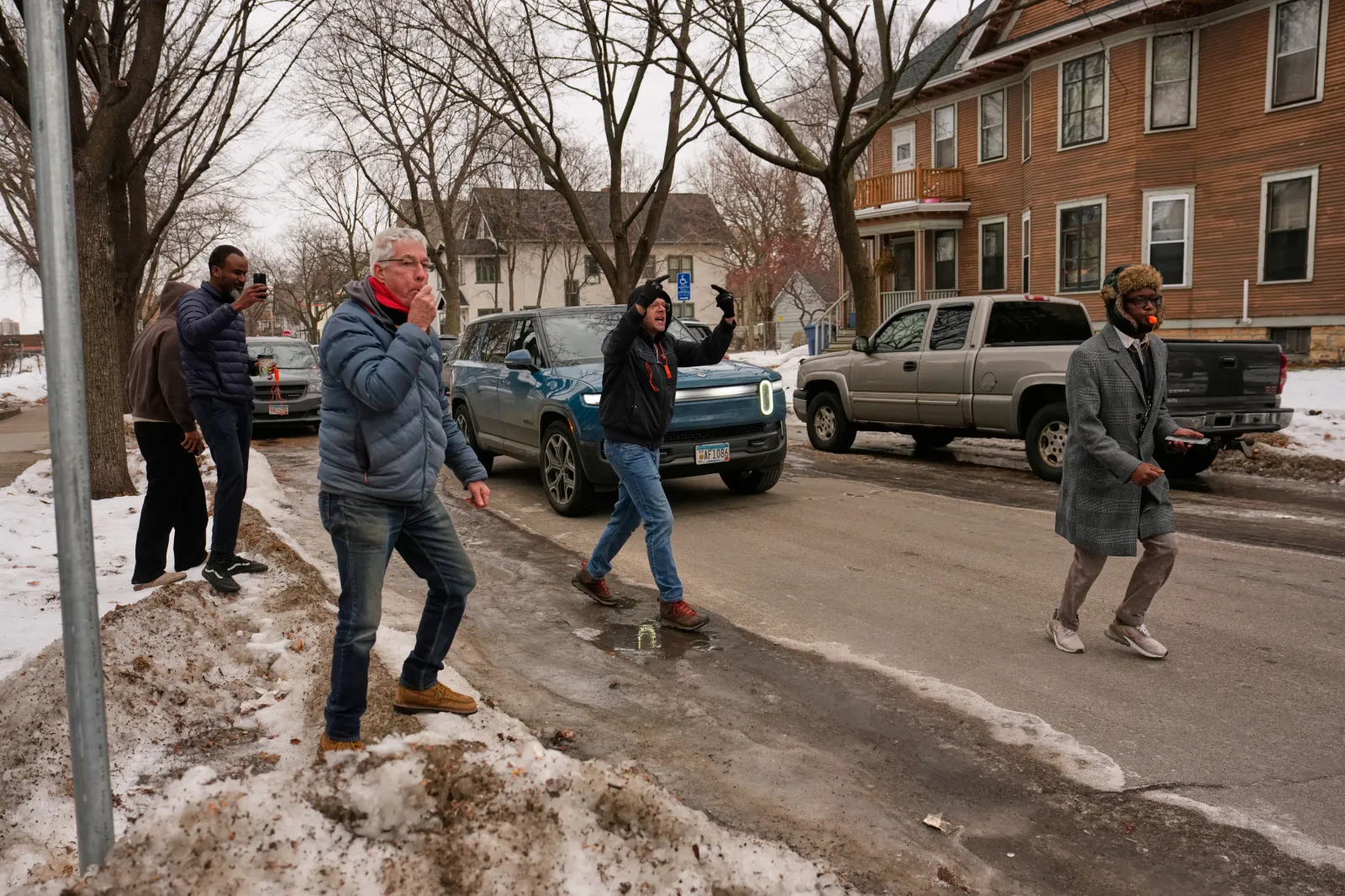
President Donald Trump on Thursday threatened to invoke the federal Insurrection Act to quell ongoing protests in Minneapolis following two incidents: a Venezuelan man being shot in the leg during an attempted traffic stop late Wednesday, and the fatal shooting of Renee Nicole Good by ICE officer Jonathan Ross on January 7.
Trump urged the “corrupt politicians of Minnesota” to stop “professional agitators and insurrectionists” from attacking ICE officers as they carried out removal operations. The comments came as the American Civil Liberties Union of Minnesota filed a lawsuit Thursday alleging violations of residents’ rights.
White House spokeswoman Abigail Jackson rejected Ginisi’s contention that ICE actions can increase risks for local officers.
“This is an absurd argument,” Jackson said in a statement. “The Trump administration is enforcing federal law and removing dangerous criminal illegal aliens from communities, many with convictions for murder, assault, rape, and trafficking. Arresting criminals does not ‘create risk,’ rather, Democrat activists — who lie about ICE officers and encourage individuals to interfere in law enforcement operations — create risk.”
Minnesota police representative cites political pressure
Kevin Rofidal, spokesman for the Minnesota Fraternal Order of Police, said the current tension in Minneapolis—and what officers may face during everyday encounters—“falls directly on politicians,” pointing to Governor Tim Walz. Walz urged residents to peacefully protest federal agents Wednesday, shortly before an ICE officer shot a Venezuelan man authorities said attacked him with a shovel and broom handle.
“Is the temperature hot? Of course it is,” Rofidal said during an interview Thursday. “But you know, it’s been a lot of elected officials … this is just 2020 on repeat for us.”
The murder of George Floyd in Minneapolis in May 2020 sparked nationwide protests against police brutality and systemic racism, heightening political pressure on law enforcement. Rofidal said individuals currently being taken into custody by ICE during large-scale operations should be treated as “very dangerous.”
“They’re not doing wide sweeps like is being reported on social media, they’re not taking people that don’t have criminal histories,” Rofidal said of ICE officers. “Not that they won’t — but right now, they have thousands of people who have been issued final removal orders and didn’t show up, and nobody for years went looking for them.”
Rofidal said it’s “hard to say” whether Minnesota officers face added safety risks from federal immigration actions, but suggested operations could be safer with marked police vehicles and uniformed officers involved. He also urged Walz to rein in what he described as “inflammatory” remarks.
“2020 is being repeated, where the local politicians here are making things worse,” Rofidal said. “And then when things go bad, they’re not being held accountable.”
A message seeking comment from Walz’s office was not immediately returned Thursday.
National law enforcement groups weigh in
The Fraternal Order of Police, which represents more than 382,000 members, did not return a request for comment. Its president, Patrick Yoes, issued a statement earlier this week calling on Americans to support officers while condemning what he described as “reckless public statements” by political leaders and activists.
“Every day, law enforcement officers — local, state, and federal — across the country perform their duties with selflessness, professionalism and courage, often under immense pressure and in rapidly evolving situations,” Yoes said. “It is essential that we support these vital activities, which are critical to upholding the rule of law and maintaining public safety.”
Betsy Brantner Smith, spokeswoman for the National Police Association, said recent shooting incidents involving ICE agents can carry broader safety implications—including the risk that other officers might be misidentified by the public as federal immigration officials.
“This vilification and demonization of federal agents of course bleeds down to all law enforcement,” she said. “It can endanger everyone in the profession. It’s less of a problem in non-sanctuary jurisdictions, where local law enforcement is cooperating with federal law enforcement and there aren’t the violent riots that we’re seeing in Minneapolis, and that we saw before in Los Angeles or Portland.”