
Federal judges in Oregon, Minnesota and Pennsylvania sharply criticized the Trump administration’s immigration enforcement approach this week, pointing to warrantless arrests, expansive detention efforts and, in one case, what a jurist described as needless spending and strain on the courts.
The decisions, issued on Wednesday, reflect growing judicial skepticism toward the government’s efforts to widen the scope of Immigration and Customs Enforcement (ICE) operations nationwide.
Oregon
In Oregon, U.S. District Judge Mustafa T. Kasubhai—appointed by then-President Joe Biden in 2024—issued a broad preliminary injunction blocking federal immigration officers from making warrantless civil immigration arrests unless they first conduct an individualized assessment that a person is likely to flee before a warrant can be obtained, according to court filings.
The order, issued Tuesday in a case brought by two immigrants, found “ample evidence” that federal agents had engaged in a pattern and practice of disregarding statutory limits on their arrest authority. Judge Kasubhai said ICE officers in the state routinely carried out warrantless arrests without the case-by-case determination federal law requires.
“Ample evidence in this case demonstrates a pattern and practice in Oregon that amounts to final agency action of executing warrantless arrests without individualized determinations of flight risk,” Judge Kasubhai wrote.
The ruling also rejected the government’s position that broader enforcement circumstances could justify bypassing warrants. Judge Kasubhai emphasized that federal law permits warrantless immigration arrests only when officers have probable cause to believe a specific individual is likely to flee before a warrant can be secured—not based on generalized assumptions or operational convenience.
Beyond halting the arrests, the judge provisionally certified a class of people arrested in Oregon without warrants and without individualized escape-risk assessments dating back to September 2025. He also imposed reporting requirements on ICE, directing agents to document the specific facts supporting any future warrantless arrest.
That documentation must include details such as the arrest location, the person’s known ties to the community and the precise facts supporting a conclusion that escape was likely.
Judge Kasubhai denied the government’s request to limit those records to attorneys’ eyes only, ruling they would instead be governed by an existing protective order. He also waived the usual bond requirement for injunctions, finding the balance of equities and the public interest favored relief.
“Actions speak louder than words. There is zero evidence that the Trump Administration has stopped the profiling and mass deportation of non-criminal immigrants without due process,” Javad M. Khazaeli, founding partner at Khazaeli Wyrsch, LLC, former ICE national security prosecutor, told Newsweek.
Minnesota
In Minnesota, U.S. District Judge Susan Richard Nelson—appointed by then-President Barack Obama in 2010—ordered the immediate release of a longtime U.S. resident after finding immigration authorities lacked lawful authority to detain him.
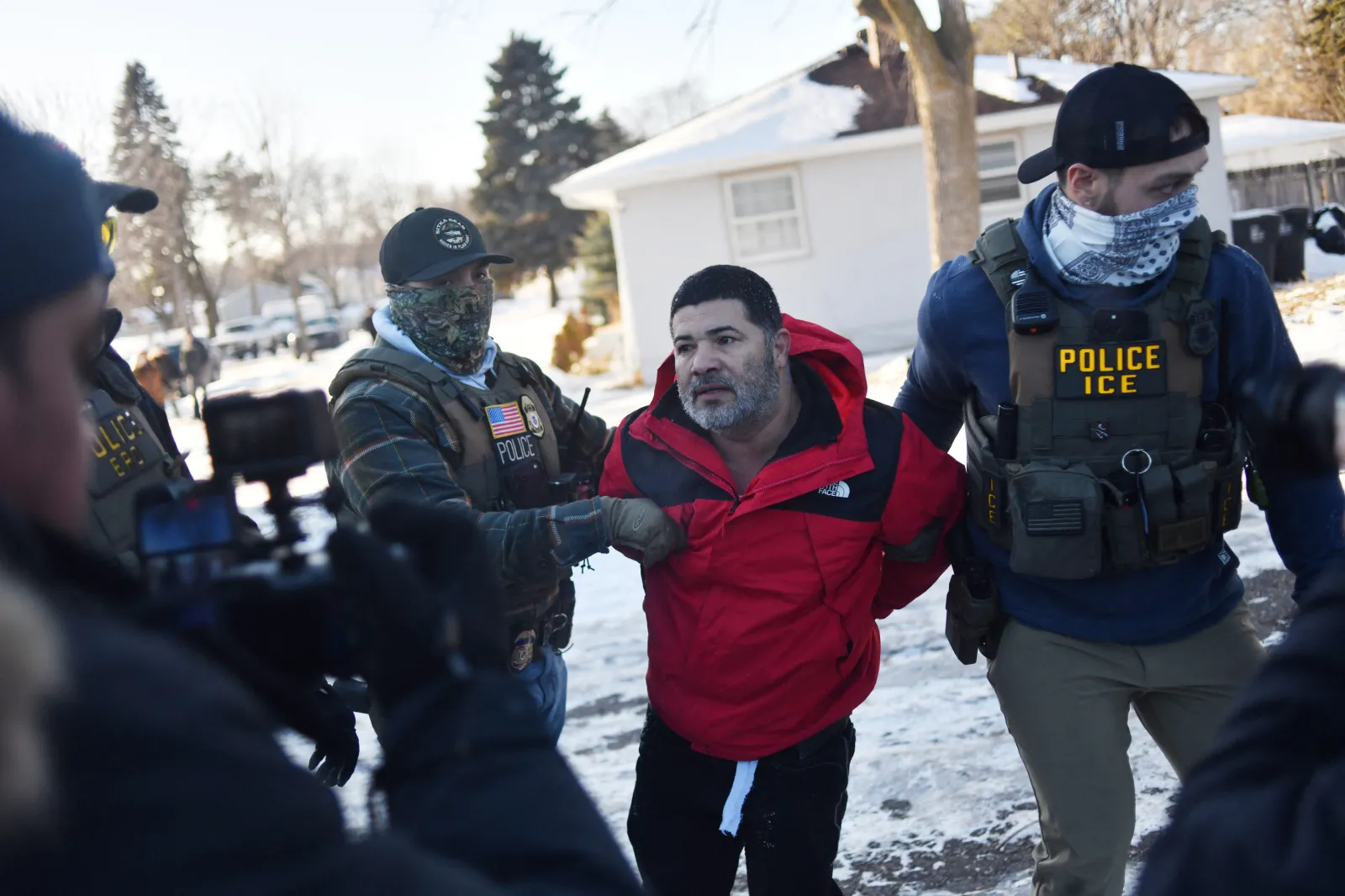
The case involved a Mexican citizen who has lived in the United States since 1988 and resides in St. Paul, Minnesota. Court filings say he has a pending green card application and serves as the authorized caregiver for his 87-year-old father. He alleged masked ICE agents arrested him without a warrant on January 4 as he was leaving a family member’s home with his father, and then detained him at the Freeborn County Jail in southern Minnesota, according to court documents.
Judge Nelson rejected the government’s argument that the man was subject to mandatory detention under a recent Department of Homeland Security interpretation of immigration law. Instead, she reiterated that noncitizens already residing in the United States are generally detained, if at all, under a statutory provision requiring a warrant.
Concluding the detention lacked legal authority, Judge Nelson said release—not merely a bond hearing—was required. She ordered federal officials to free the man within 48 hours, return his personal and immigration documents, and barred the government from re-detaining him under the same legal theory unless circumstances materially changed.
Pennsylvania
In Pennsylvania, a federal judge delivered a blunt rebuke of ICE while ordering the release of a Brazilian asylum seeker detained in Philadelphia.
The decision came from the United States District Court for the Eastern District of Pennsylvania, where Judge Harvey Bartle III—appointed by President George H.W. Bush in 1991—granted a petition for a writ of habeas corpus filed by Guilherme Coelho Lopes, who had been held at the Philadelphia Federal Detention Center.
“Despite hundreds of similar rulings in this and other courts resoundingly in favor of the ICE-detainee petitioners ICE continues to act contrary to law, to spend taxpayer money needlessly, and to waste the scarce resources of the judiciary,” Judge Bartle wrote.
Lopes, a citizen of Brazil, entered the United States with his wife and two children in late 2023 and was released on parole while his immigration case proceeded, according to court filings reviewed by Newsweek.
Since then, he has lived in Philadelphia, worked in construction and pursued an asylum claim based on fears of persecution in Brazil, according to court documents. His children, now 10 and 4, are enrolled or preparing to enroll in local schools.
Court filings state that ICE arrested Lopes in January during a routine check-in appointment, taking him into custody in front of his wife and children. The agency argued he was subject to mandatory detention under a recent policy interpretation treating certain noncitizens already living in the United States as “applicant[s] for admission,” a classification that would bar them from seeking bond.
Judge Bartle rejected that argument, finding the mandatory detention statute applies only to noncitizens who are newly arriving—not those already living in the country. Citing more than 100 similar decisions in the Eastern District of Pennsylvania, he ruled Lopes was detained under the wrong statute without a bond hearing, violating federal law, and ordered his release as unlawful.