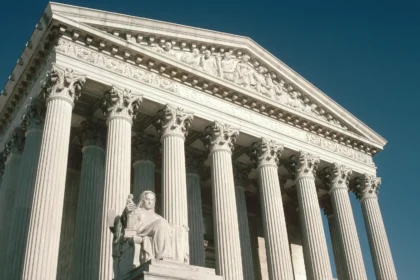

The majority of the big tariffs President Donald Trump put in place during his second term are facing a final test. This test will decide whether he can keep these tariffs and whether businesses could get huge refunds.
This comes after a federal appeals court ruled on Friday that Trump wrongly used the International Emergency Economic Powers Act (IEEPA) to impose wide-ranging duties on other countries. Trump had used these powers to set import taxes as high as 50% on India and Brazil, and up to 145% on China earlier this year.
By August 24, American businesses had paid over $210 billion in tariffs that courts now say are illegal. On Tuesday, Trump admitted that if the Supreme Court upholds the decision, the U.S. Treasury might have to “give back” the tariff money.
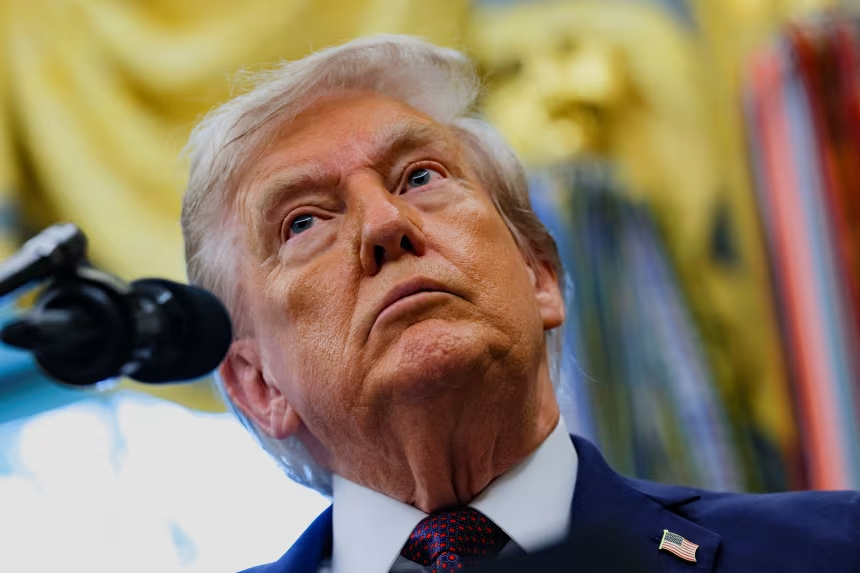
Trump told reporters that his administration is preparing to appeal to the Supreme Court, possibly as soon as Wednesday. He wants the tariffs to stay in place past the October 14 deadline the appeals court set.
“It’s a very important decision, and frankly, if they make the wrong decision, it would be a devastation for our country,” Trump said.
The Supreme Court may decide not to hear Trump’s appeal and let the lower court’s decision stand. If that happens, American businesses could get that money back. But it might not be a fast or easy process.
It’s not over yet
The Supreme Court will likely take the case during its next term, which starts next month. The tariffs might stay in effect while the appeal is ongoing, said Ted Murphy, an international trade lawyer at Sidley Austin.
If the Supreme Court also finds that Trump didn’t have the legal power under IEEPA to impose tariffs, the government would have to stop collecting them immediately. How refunds would work is still unclear, Murphy said.
The government could refund all importers who paid the tariffs, or it could apply only to the named plaintiffs, meaning other businesses might have to take legal action to get their money. Murphy thinks the most likely solution is an administrative refund process, where businesses would need to request the money back.
The Treasury Department, which holds the tariff revenue, declined to comment on how refunds would be handled.
When a three-judge panel at the U.S. Court of International Trade first ruled in May that Trump’s tariffs under IEEPA were illegal, trade attorney Thomas Beline said he immediately got calls from clients asking, “When can I have my money back?” His answer: don’t expect it soon.
He’s been helping clients file administrative protests with U.S. Customs and Border Protection for tariff payments. This stops the entries from fully settling, which could make it easier to get refunds later. Some clients have even been approached by investment firms wanting to buy their potential refunds.
It’s a risk. Businesses want immediate cash, but they also risk not getting the full refund if they act too soon.
The downsides of tariff refunds
Even though businesses might be happy about refunds, it could create problems for the economy.
The hundreds of billions of dollars the Treasury has from tariffs means the government borrowed less money than usual. If it has to refund tariffs, it might need to borrow more, which could push up borrowing costs across the economy.
The U.S. might sell more Treasury bonds, which could raise yields—the interest the government pays investors. On Wednesday, the 30-year Treasury bond yield briefly hit 5%, its highest since July.
“If this ruling is upheld, refunds of existing tariffs are on the table, which could cause a surge in Treasury issuance and yields,” said Ed Mills, a Washington policy analyst at Raymond James.
Refunds could also fuel inflation, Gary Hufbauer, a senior fellow at the Peterson Institute for International Economics, told CNN.
“During the Biden administration, big budget deficits and loose monetary policies caused high inflation,” he said.
Under Trump, the budget deficit has continued to grow, even with the extra tariff money. Trump has tried to lower interest rates by criticizing the Federal Reserve and attempting to replace Fed officials with allies who might influence rate decisions.
If interest rates drop while large tariff refunds are being paid, Hufbauer warned it could remind investors of the high inflation seen during the Biden years.