
President Donald Trump issued a blunt ultimatum to global allies on Sunday, demanding that nations heavily reliant on Middle East crude deploy warships to the Strait of Hormuz to secure a maritime artery currently choked by the escalating conflict with Iran.
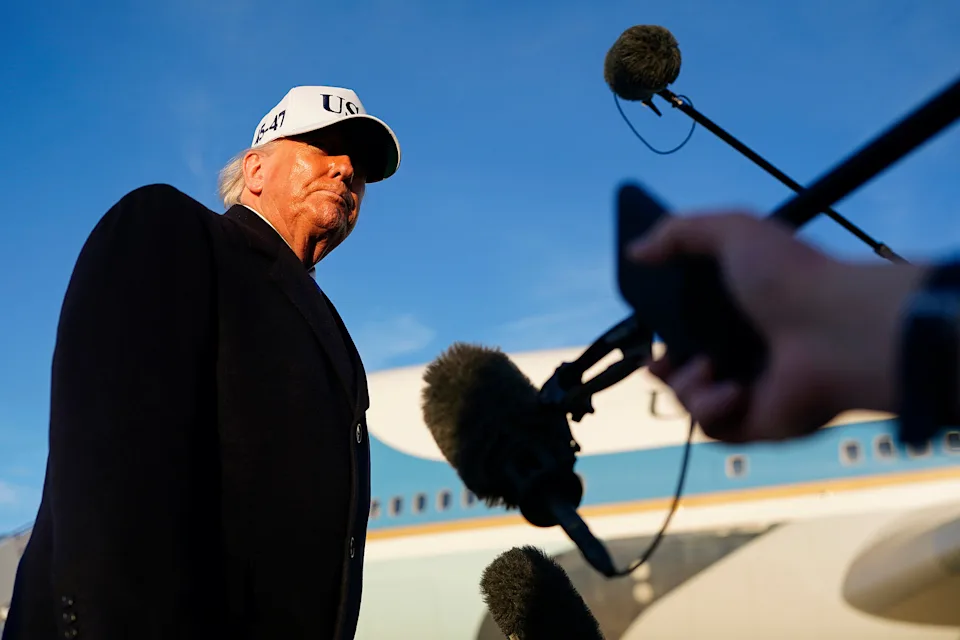
Speaking to reporters aboard Air Force One during his return from Florida, the President revealed he has “demanded” that approximately seven countries join a U.S.-led coalition to police the waterway. The demand comes as the war enters a volatile new phase, with global oil prices surging and Tehran maintaining a strategic stranglehold on one-fifth of the world’s traded oil.
“I’m demanding that these countries come in and protect their own territory, because it is their own territory,” Trump said, arguing that the United States no longer requires the shipping channel due to domestic energy independence. “It would be nice to have other countries police that with us, and we’ll help. We’ll work with them.”
Allies Hesitant Despite Soaring Energy Costs
Despite the President’s pressure, international commitments remain elusive. While the administration has previously appealed to China, Britain, France, Japan, and South Korea, no nation has yet pledged a naval presence.
- United Kingdom: Prime Minister Keir Starmer reportedly expressed concerns about placing British aircraft carriers “into harm’s way,” a stance Trump addressed directly: “Whether we get support or not… I said to them: We will remember.”
- Germany: Foreign Minister Johann Wadephul explicitly ruled out participation, stating, “Will we soon be an active part of this conflict? No.”
- France: President Emmanuel Macron signaled a preference for an international escort mission only once “circumstances permit” and active hostilities subside.
In a move to stabilize markets, the International Energy Agency (IEA) announced Sunday it would release nearly 412 million barrels from emergency stocks—the largest collective action in the organization’s history.
Conflict Escalates: Strikes on Dubai and Tehran
The geopolitical tension is matched by intensifying military action across the region. On Sunday, Dubai International Airport—the world’s busiest—temporarily suspended flights after a drone strike ignited a fuel tank.
Tehran has justified its regional aggression by claiming, without evidence, that recent U.S. strikes on Iran’s Kharg Island oil terminal were launched from the United Arab Emirates (UAE). The UAE has vehemently denied these claims, asserting it does not allow its territory to be used for offensive operations against Iran.
In Tehran, the human cost of the conflict is becoming visible. Following U.S.-Israeli strikes on Friday, journalists were shown a destroyed police station and damaged residential blocks in the Javadieh district. The Iranian Red Crescent reports that over 1,300 people have been killed within Iran since the onset of hostilities.
A Multi-Front War
The violence shows no signs of abating as the war nears its third week:
- Israel: Early Monday, the Israeli military confirmed a fresh barrage of Iranian missiles. Previous strikes utilized cluster munitions designed to evade air defenses, causing damage at 23 sites in the Tel Aviv area.
- Lebanon: Over 820 people have been killed and 800,000 displaced—roughly one-seventh of the population—following Israeli ground operations and airstrikes targeting Hezbollah infrastructure in Beirut.
- Gulf States: Missile and drone attacks have been reported in Saudi Arabia, Kuwait, and Bahrain, claiming the lives of at least a dozen civilians.
Diplomatic Deadlock
Prospects for a ceasefire remain grim. Iranian Foreign Minister Abbas Araghchi told CBS that Tehran sees “no reason” to negotiate with Washington, maintaining that the U.S. and Israel initiated the conflict during nuclear talks on Feb. 28.
While Trump predicted the war would be “over pretty quickly,” the refusal of regional and global powers to commit to a maritime coalition suggests a prolonged period of instability for the world’s most critical energy corridor.