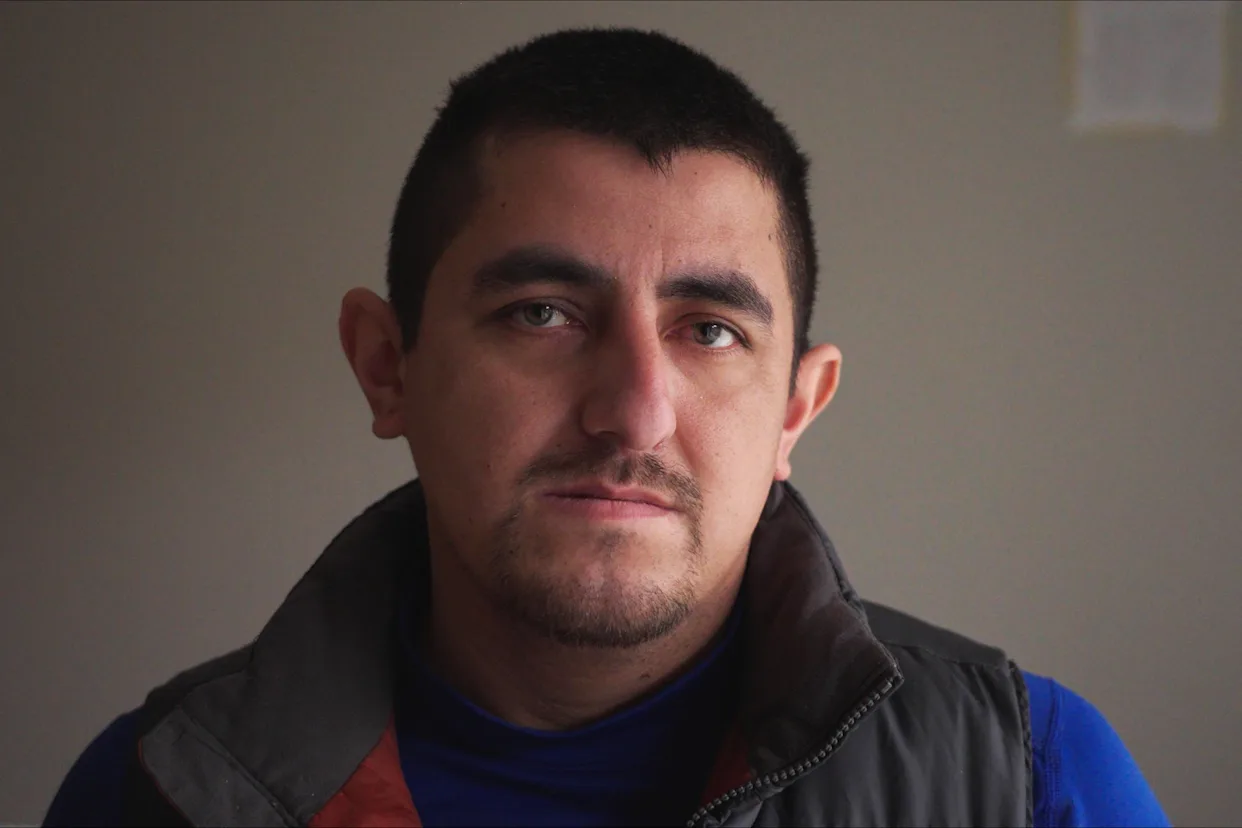

Alberto Castañeda Mondragón says the first thing he noticed after waking up in the hospital wasn’t just the pain — it was the emptiness.
After a violent encounter with immigration officers in Minnesota last month, the 31-year-old Mexican immigrant says his mind felt scrambled so badly that, at first, he couldn’t remember he had a daughter. Even now, he says, entire chapters of his life are missing — including simple, cherished moments like the night he taught her to dance.
But he remembers the beating.
He recalls being pulled from a friend’s car on Jan. 8 outside a shopping center in St. Paul, slammed to the ground, handcuffed, and then struck repeatedly. He says officers punched him and hit his head with a steel baton. He remembers being dragged into an SUV and transported to a detention facility — and says the violence continued there.
What came next is etched into him: an emergency room, unbearable pain, and doctors diagnosing eight skull fractures and five brain hemorrhages so severe they were considered life-threatening.
“They started beating me right away when they arrested me,” he said this week in an interview.
A case that raises questions — and has yet to be investigated
Castañeda Mondragón’s account is one of a growing number of allegations involving serious injuries suffered by immigration detainees during enforcement operations. While he ultimately avoided deportation after a judge ruled his arrest unlawful, he says the cost was permanent: brain trauma, memory loss, and a fear that now governs his day-to-day life.
So far, he says, the federal government has not investigated his allegations of excessive force.
During his hospitalization at Hennepin County Medical Center, he said, immigration officers remained near him constantly, even as he struggled to orient himself.
“He ran into a wall,” officers claimed — but scans told a different story
According to Castañeda Mondragón, officers told hospital staff he had “purposefully” run headfirst into a brick wall. Caregivers immediately questioned the explanation, he said — and medical imaging added to the doubts.
A CT scan showed fractures across the front, back, and both sides of his skull. A doctor familiar with the case said the injury pattern was inconsistent with a simple fall.
“There was never a wall,” Castañeda Mondragón said, describing officers striking him with a metal rod he later identified as an ASP — a telescoping baton commonly carried by law enforcement.
Use-of-force training materials typically warn that baton strikes to the head, neck, or spine can be deadly. A former police lieutenant and use-of-force expert said head strikes are generally reserved for situations that would justify lethal force.
“They laughed at me and hit me again,” he says
Castañeda Mondragón says the violence didn’t end after the arrest. He alleges that once he was taken to a holding facility at Ft. Snelling, officers resumed beating him. Realizing how badly hurt he was, he says he begged them to stop.
He claims they mocked him instead.
“They were very racist people,” he said, alleging the officers targeted him and another detainee with hostility simply for being immigrants.
The Department of Homeland Security, which oversees ICE, did not respond to repeated requests for comment over the last two weeks regarding the injuries described.
It remains unclear whether the arrest was captured on body-camera footage, or whether security footage exists from the detention facility. DHS has recently announced broader body-camera usage for immigration officers in Minneapolis as it also draws down ICE’s presence there.
Court documents: injury acknowledged, cause not explained
In a Jan. 20 declaration filed in federal court, an ICE deportation officer wrote that during intake, officials determined Castañeda Mondragón “had a head injury that required emergency medical treatment.” The declaration did not explain how the injury occurred.
The same filing stated that he entered the U.S. legally in March 2022 and that officials determined only after his arrest that he had overstayed his visa. A federal judge later ruled the arrest unlawful and ordered him released.
A video shows him stumbling as masked men escort him
A video posted on social media captured the moments after his arrest: four masked men walking him through a parking lot while he is handcuffed, unsteady, and stumbling. In the clip, bystanders shout warnings — including concerns that he could be harmed further.
The person who posted the video declined to speak publicly, but Castañeda Mondragón confirmed he is the man shown in the recording.
Court filings and accounts from nurses also reference an officer later describing the incident in crude terms, according to records connected to his legal effort to secure release.
Medical staff who treated him described injuries they say were incompatible with an accidental fall. A doctor and several nurses spoke anonymously, saying they feared retaliation and were not authorized to discuss patient care.
Minnesota law requires health professionals to report wounds that appear connected to a crime. A hospital spokesperson declined to say whether such a report was made. After earlier reporting about the case, hospital administrators also opened an internal inquiry to determine which staff members spoke to the media, according to internal communications.
Public officials call for answers
State and local leaders have begun demanding accountability.
Gov. Tim Walz posted that “law enforcement cannot be lawless,” warning that aggressive federal operations have injured and terrified Minnesotans. Congressional leaders and local elected officials, including the St. Paul mayor, also called for an investigation.
The Ramsey County Attorney’s Office urged Castañeda Mondragón to file a police report to prompt an investigation. He said he plans to file a complaint. St. Paul police said they will investigate alleged crimes when reports are made.
Castañeda Mondragón’s arrest came amid heightened tensions following two fatal shootings of U.S. citizens in Minneapolis by immigration officers — incidents that triggered public protests and intense scrutiny of federal enforcement tactics in Minnesota.
No criminal record — and a family depending on him
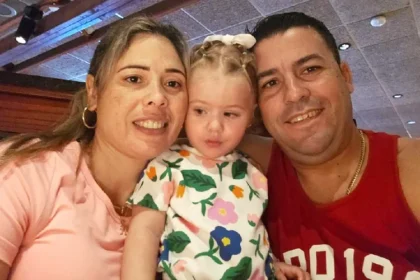
Castañeda Mondragón has no criminal record. He says he came to Minnesota nearly four years ago on a temporary work visa, took jobs as a driver and roofer, and sent money to support his disabled, diabetic father in Mexico — along with his 10-year-old daughter.
On the day of his arrest, he says he and a friend were running errands when they were suddenly surrounded by ICE agents who began breaking the vehicle’s windows and opening doors. He alleges the first officer to strike him insulted him for being Mexican and demanded proof of immigration status.
Court records show he was taken to an emergency room about four hours later with swelling, bruising, and bleeding, before being transferred to a Minneapolis medical center. Staff documented him saying he had been “dragged and mistreated by federal agents” before his condition deteriorated.
A week into his hospitalization, caregivers described him as minimally responsive.
“I am your daughter,” she told him — and he couldn’t remember
As he slowly improved, hospital staff handed him his phone. He says he called his child in Mexico — and realized he couldn’t place her.
“I am your daughter,” she told him. “You left when I was 6 years old.”
For her, their shared past remains vivid: birthdays, the day he left for the U.S., the milestones that shaped her childhood. For him, he says, those images have been erased.
In daily calls, she has been trying to rebuild him from the inside.
“When I turned 5, you taught me how to dance for the first time,” she reminded him.
“All these moments, really, for me, have been forgotten,” he said.
He was released from the hospital on Jan. 27, a recovery some of his caregivers reportedly didn’t expect.
A long recovery — and a life narrowed by fear
Castañeda Mondragón says he still struggles with balance, coordination, and memory. He says he can’t bathe without help. He’s unsure whether he’ll be able to return to roofing — work that depends on ladders, stability, and quick reflexes.
“I can’t get on a roof now,” he said.
Without health insurance, he says doctors have told him he needs ongoing treatment. Unable to work, he’s relying on help from co-workers and community members raising money for food, housing, and medical care, including through a GoFundMe.
Despite everything, he says he wants to stay in the U.S. and rebuild, separating the welcome he felt in Minnesota from the officers he alleges assaulted him.
He calls his survival “immense luck” — a chance to heal and move forward.
But at night, he says, the fear returns.
When he closes his eyes, he dreams that officers come for him again. He says he’s terrified to leave his apartment, afraid that a routine trip for groceries or lunch could end with another stop — and another beating.
“You’re left with the nightmare of going to work and being stopped,” he said, “or that you’re buying your food somewhere, your lunch, and they show up and stop you again. They hit you.”