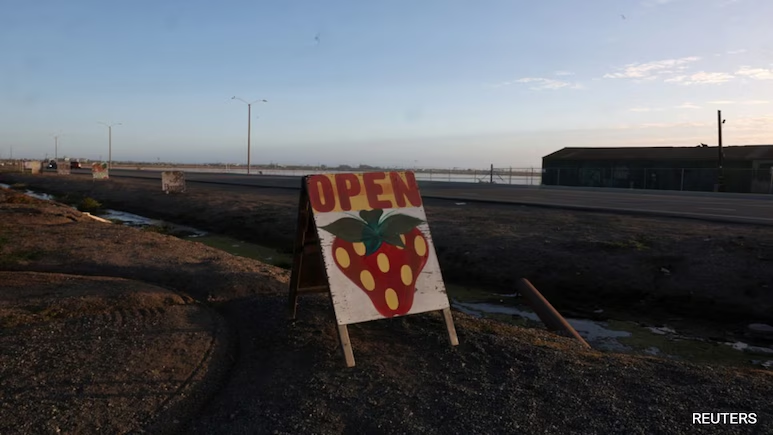

In the heart of California’s strawberry industry, a wave of immigration enforcement is spreading fear among farmworkers and threatening the stability of local agriculture. Workers like Flor, a Mexican migrant with legal permission to work, say recent raids have brought emotional distress to both adults and children in the community.
Flor, a single mother of three U.S.-born daughters, says her children live in daily fear that she’ll be taken away. “Every time I leave, they say, ‘Mommy, be careful—they might catch you and send you to Mexico,’” she told Reuters. “When I return home, they say, ‘Mommy, immigration didn’t take you.’ It breaks my heart.”
Since taking office, President Donald Trump has intensified immigration enforcement, aiming to deport record numbers of undocumented immigrants. Farmers—many of whom depend on immigrant labor—warn the crackdown could devastate their operations and disrupt the U.S. food supply.
Though Trump has floated a possible program to let farmers retain some workers, no formal plan has been introduced. Agriculture Secretary Brooke Rollins emphasized Tuesday that “there will be no amnesty.” Meanwhile, ICE arrests have doubled compared to last year, though it’s unclear how many farmworkers are affected.
In Oxnard, fear has become widespread. Many residents haven’t left their homes in weeks, and some workers are too afraid to show up in the fields. Even elderly laborers reportedly cry when immigration officers are spotted nearby. “They’ve spent decades here. This is their home,” said Flor.
Farmworker advocates say the emotional toll on children is particularly severe. “We are just workers who came here chasing a dream for our kids,” Flor said. Her 10-year-old daughter wants to become a police officer, but now worries her family might be torn apart.
Teresa Romero, president of the United Farm Workers union, said the community is trying to stay united in the face of fear. “The administration is trying to deport an experienced workforce that has been the backbone of American agriculture,” she said.
While a White House official admitted that top immigration advisor Stephen Miller avoided targeting farms due to concerns over replacing labor, raids are still ongoing—prompting protests like those at marijuana farms near Los Angeles last week.
Trump’s border czar, Tom Homan, defended the enforcement effort on CNN, saying, “It’s a crime to enter this country illegally,” while assuring legal immigrants shouldn’t worry. But many, like Flor, say even those with documentation live in fear of being mistakenly targeted.
The Department of Homeland Security declined to comment.
In Washington, lawmakers are working on a response. Democratic Rep. Zoe Lofgren has introduced the Farm Workforce Modernization Act, a bipartisan bill aimed at protecting agricultural workers. Though supported by over 30 Republicans, it’s unlikely to pass before the next Congress convenes in 2027.
“We’re not giving up,” said Romero. “Sí se puede (Yes, we can).”
Flor, who earns around $2,000 a month while paying $1,250 in rent and $250 a week for childcare, says the financial burden is crushing. Sometimes, there’s not enough food for her daughters. The physical demands of farm labor—stooping for hours and lifting heavy boxes—leave her too exhausted to spend meaningful time with them.
Romero says she’s spoken to children affected by the deportations. “All they say is, ‘I want Daddy back,’” she recalled. “These are U.S. citizen children. They don’t deserve to grow up in fear.”
Until reform is passed, advocates warn that the trauma unfolding in California’s fields will only continue.