
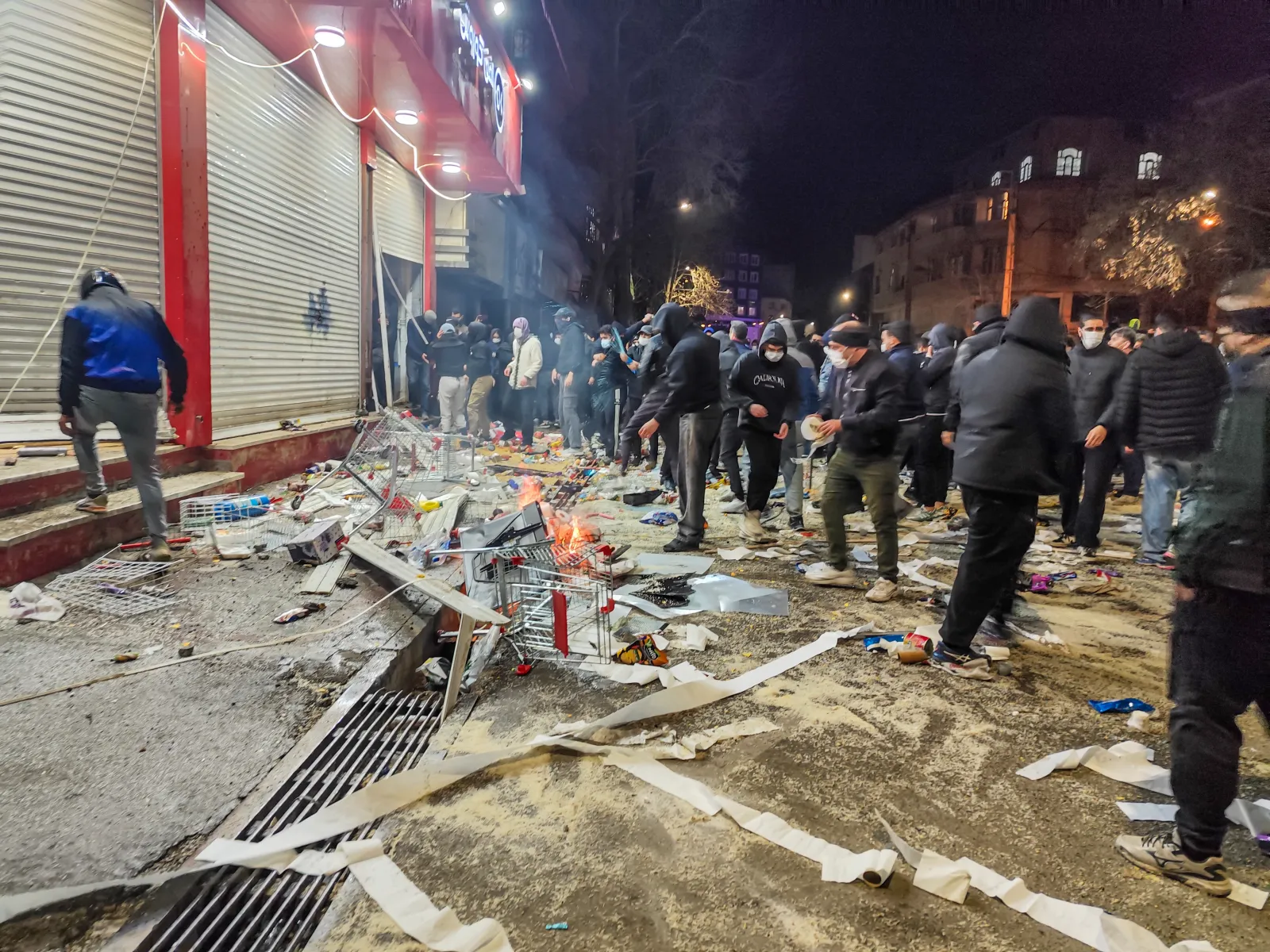

Protesters in Iran have drawn “greater strength” from President Donald Trump’s warning to the ruling authorities in Tehran, Reza Pahlavi—an exiled opposition figure and Iran’s former crown prince—told Newsweek, arguing the message has already affected how the state is responding to unrest.
Pahlavi, whose name has become a frequent chant at demonstrations that began on December 28, said Trump’s threat to punish the government if it escalates violence has boosted morale among protesters. Rights groups say at least 48 people have been killed and thousands arrested since the unrest began.
“The warning he has issued to the regime gives my people greater strength and hope—that unlike President Obama and President Biden who sold out the people of Iran, President Trump stands with them,” Pahlavi said in emailed comments to Newsweek.
Pahlavi, 65, is the son of Shah Mohammad Reza Pahlavi, who was overthrown in the 1979 Islamic Revolution that brought clerical rule and established the Islamic Republic.
The latest protests were initially driven by the collapse of Iran’s currency, the rial, and broader economic hardship intensified by snapback UN sanctions. They have since broadened into nationwide anger at the governing system, with some demonstrators calling for Pahlavi’s return.
Pahlavi said he welcomed Trump’s “clear warnings to the criminal leaders of the Islamic Republic and his support for the Iranian people.” He noted that he had urged Trump’s assistance in an X post on Friday after the U.S. president pledged to hit Iran “very hard” if violence against protesters continued.
“It likely already has made a difference in how the regime has acted,” Pahlavi said, adding that “Iranians are writing his name on walls and thanking him.”
He argued that when authorities and security forces believe brutal repression will carry consequences—and that protesters will not be abandoned—it can change behavior within the system.
“When the regime and its security forces see that violent repression will carry consequences and that the Iranian people will not be abandoned, it raises the cost of brutality and affects behavior inside the system,” Pahlavi said.
He also urged Trump not to rely on Washington “experts” who argue the government can be reformed internally. “All he needs is to listen to the people of Iran on the streets who are asking for his help,” he said, adding that “European leaders can learn from President Trump’s moral clarity on Iran, here.”
Calls to intensify street demonstrations
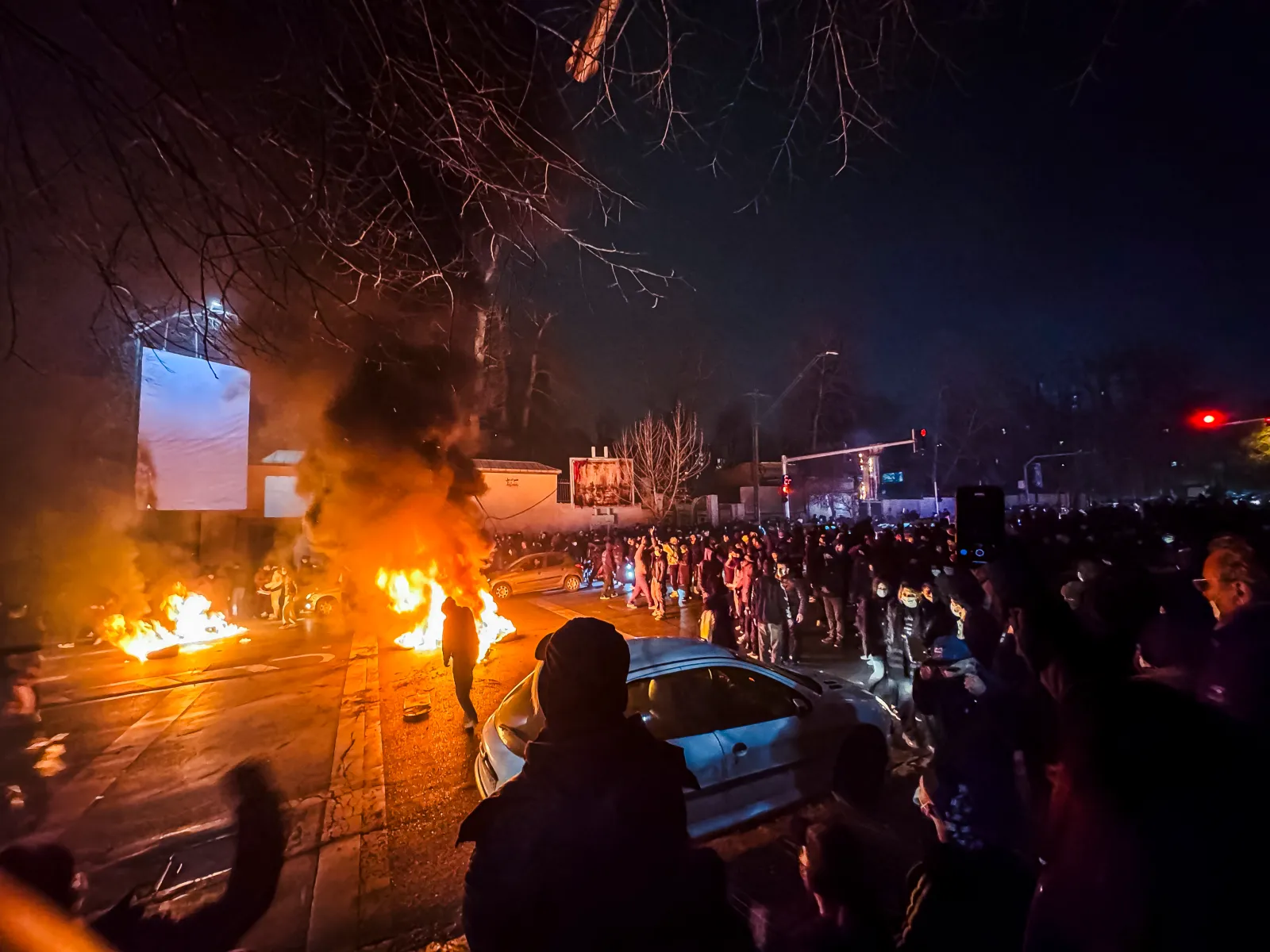
On Friday, protesters returned to the streets following a call by Pahlavi. He renewed that appeal on Saturday, urging two more nights of demonstrations aimed at seizing city centers.
In Mahdasht, in Alborz province, protesters were seen setting fires in the streets on Friday night. In a video posted on social media, chants of “this is the final battle, Pahlavi will return” could be heard, according to independent outlet Iran International. The outlet also reported chants of “death to Khamenei,” a reference to Supreme Leader Ali Khamenei.
Khamenei said in a speech on Friday that the Islamic Republic would not back down, raising the prospect of a harsher security response.
Judiciary chief Gholam-Hossein Mohseni-Ejei said this week the authorities “will show no mercy to the rioters.” That marked a shift from earlier messaging suggesting protests might be tolerated if dialogue could take place with merchants and demonstrators about the country’s economic crisis.
The unrest represents the most serious challenge to the government since protests in 2022, sparked by the death of Mahsa Amini, a 22-year-old woman who died in custody after being arrested for allegedly violating Iran’s strict hijab laws.
Israel’s 12-day war against Iran in 2025 and sanctions tied to the country’s nuclear program have added new dimensions to the current protests, compared with earlier waves of unrest. As in past episodes, authorities have restricted internet access.
“A different moment”
Pahlavi said factors that were missing in earlier protests are now converging. He pointed to signs of internal defections—including reported refusals to participate in repression—and to what he described as a changing international climate.
“In the past, Iranians appealed for support and were met with hesitation or silence. Today, there is growing recognition that this regime is irredeemable and has reached the end of the road,” he said.
“What makes this moment different is that the Islamic Republic is at its weakest point, and the Iranian people are on the streets not only because of economic misery or injustice, but because they are fed up with the entire system.”
He credited Trump’s renewed “maximum pressure” approach, arguing that sustained sanctions, without “lifelines,” squeeze the government and increase the political cost of repression.
Snapback sanctions, he said, matter “not because sanctions alone bring freedom—but because they deny this regime the oxygen it needs to survive.”
Competing visions for what comes next
Support demonstrations have also taken place outside Iran, with chants supporting Pahlavi heard in cities including New York, Toronto, and parts of New Zealand.
Hamidreza Azizi, an Iran expert at the German Institute for International and Security Affairs, told Newsweek on Friday that pro-monarchy slogans reflect a sense of nostalgia among some segments of society for the period before 1979.
“Many people, in one way or another, want a return to what they perceive as the glory and prosperity of the Shah’s era. For that reason, they view Reza Pahlavi as a continuation of his father’s legacy,” Azizi said.
But Azizi added that many others may view the pre-revolutionary era more positively than the Islamic Republic while still rejecting the monarchy—or seeing its return as unrealistic.
“While these slogans may help mobilize people and foster unity against the Islamic Republic in the short term, it is still unclear whether monarchism will emerge as the option people ultimately rally around going forward,” he said.
Pahlavi said he has positioned himself to help lead a transition to democracy by uniting a broad coalition—monarchists and republicans, secular and religious groups, activists and professionals, civilians and members of the armed forces.
He said Iran’s future must be decided through a free constitutional process followed by genuinely free elections. “I have been clear that I will remain entirely impartial in that process, so that Iranians can finally choose their system of governance freely,” he said.
Some Iranians, he noted, favor a constitutional monarchy, others a republic. “My responsibility is not to predetermine the outcome, but to guarantee the process,” he said.
He also pointed to the Iran Prosperity Project, led by the National Union for Democracy in Iran (NUFDI) and unveiled in Washington, D.C. in April 2025, which outlines a roadmap for economic recovery and reintegration into the global community.
Under the plan’s first phase, he said, the priority would be keeping the country functioning—securing essential services, restoring confidence, and maintaining basic governance—followed by a constitutional process and national elections.
“For the first time in 46 years, the demand is clear, vivid, and nationwide—an end to this criminal regime,” Pahlavi said.


