
Federal Reserve Chair Jerome Powell said Sunday that the Department of Justice served the central bank with grand jury subpoenas on Friday, raising the prospect of a criminal indictment tied to his congressional testimony about the Fed’s building-renovation project.
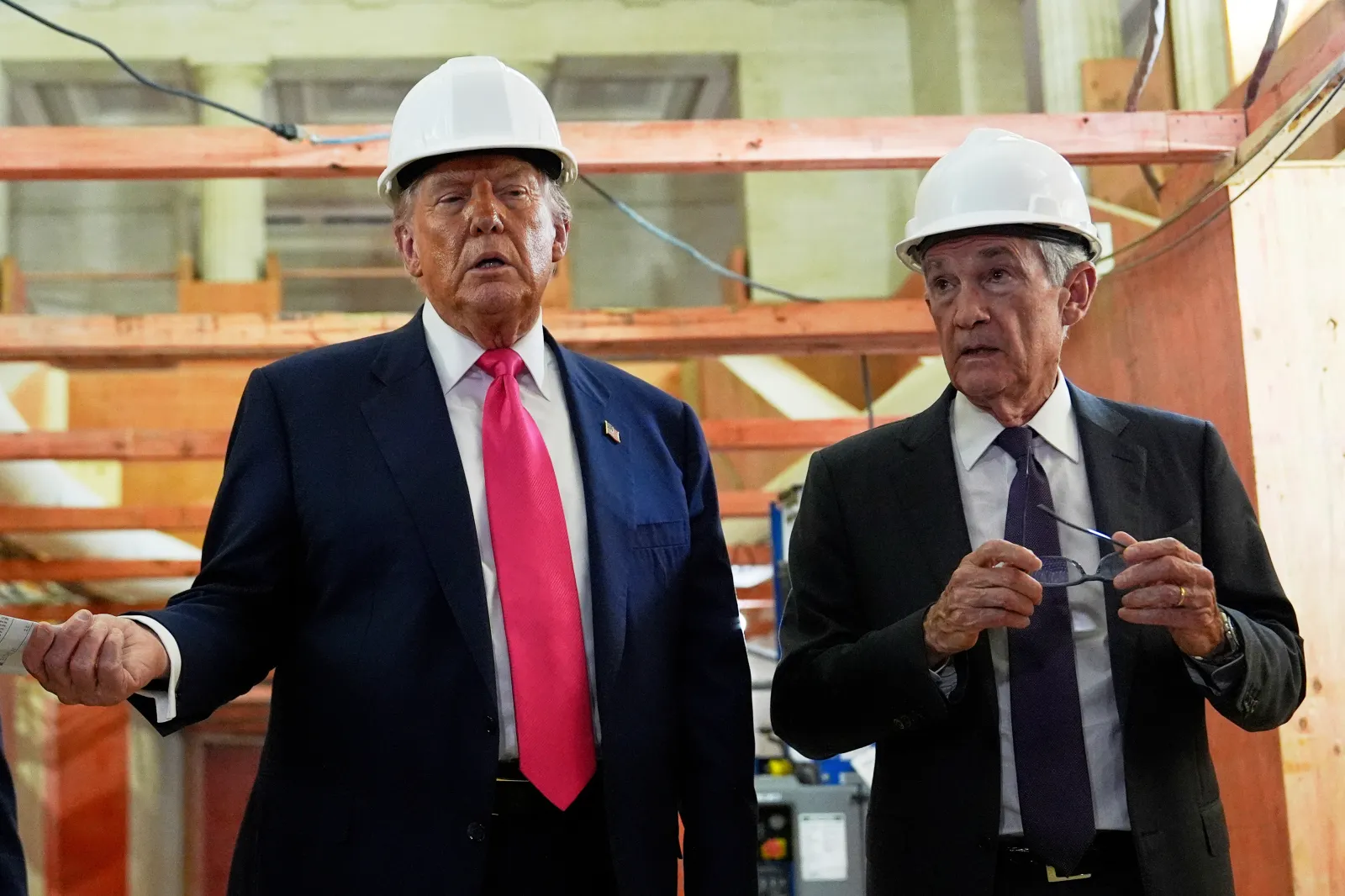
In a video statement released Sunday evening, Powell framed the move as political intimidation aimed at eroding the Federal Reserve’s independence in setting monetary policy. The subpoenas relate to his June appearance before the Senate Banking Committee, where he addressed the Fed’s roughly $2.5 billion renovation of two historic office buildings—an effort President Donald Trump has criticized as excessive.
Powell said he intends to keep doing his job, adding that “public service sometimes requires standing firm in the face of threats.”
Why It Matters
What began as a dispute over renovation costs has turned into a broader fight over the Fed’s independence and the politics surrounding interest-rate decisions. Powell’s unusually direct public response marks a sharp break from the central bank’s typically cautious posture when facing presidential criticism.
The episode also lands amid heightened scrutiny of the Justice Department’s investigative posture—particularly as Trump has repeatedly urged prosecution of political opponents—raising concerns among critics about whether long-standing norms separating the White House from investigative decisions are being tested.
What To Know
The Justice Department’s focus centers on Powell’s June testimony about renovation costs for the 90-year-old Marriner S. Eccles building and an adjacent structure. Costs have climbed to about $2.5 billion—roughly $600 million over budget—driven, according to the account provided, by rising construction expenses during the 2021–2022 inflation surge, unexpected asbestos-removal needs, and Washington’s building-height restrictions that can require costly underground work.
White House budget director Russ Vought accused the Fed of an “ostentatious overhaul” that included rooftop terrace gardens, VIP dining rooms, special elevators, water features, and premium marble. Powell rejected those claims in June, saying: “There’s no VIP dining room. There’s no new marble. There are no special elevators. There are no new water features. And there’s no roof terrace gardens.” The Fed has said those elements were removed from initial 2021 plans submitted to the National Capital Planning Commission.
White House officials have also suggested Powell deviated from approval terms by changing renovation plans, with deputy chief of staff James Blair arguing the project appears inconsistent with what was approved. The Fed maintains it is not subject to the commission’s direction and says it remains accountable to Congress through oversight by an independent inspector general—whom Powell has asked to review the renovation costs.
The Justice Department said Sunday that Attorney General Pam Bondi “has instructed her US Attorneys to prioritize investigating any abuse of tax payer dollars,” while declining to comment on specific cases.
Powell’s Full Statement
“Good evening.
On Friday, the Department of Justice served the Federal Reserve with grand jury subpoenas, threatening a criminal indictment related to my testimony before the Senate Banking Committee last June. That testimony concerned in part a multi-year project to renovate historic Federal Reserve office buildings.
I have deep respect for the rule of law and for accountability in our democracy. No one—certainly not the chair of the Federal Reserve—is above the law. But this unprecedented action should be seen in the broader context of the administration’s threats and ongoing pressure.
This new threat is not about my testimony last June or about the renovation of the Federal Reserve buildings. It is not about Congress’s oversight role; the Fed through testimony and other public disclosures made every effort to keep Congress informed about the renovation project. Those are pretexts. The threat of criminal charges is a consequence of the Federal Reserve setting interest rates based on our best assessment of what will serve the public, rather than following the preferences of the President.
This is about whether the Fed will be able to continue to set interest rates based on evidence and economic conditions—or whether instead monetary policy will be directed by political pressure or intimidation.
I have served at the Federal Reserve under four administrations, Republicans and Democrats alike. In every case, I have carried out my duties without political fear or favor, focused solely on our mandate of price stability and maximum employment. Public service sometimes requires standing firm in the face of threats. I will continue to do the job the Senate confirmed me to do, with integrity and a commitment to serving the American people.
Thank you.”
What Happens Next
Republican Sen. Thom Tillis of North Carolina, a member of the Banking Committee, said he would oppose future Fed nominees—including any potential replacements for Powell—until “this legal matter is fully resolved.”
Powell’s term is set to expire in May 2026. The Supreme Court has recently signaled that Trump cannot remove him simply over interest-rate disagreements, though removal “for cause,” such as misconduct, remains a legal possibility. The grand jury investigation is expected to proceed under U.S. Attorney Jeanine Pirro’s office.