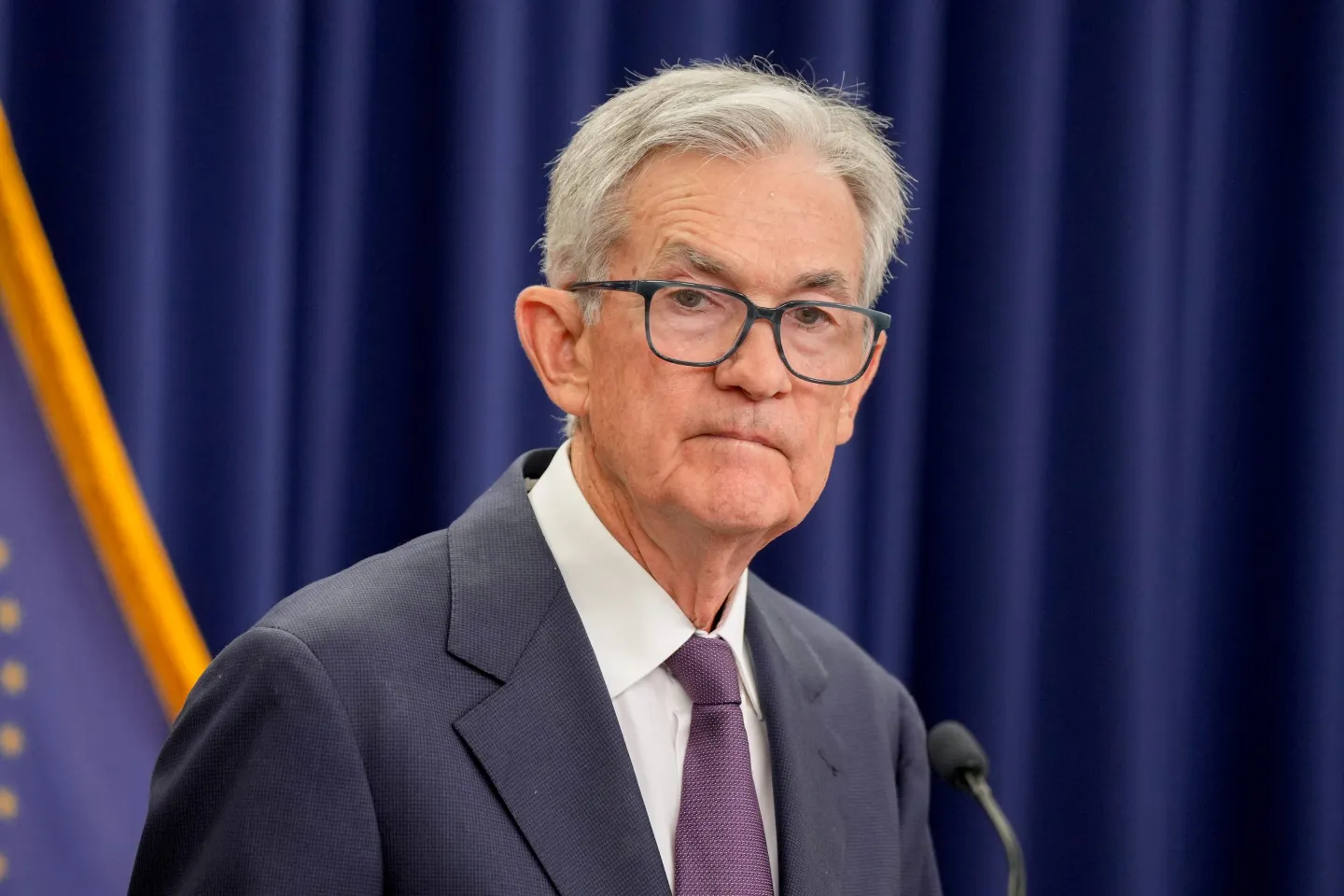

Federal Reserve Chair Jerome Powell has raised concerns about something many recent college graduates are already feeling—finding a job right after school is really tough right now. Speaking at his usual press conference after the Federal Open Market Committee meeting, Powell called it “an interesting labor market.” He said young people, especially college graduates and minorities, “are having a hard time finding jobs.” Overall, he noted that the “job finding rate” is very low, but layoffs are also low. “So you’ve got a low firing, low hiring environment,” he said.
Recent reports back this up. The Black unemployment rate went above 7% in August, and for the first time, the unemployment rate for recent graduates is higher than the overall rate. Apollo Global Management Chief Economist Torsten Slok, known for spotting trends on Wall Street, said unemployment is actually falling for recent female graduates but rising for male graduates. More broadly, he pointed out that the U.S. has more unemployed people than job openings—7.4 million compared to 7.2 million.
The last few months of 2025, described by Deutsche Bank as “the summer AI turned ugly,” have shown that AI adoption at companies is not going smoothly. At the same time, AI seems to be affecting entry-level hiring.
Powell has spoken about AI and jobs before. While some experts predicted AI could wipe out half of white-collar jobs, others argued it could create many new positions. Powell has taken a middle view. “There’s certainly a possibility that, at least in the beginning, AI will replace a lot of jobs, rather than just augmenting people’s labor,” he told the Senate Banking Committee in June. “In the long run, AI may raise productivity and lead to greater employment. But it is a transformational technology, with effects that are unknowable.”
On Wednesday, Powell did not give a clear answer about AI’s effect on the job market. “There’s great uncertainty,” he said. “I think, my view, which is also a bit of a guess, but widely shared, is that you are seeing some effects, but it’s not the main thing driving it.” He added that companies may be using AI more than before to replace entry-level jobs, which could explain some of the difficulty for young people.
Powell emphasized that the economy has slowed down, and job growth has slowed too. AI may play a role, but it’s “hard to say how big it is,” he said.
Long-term consequences
The struggles of Gen Z and minority jobseekers could affect not just individuals but the broader U.S. economy. Research shows starting a career during a downturn can lower lifetime earnings, delay buying a home, and make it harder to build wealth—especially for those already facing challenges.
Economists have studied the “scarring effects” of economic downturns for decades. Harvard professor David Ellwood first used the term “permanent scars” in 1982. In 1986, Olivier Blanchard and Larry Summers wrote a paper showing that unemployment after a recession can affect careers for many years. Adam Posen, president of the Peterson Institute for International Economics, told Bloomberg in August that economists have looked for such effects since the Great Recession but haven’t found strong evidence.
However, David Blanchflower of Dartmouth College and Alex Bryson of University College London found something notable: while youth wages and unemployment haven’t dropped sharply since the 2010s, young workers are showing more signs of frustration. Blanchflower told Fortune that it can be summed up as “this job sucks.” With unemployment now rising, this problem may be getting worse.