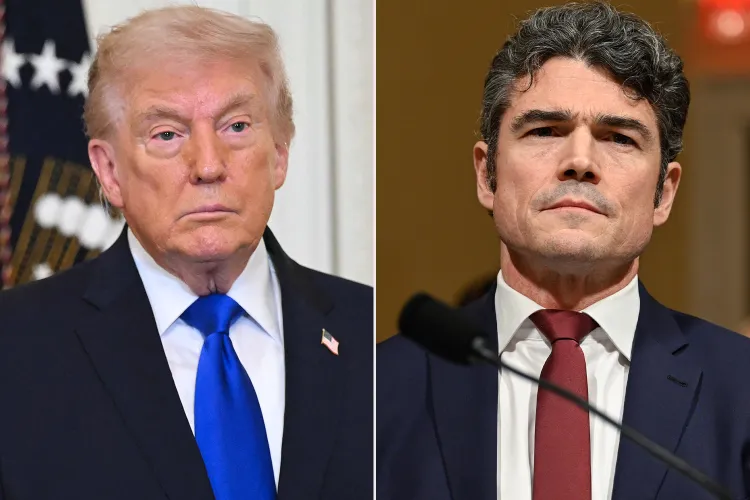

The White House launched a blistering counter-offensive Wednesday against Joe Kent, the nation’s former top counterterrorism official, after he resigned in protest of the escalating U.S.-led war in Iran. Press Secretary Karoline Leavitt dismissed Kent as being “not up for the job,” defending President Donald Trump’s military strategy against Kent’s allegations of foreign influence.
The public fallout follows Kent’s departure on Tuesday, March 17, from his post as Director of the National Counterterrorism Center (NCTC). Kent is the first senior administration official to resign over the military campaign that commenced on Feb. 28.
Trump Rebukes Claims of Foreign Influence
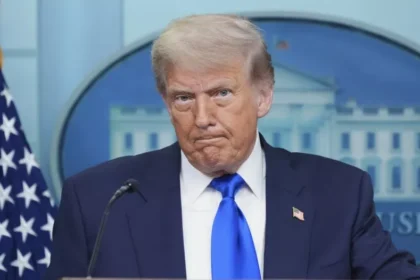
President Trump, 79, personally weighed in on the resignation from the Oval Office, characterizing Kent as a “nice guy” who lacked the necessary resolve for national security.
“It’s a good thing that he’s out because he said Iran was not a threat,” Trump told reporters. “He was weak on security.”
The President also flatly denied Kent’s central allegation: that the United States was pressured into the conflict by the Israeli government. Leavitt echoed this sentiment on Wednesday, calling the suggestion that a foreign power controls the President “insulting and laughable.”
“The president is the leader of the most powerful country and military in the world. Nobody tells him what to do,” Leavitt said, adding that Kent’s resignation letter was “riddled with lies.”
:max_bytes(150000):strip_icc():focal(999x0:1001x2):format(webp)/trump-1-3e906321d94349e0be8b76bb131c7a9d.jpg)
The Resignation: Allegations of Deception
In a searing resignation letter, Kent, 45, stated he “cannot in good conscience” support the ongoing war. A veteran of the Iraq War and a widower of a U.S. Navy cryptologic technician killed in Syria, Kent argued that the current conflict is the result of a coordinated “misinformation campaign” by Israeli officials and media allies.
“Iran posed no imminent threat to our nation, and it is clear that we started this war due to pressure from Israel and its powerful American lobby,” Kent wrote.
He further drew parallels to the lead-up to the 2003 Iraq War, claiming the same “echo chamber” was being used to deceive the administration into believing a “swift victory” was possible.
:max_bytes(150000):strip_icc():focal(759x294:761x296):format(webp)/joe-kent-031726-4b977e42564c4b90acd65e48c9ca9485.jpg)
Bipartisan Criticism and Charges of Antisemitism
While Kent’s opposition to the war found some resonance with anti-war advocates, his rhetoric has drawn fierce condemnation from both sides of the aisle.
- Rep. Don Bacon (R-NE): A retired Air Force general on the House Armed Services Committee, Bacon cheered the departure on social media, stating, “Anti-Semitism is an evil I detest, and we surely don’t want it in our government.”
- Ilan Goldenberg (J Street): The senior vice president of the pro-Israel group noted that while he also opposes the war, Kent’s framing of a “secret conspiracy” was “ugly stuff.”
- Sen. Mark Warner (D-VA): Though Warner called Kent’s past record “deeply troubling,” he conceded that the administration has yet to provide “credible evidence of an imminent threat” to justify the military action.
A Pattern of Dissent
Kent’s departure marks a significant fracture in the administration’s “America First” coalition. In his letter, Kent invoked the memory of his late wife, Chief Petty Officer Shannon Kent, who was killed by a suicide bomber in 2019. He asserted that he could not support “sending the next generation off to fight and die in a war that serves no benefit to the American people.”
The White House maintained that Kent had been increasingly marginalized prior to his exit, with Leavitt claiming he had not been involved in the President’s daily classified intelligence briefings “for quite some time.”
As the conflict in the Middle East expands, the administration faces the dual challenge of managing a burgeoning war and a growing chorus of internal critics questioning the intelligence and motives behind the intervention.