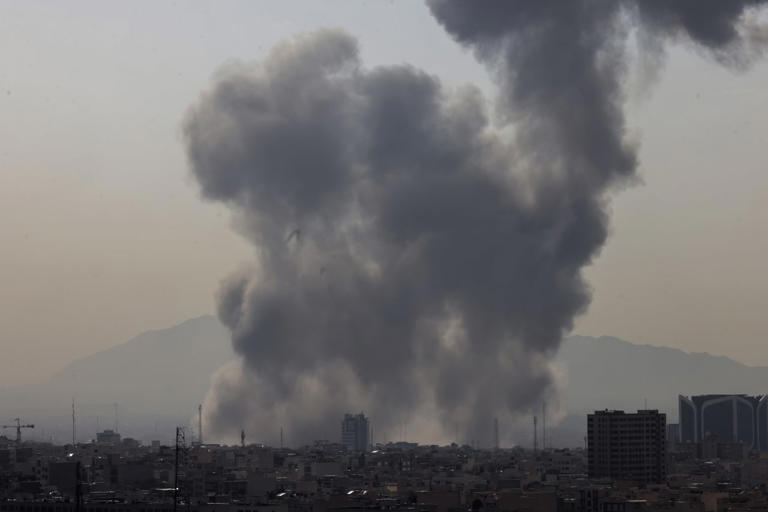

TEHRAN / WASHINGTON — Global energy markets and financial hubs are bracing for a period of extreme volatility as trading opens Sunday evening, following a massive joint U.S.-Israeli military strike on Iran and the confirmed death of Supreme Leader Ali Khamenei. The geopolitical landscape of the Middle East has been fundamentally altered overnight, triggering an immediate shutdown of the Strait of Hormuz—the world’s most vital energy chokepoint—and sending shockwaves through global capitals.
The escalation reached a fever pitch late Saturday when Iranian state television confirmed the death of Khamenei. The announcement followed a post on Truth Social by President Donald Trump, who stated, “Khamenei, one of the most evil people in History, is dead. This is not only Justice for the people of Iran, but for all Great Americans.”
A “Jugular” Strike on Energy Infrastructure
Unlike the brief “12-day” conflict of 2025 which focused on nuclear facilities, analysts warn this campaign is broader in scope, specifically targeting Iran’s economic backbone. Reports of explosions at Kharg Island, the terminal handling 90% of Iran’s oil exports, suggest a deliberate attempt to neutralize Tehran’s primary revenue stream.
“This is a shock because it didn’t start as a limited attack and escalate; it went straight for the jugular,” said Stephen Myrow, managing partner at Beacon Policy Advisors and a former State and Defense Department official.
The $100 Barrel: Oil Markets on Edge
As the Sunday evening trading session approaches, analysts at Barclays and Tortoise Capital suggest Brent crude could rapidly surge toward $100 a barrel. The immediate catalyst is the closure of the Strait of Hormuz. Iran’s military has reportedly declared that ships are “not allowed” to pass, a move that effectively strangles:
- 26% of the world’s crude oil transit
- 23% of global Liquefied Natural Gas (LNG), including all exports from Qatar
- 31% of liquefied petroleum gas (LPG), a critical fuel source for China
If the blockage persists, the global economy will lose an estimated 20 million barrels of crude per day.
| Commodity | Global Transit via Hormuz | Impact of Sustained Closure |
|---|---|---|
| Crude Oil | 26% | Supply shortages; $10–$15/bbl price spike |
| LNG | 23% | European and Asian gas market “scramble” |
| LPG | 31% | Critical disruption to Chinese industrial sectors |
The OPEC+ Response
The timing of the strikes coincides with a pre-scheduled meeting of eight OPEC+ members, including Saudi Arabia, Russia, and the U.A.E., on Sunday. While Saudi Aramco maintains a spare capacity of roughly 2 to 3 million barrels per day, it remains unclear if the cartel will move to increase output to stabilize prices or wait to assess the risk of Iranian retaliatory strikes on their own infrastructure.
Stock Market Outlook: A Flight to Safety
Wall Street is expected to react sharply when futures begin trading. Analysts are advising a “flight to safety,” urging investors to pivot toward U.S. Treasuries and assets isolated from Middle Eastern volatility.
“The risk of escalation goes up significantly if energy infrastructure in neighboring Gulf states is hit,” warned Matt Gertken, chief geopolitical strategist at BCA Research. He noted that while a market correction is likely, buying opportunities may emerge in cyclical stocks if the conflict remains contained to Iranian soil.
What Comes Next: Geopolitical “Offramps”
The path forward remains shrouded in uncertainty. While the U.S. and Israel have achieved a major tactical objective with the removal of Khamenei, the vacuum of power in Tehran presents two divergent paths:
- Regime Collapse: A transition to a more moderate governance structure that could eventually stabilize markets.
- Military Escalation: Control falling to the Islamic Revolutionary Guard Corps (IRGC), potentially leading to a prolonged regional war.
Observers are also watching President Trump’s upcoming summit with Chinese leader Xi Jinping. Given China’s reliance on Iranian and Gulf oil, the President may seek a rapid “offramp” to prevent a total fracture in U.S.-China relations.
For now, the world watches the tickers. As the sun sets in Washington and rises over Asian markets, the true economic cost of this weekend’s strikes is about to be tallied.