
The global energy landscape has entered a period of unprecedented volatility as the International Energy Agency (IEA) confirmed Thursday that the ongoing conflict in Iran has triggered the largest supply disruption in the history of the oil market. With the strategic Strait of Hormuz effectively sealed, the world is grappling with the erasure of nearly 20 million barrels of petroleum daily, sending shockwaves through global economies and forcing a record-breaking release of emergency reserves.
The “Trickle” Effect: A Market in Freefall
The U.S.-led military campaign, now involving a coalition of over a dozen Middle Eastern and Near Eastern nations, has hit the world’s most critical energy artery. The Strait of Hormuz, which typically facilitates the passage of 20% of the world’s petroleum, has been reduced to what the IEA describes as a “trickle.”
“We are witnessing a market distortion that could ripple long after the guns fall silent,” the IEA stated in its Thursday report. The agency warned that while the physical blockage is the immediate crisis, the systematic targeting of energy infrastructure by Iranian forces has created a long-term deficit that cannot be solved by simply reopening shipping lanes.
Price Volatility and the “Khamenei Factor”
Market reaction has been swift and violent. Brent crude, the international benchmark, spiked to nearly $120 per barrel on Monday before retreating to approximately $100 following conflicting signals from the Trump administration regarding the war’s duration.
However, stability remains elusive. Iran’s newly installed Supreme Leader, Mojtaba Khamenei, issued a defiant pledge on Thursday to maintain the blockade of the Strait. This geopolitical deadlock has already filtered down to consumers; in the United States, the average price for regular fuel has climbed to $3.63 a gallon, a significant jump from $2.94 just one month ago.
Infrastructure Under Siege
The crisis extends beyond stranded tankers. The IEA highlighted a “radically reshaped” market where extraction sites and refineries are being manually “shut-in” to prevent overflow due to lack of export capacity.
- Qatar’s Crisis: The Ras Laffan gas facility, responsible for 20% of the global liquefied natural gas (LNG) supply, remains offline following drone strikes.
- The “Switch” Myth: Experts warn that restarting production isn’t as simple as flipping a toggle. “Shut-ins can cause corrosion and structural damage,” noted Richard Nephew of Columbia University’s Center on Global Energy Policy. “Getting production back online is a time-consuming, technical gauntlet.”
- Regional Cutbacks: Producers including Saudi Arabia, Kuwait, and the UAE have been forced to slash operations by a combined 10 million barrels per day due to reaching maximum storage limits.
Emergency Measures: The 400-Million-Barrel Gamble
In a desperate bid to stave off a global recession, the IEA has mediated a coordinated release of 400 million barrels from the strategic reserves of its 32 member nations. While this represents the largest such release in history, analysts are skeptical of its long-term efficacy.
“It is a stop-gap measure,” the IEA admitted. Without a rapid resumption of shipping flows, the injection of reserves may only provide a few weeks of breathing room before prices resume their upward trajectory.
The Specter of Protectionism
Prominent economists, including Mohamed El-Erian and Paul Krugman, have sounded the alarm on “stagflation”—a combination of stagnant growth and high inflation. The crisis is already sparking a wave of energy protectionism. China has significantly tightened export restrictions on oil to insulate its domestic market, a move reminiscent of the economic shielding seen during the 2022 invasion of Ukraine.
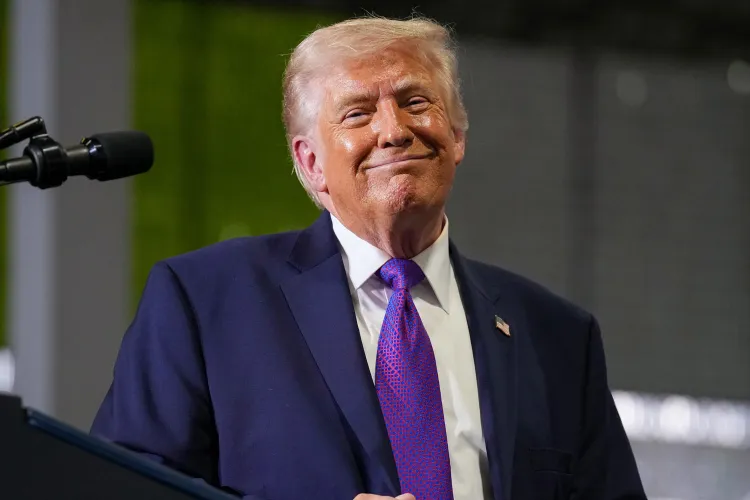
As the Trump administration maintains that the conflict is nearing its conclusion, the IEA and global energy ministers remain focused on the “day after.” Even in a best-case scenario, the agency predicts it will take weeks, if not months, for export volumes to return to pre-war levels, leaving the global economy on a precarious footing for the foreseeable future.