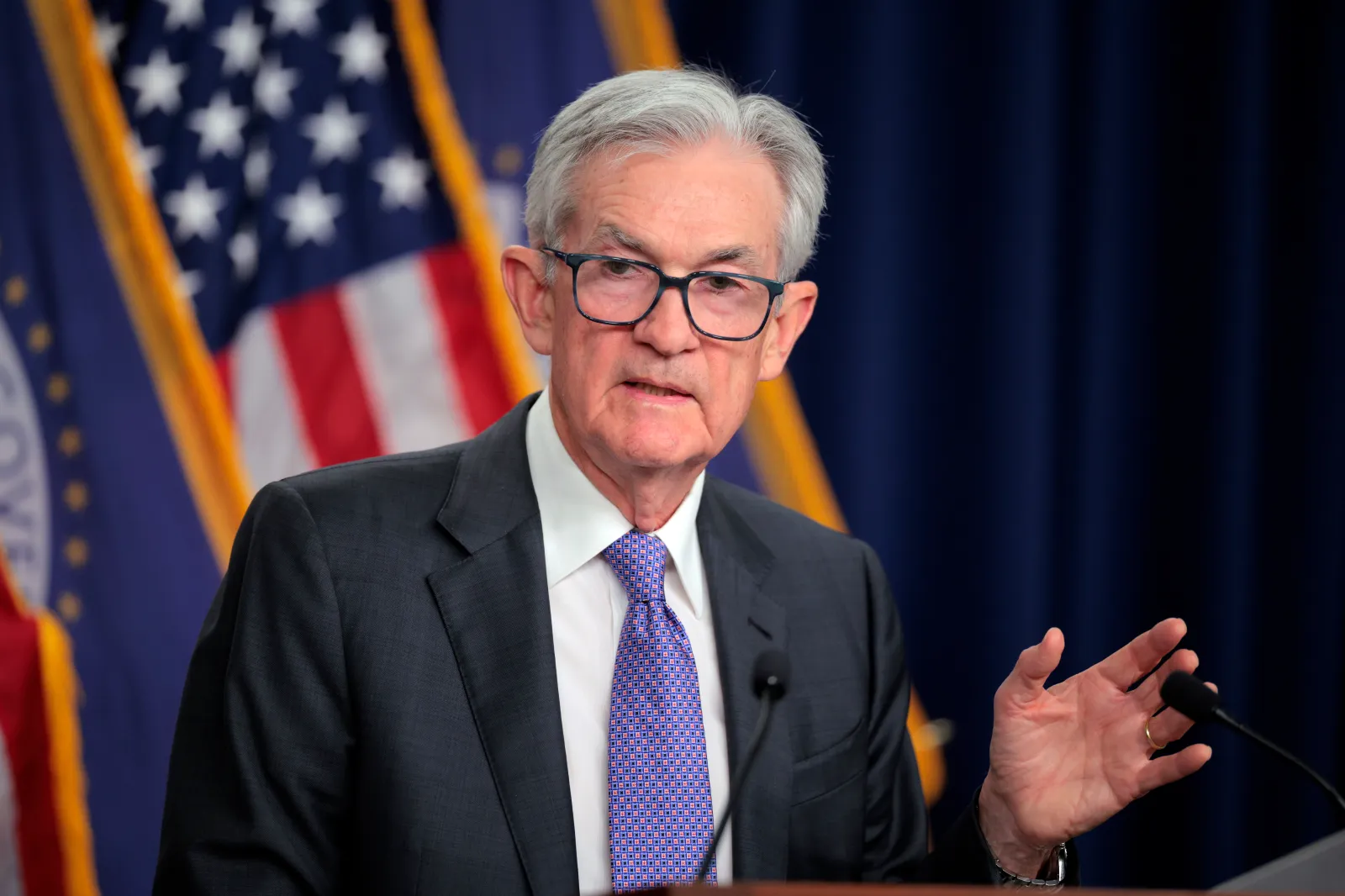

Democrats in both the House and Senate — along with a small number of Republicans — are criticizing President Donald Trump over a probe involving Federal Reserve Chair Jerome Powell. Several lawmakers say they will oppose any Trump nominee to replace Powell until the matter is settled.
On Sunday, Powell confirmed that the Federal Reserve received grand jury subpoenas from the Department of Justice (DOJ) on Friday. The subpoenas, he said, carry the threat of a criminal indictment tied to testimony he gave last summer about renovations to the Fed’s historic office buildings in Washington, D.C.
“He is abusing the law like a wannabe dictator so the Fed serves him and his billionaire friends,” Massachusetts Sen. Elizabeth Warren wrote on Sunday. “The Senate must not move ANY Trump Fed nominee.”
A spokesperson for the Federal Reserve told Newsweek the central bank had nothing to add beyond Powell’s statement and directed further questions about the criminal probe to the DOJ.
Why it matters
Trump repeatedly clashed with Powell last year over the Fed’s pace on interest-rate cuts — even though Trump originally nominated Powell in 2017. The president mocked him as “too-late Powell,” called him a “numbskull” and “Trump hater,” and suggested he could remove him before his term ends. Trump also floated legal action over what he described as Powell’s “grossly incompetent” handling of the D.C. renovation project.
Those threats have fueled concerns that Trump is trying to weaken the Fed’s independence and tighten the White House’s grip on monetary policy. Critics say the new subpoenas represent a sharper escalation — moving from political pressure to the specter of criminal prosecution.
What to know
In a video on Sunday, Powell said the DOJ threat stems from his June testimony before the Senate Banking Committee, which included questions about the multi-year renovation project.
Costs for the project have increased from an estimated $1.9 billion in 2019 to $2.5 billion in the Fed Board’s 2025 budget. During that Senate hearing, Powell pushed back on claims from Republican lawmakers that the Fed was pouring money into “lavish renovations.”
In July, the Federal Reserve said it takes “seriously the responsibility to be a good steward of public resources,” adding that the project is intended to reduce costs over time by consolidating much of the board’s operations.
Powell, however, argued on Sunday that the investigation is not really about construction — but retaliation for how the Fed sets interest rates. He said the central bank makes those decisions “based on our best assessment of what will serve the public, rather than following the preferences of the president.”
Some lawmakers from both parties echoed that view.
North Carolina Sen. Thom Tillis, a Republican, wrote on X: “If there were any remaining doubt whether advisers within the Trump administration are actively pushing to end the independence of the Federal Reserve, there should now be none. It is now the independence and credibility of the Department of Justice that are in question.”
Virginia Sen. Mark Warner, a Democrat and member of the Banking Committee, said the administration’s attacks on Powell reflect “Donald Trump’s chaos-driven approach to the economy,” warning that “working Americans” would bear the cost.
Warren claimed Trump wants to replace Powell — and push him off the Fed board entirely — to “complete his corrupt takeover of our central bank.”
With Powell’s term as chair ending in May, Trump is expected to nominate a successor soon. Tillis and Warren say they will vote against any replacement nominee while the situation remains unresolved.
“I will oppose the confirmation of any nominee for the Fed—including the upcoming Fed chair vacancy—until this legal matter is fully resolved,” Tillis said Sunday.
What people are saying
Powell said Sunday: “This new threat is not about my testimony last June or about the renovation of the Federal Reserve buildings. It is not about Congress’ oversight role; the Fed through testimony and other public disclosures made every effort to keep Congress informed about the renovation project. Those are pretexts. The threat of criminal charges is a consequence of the Federal Reserve setting interest rates based on our best assessment of what will serve the public, rather than following the preferences of the president.”
Todd Belt, director of the Political Management Program at George Washington University, told Newsweek the move “seems” like political retribution tied to Powell’s refusal to cut rates as aggressively as Trump wants. He called it “the most serious threat to the Fed’s independence” seen from a president, arguing the renovation issue is being used as a convenient justification.
Anthony Scaramucci wrote on X that the message to future Fed chairs is clear: if they don’t do what Trump wants, “he will criminally prosecute you,” referencing the grand jury subpoenas and the threat of indictment.
Former Rep. Adam Kinzinger, a Republican, said in a video on X that the motivation is intimidation — pressuring Powell to lower rates. He argued the Fed’s job is to stabilize monetary policy and promote employment, warning against cutting rates when inflation is high.
Rep. Melanie Stansbury, a Democrat from New Mexico, wrote on X that using the DOJ to threaten the Fed chair could destabilize markets and affect inflation, retirement savings, employment, and household costs — and called it an abuse of power.
What happens next
In an interview with NBC News, Trump said he had no knowledge of the DOJ probe. Still, he criticized Powell’s performance, saying, “he’s certainly not very good at the Fed, and he’s not very good at building buildings.”
“I wouldn’t even think of doing it that way,” Trump added. “What should pressure him is the fact that rates are far too high.”
The Fed cut rates three times in its final meetings of 2025, but officials are expected to hold rates steady at their next meeting in late January.
Powell is scheduled to step down as chair in May. However, because his separate 14-year term as a Fed governor continues, he could remain on the Board of Governors even after leaving the top job.