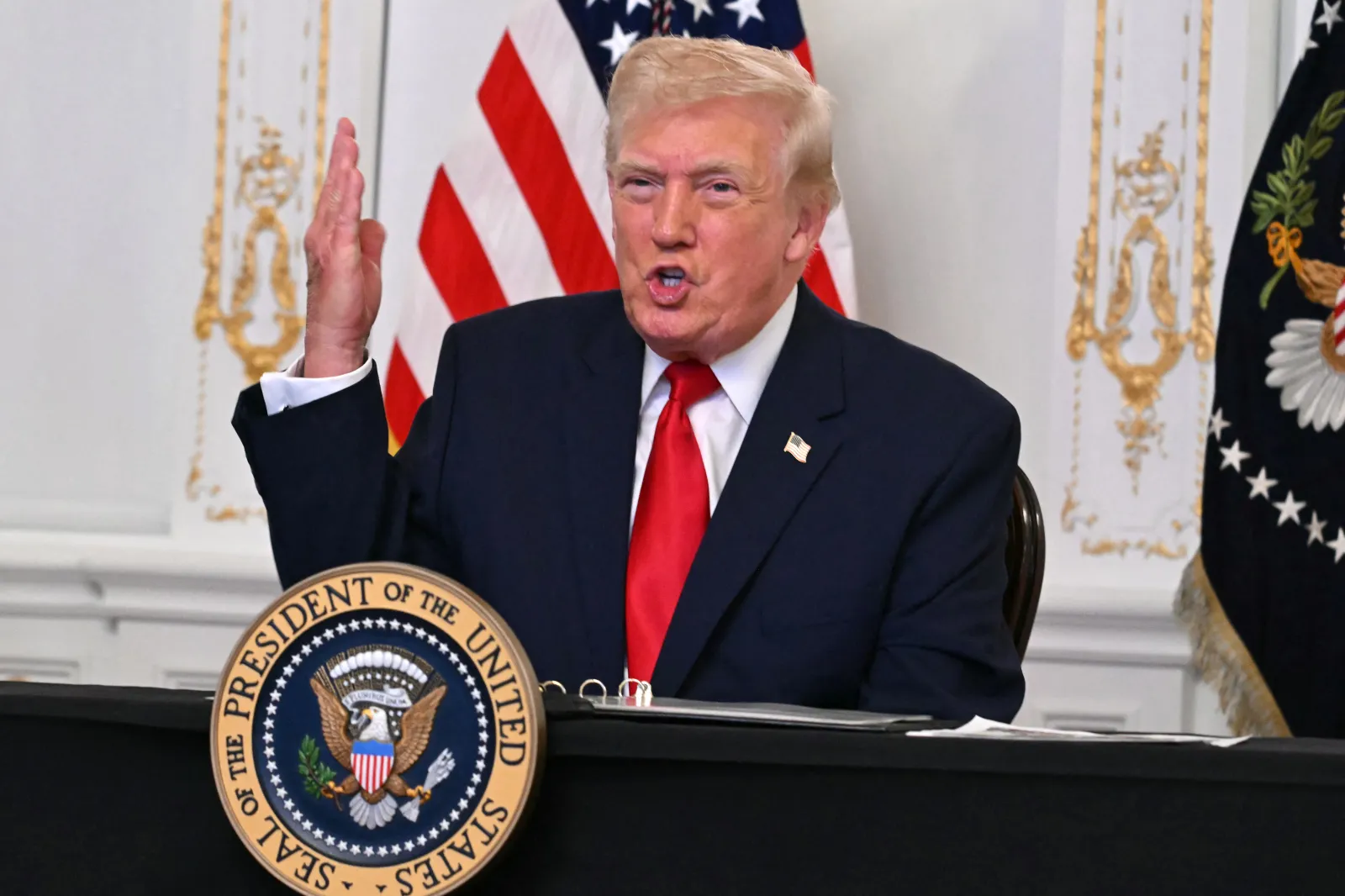

President Donald Trump announced Friday that he is cancelling all executive orders he claims were signed by former President Joe Biden using an autopen—a device that reproduces a person’s signature—asserting that this accounts for roughly 92 percent of Biden’s directives.
Legal experts immediately challenged Trump’s position. Barbara McQuade, former U.S. attorney for the Eastern District of Michigan under the Barack Obama administration, told Newsweek that autopen signatures are considered valid under the law and that the method of signing does not affect the legitimacy of an executive order.
Why It Matters
Trump’s declaration follows his earlier order for an inquiry into Biden’s alleged reliance on an autopen to sign official documents.
The White House has said that, upon returning to office in January, Trump rescinded dozens of Biden-era executive orders. If Biden’s actions were somehow deemed invalid because of autopen use, the fallout could reach far beyond policy—potentially touching presidential pardons, including any involving Biden family members or political allies, and opening the door to legal challenges over due process and the finality of clemency decisions.
The dispute could also prompt tighter documentation or authentication rules for future administrations, even though mechanical and automated signature devices have been in use since the time of Thomas Jefferson and have been employed by multiple presidents, including Trump.
What To Know
On Friday afternoon, Trump posted on Truth Social that “any document signed by Sleepy Joe Biden with the Autopen … is hereby terminated, and of no further force or effect,” claiming that the device was improperly used without proper presidential authorization. He accused Biden’s advisers of effectively usurping presidential authority and said they had “took the Presidency away from him.”
Trump went on to say he was cancelling all executive orders and “anything else that was not directly signed” by Biden, arguing that those who operated the autopen did so illegally. He warned that if Biden claimed to have overseen the process, he should face perjury charges.
According to The American Presidency Project (APP), Biden issued 162 executive orders while in office, though it is not publicly known how many were signed using an autopen.
Legal analysts have broadly rejected Trump’s reasoning. McQuade told Newsweek that any president has the authority to revoke a predecessor’s executive orders “regardless of how [they were] signed,” and emphasized that the autopen is a legally acceptable method of signature.
Not all Republicans agree with that view. Representative James Comer, a Kentucky Republican and chair of the House Oversight Committee, argued on X that the “Biden Autopen Presidency is one of the biggest political scandals in U.S. history.” He alleged that Biden’s inner circle used the device to mislead the public, obscure Biden’s condition, and carry out unauthorized executive actions that he now contends are invalid.
The Department of Justice (DOJ) weighed in on the broader issue in 2005, stating that a president does not need to personally perform the physical act of signing a bill for it to become law, as long as the president has decided to approve and sign it.
Trump has previously acknowledged using an autopen himself, saying it was employed only for what he described as “very unimportant papers,” such as routine letters.
Earlier this year, Trump claimed Biden’s staff used the autopen to push forward “radical” policies. Biden responded by insisting that he personally made the key decisions during his presidency, including those involving pardons, executive orders, legislation, and proclamations, and called any suggestion otherwise “ridiculous and false.”
What Happens Next?
For now, the immediate legal effect of Trump’s announcement is uncertain. Any attempt to broadly invalidate Biden’s executive orders on the basis of autopen use would likely face significant legal scrutiny and could ultimately be resolved in the courts.