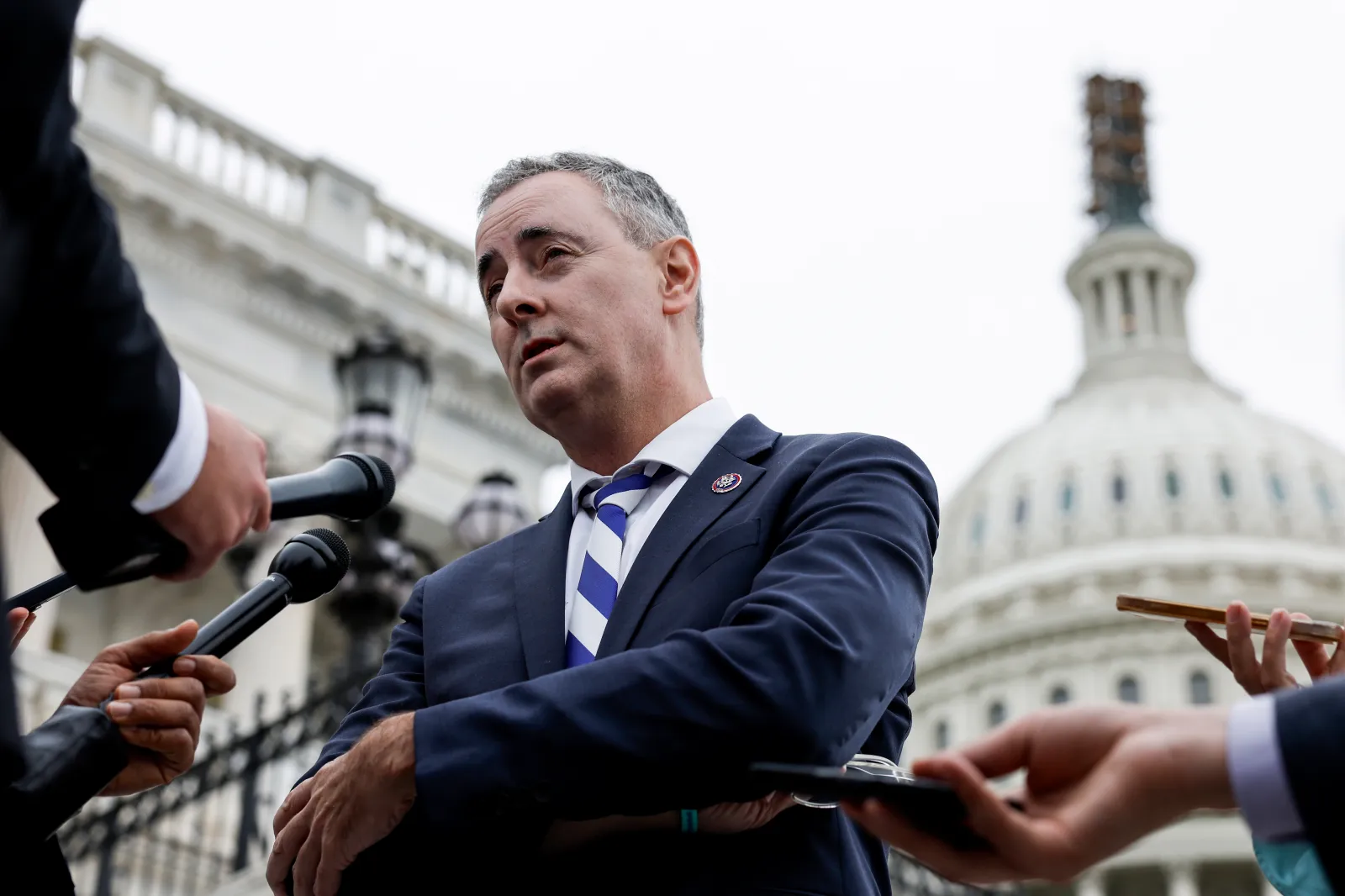

Four House Republicans have joined Democrats’ effort to force a vote on extending Affordable Care Act (ACA) premium tax credits, escalating an intra-party dispute as a key deadline approaches.
Why It Matters
If the enhanced ACA tax credits expire, millions of Americans could face higher health insurance costs. About 22 million people could see premium increases in 2026 if the credits are not extended, according to a KFF report, and some could lose the subsidy entirely. The credits were broadened during the COVID-19 pandemic to help more people afford coverage.
Republicans have been split on whether to extend the subsidies. Support has come largely from lawmakers in competitive districts who are already looking toward difficult 2026 reelection fights.
What To Know
House Speaker Mike Johnson said Tuesday that he would not bring a vote on extending the ACA subsidies, despite pressure from more moderate Republicans. That decision significantly reduced the chances of Congress extending the credits by year’s end.
On Wednesday, the following House Republicans signed onto a discharge petition introduced by House Minority Leader Hakeem Jeffries that would compel a vote on a three-year extension:
- Representative Brian Fitzpatrick of Pennsylvania
- Representative Mike Lawler of New York
- Representative Rob Bresnahan of Pennsylvania
- Representative Ryan Mackenzie of Pennsylvania
All four represent districts carried either by former Vice President Kamala Harris (New York) or narrowly by President Donald Trump (Pennsylvania) last November—an electoral map that could make each seat especially vulnerable in the 2026 midterms.
Fitzpatrick was the first Republican to join the discharge effort. He said in a statement reported by NBC News that he and others worked across party lines for months to propose what he described as a “responsible bridge,” but that House leadership rejected amendments he and colleagues filed.
“As I’ve stated many times before, the only policy that is worse than a clean three-year extension without any reforms, is a policy of complete expiration without any bridge,” he said in the statement. “Unfortunately, it is House leadership themselves that have forced this outcome.”
Johnson, asked about the maneuver, told reporters Wednesday that he has “not lost control of the House.”
“We have the smallest majority in U.S. history,” he said. “These are not normal times. There are processes and procedures that are less frequently used when there are larger majorities.”
Jeffries highlighted the petition’s progress in a post on X: “Urgent update. Our bipartisan petition to force a vote on a straightforward extension of the Affordable Care Act tax credits now has 218 signatures. Mike Johnson should bring the bill to the floor immediately.”
A separate effort is also underway. Representative Josh Gottheimer introduced a discharge petition aimed at forcing a vote on a one-year extension. That petition has drawn support from more Republicans, though it has not attracted unanimous backing from Democrats.
Health care is expected to be a central campaign issue heading into the midterms. A KFF poll released earlier in December found that 84 percent of marketplace enrollees support extending the credits. Among those respondents, 35 percent said they would blame Republicans in Congress if the credits expire, while 41 percent said they would blame Trump. The poll surveyed 1,350 adults with ACA Marketplace coverage from November 7–15 and had a margin of error of plus or minus 3.3 percentage points.
What People Are Saying
Representative Mike Lawler, in a statement: “This procedural step is not an endorsement of the bill written. I continue to believe any extension should be targeted, fiscally responsible, and include income eligibility limits and safeguards against fraud, similar to the bipartisan discussions underway in the Senate. But when leadership blocks action entirely, Congress has a responsibility to act. My priority is ensuring Hudson Valley families aren’t caught in the gridlock.”
House Speaker Mike Johnson, on Tuesday: “There’s about a dozen members in the conference in these swing districts that are fighting hard to make sure that they reduce costs for all of their constituents. Many of them did want a vote on this Obamacare COVID-era subsidy that the Democrats created. We looked for a way to try to allow for that pressure release valve, and it just was not to be.”
House Minority Leader Hakeem Jeffries, last week: “There are only five legislative days left before the Affordable Care Act tax credits expire. And we have yet to see a Republican plan to prevent tens of millions of Americans from experiencing dramatically increased premiums, co-pays and deductibles. We know that premium increases in some cases will be $1,000 or $2,000 per month. This is going to make health care unaffordable for millions of working-class Americans, middle-class Americans and everyday Americans.”
What Happens Next
The discharge petition has reached 218 signatures, the threshold needed to force a vote. If every signer votes for the extension, it would pass the House. The proposal could face a steeper path in the Senate, which has already rejected legislation to extend the subsidies for three years.