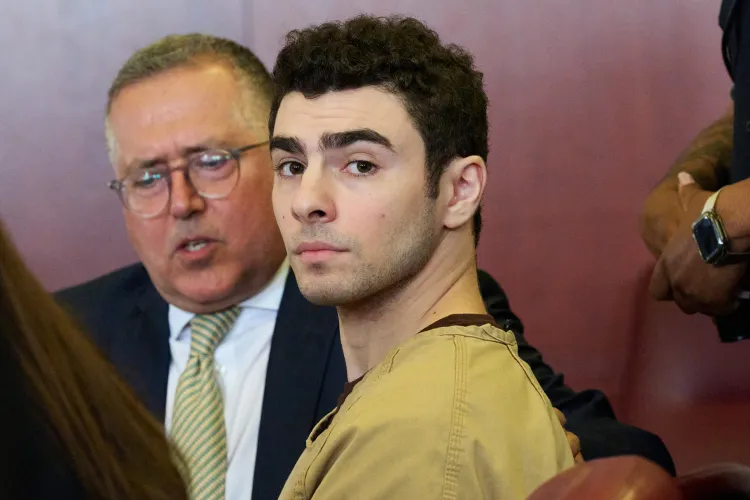

Luigi Mangione, the man accused of killing UnitedHealthcare’s CEO last year, got what a former Manhattan prosecutor called a legal win on Tuesday, Sept. 16, after a New York judge dismissed two terrorism charges in his state case.
“Mangione can claim a legal victory today, and yes, it is,” said Gary Galperin, an adjunct professor at Cardozo School of Law in New York, in an interview shortly after the judge’s ruling. “But this is far from over.”
Judge Gregory Carro, who is handling Mangione’s state case, kept other charges, but his decision removed the two main charges, including first-degree murder, which could have sent Mangione to prison for life.
Prosecutors had also charged Mangione with second-degree murder in furtherance of terrorism, which was another dropped count. Mangione, 27, is also facing a federal case that could result in the death penalty. He has pleaded not guilty to both state and federal charges.
“While the defendant clearly expressed anger toward UHC and the healthcare industry, it does not mean his goal was to ‘intimidate and coerce a civilian population,’ and there was no proof of such a goal,” Carro said in his written decision.
Galperin, a 40-year veteran prosecutor in the Manhattan DA’s office, said the judge’s decision made sense because UnitedHealthcare employees are not considered a “civilian population.”
“Here, the judge found, and I think logically, that the employees of UnitedHealthcare would not count as a civilian population. These are employees, not people living in a region or part of a specific racial or ethnic group, which is what the law is meant to cover.”
Mangione’s lawyers did not immediately respond to requests for comment. They had argued that the district attorney’s office had “expanded New York’s terrorism statute well beyond its intended purpose to seek enhanced charges against” Mangione.
The judge also said there was not enough evidence that Mangione tried to influence government policy, which is another part of the terrorism charges.
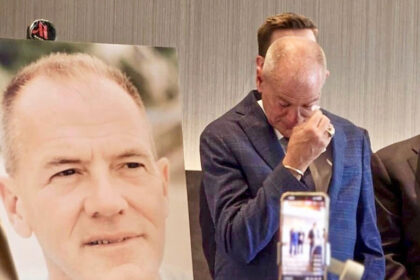
Mangione is accused of shooting UnitedHealthcare CEO Brian Thompson on Dec. 4, 2024, outside a Midtown Manhattan hotel. The killing was caught on surveillance cameras, and Mangione was arrested a few days later at a McDonald’s in Altoona, Pa.
“This is somewhat of an unusual case,” Galperin said, because Mangione is alleged to have targeted the CEO, Brian Thompson, “to draw attention to what he saw as unfairness in the healthcare system and the greed of the healthcare industry, especially UnitedHealthcare.”
Authorities said they found a notebook from Mangione that described his plan to “wack” an insurance executive. The writings may be used to show his motive, Galperin said.
The second-degree murder case can still move forward, Carro ruled, because the DA provided enough evidence that Mangione “murdered Brian Thompson in a premeditated and calculated way.”
“The Manhattan DA’s office had reason to consider acts of terrorism, and they got a grand jury to agree,” Galperin said. “But the judge’s dismissal is well explained and makes sense.”
A spokesperson for Bragg’s office said in a statement on Tuesday, “We respect the Court’s decision and will proceed on the remaining nine counts, including murder in the second degree.” For that charge, Mangione could get 25 years to life if convicted.
“I prosecuted many murder cases, and this is a tough one,” Galperin said. “What would be a good defense for him?”