
In the aftermath of President Donald Trump’s surprise military strikes on Iran’s nuclear facilities, a flood of urgent questions has followed. Were the attacks legal under international law? How might Iran respond? And is this Trump’s first step toward deeper conflict—or the last chapter in this confrontation?
While those big-picture questions are crucial, there’s also an immediate one: Did the strikes actually achieve what Trump claimed?
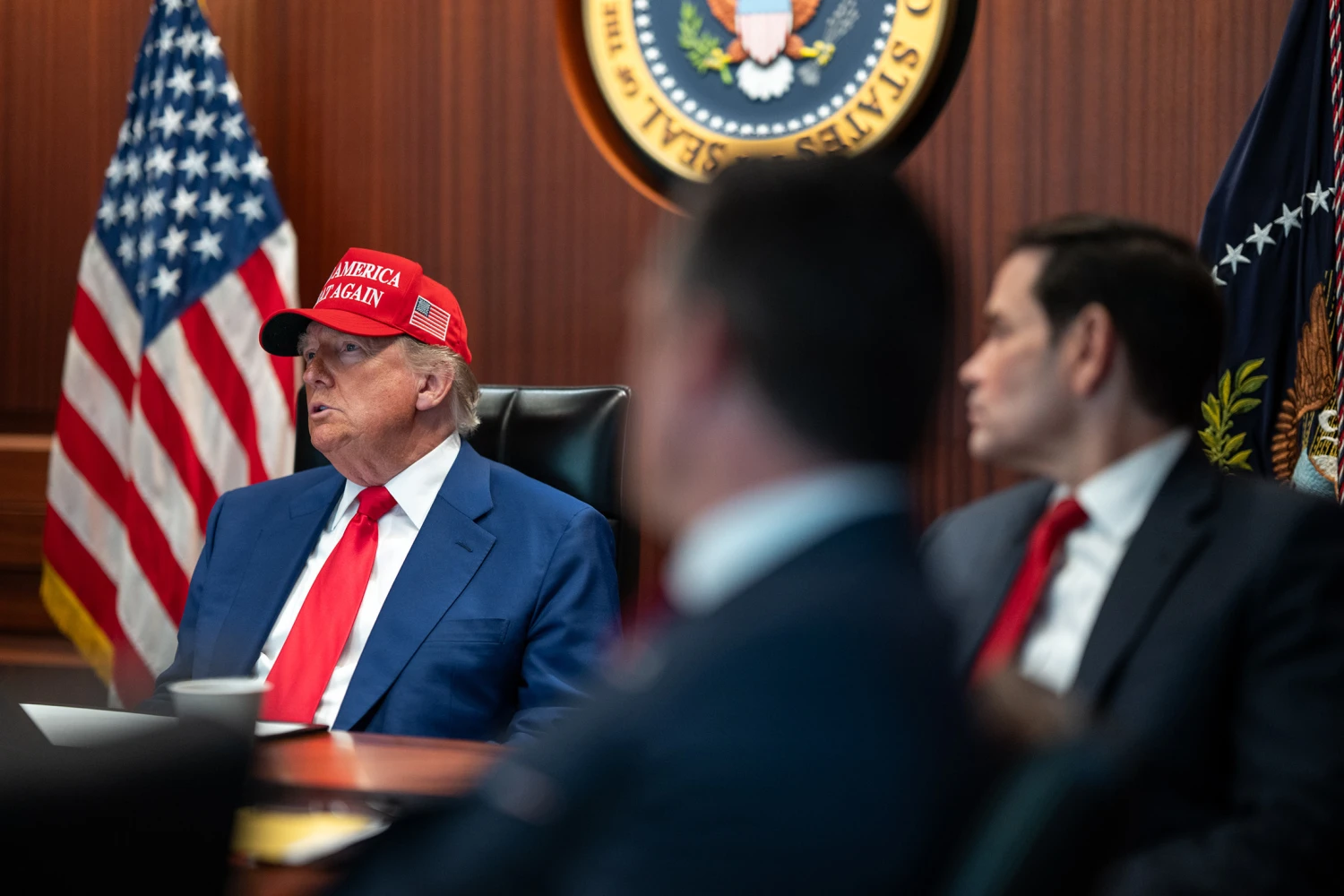
On Saturday night, Trump addressed the nation from the White House and declared the mission a complete success. In his words, Iran’s nuclear capabilities had been “completely and totally obliterated.” Defense Secretary Pete Hegseth echoed the language shortly after, insisting that the country’s nuclear ambitions were now in ruins.
The message was clear: America had ended Iran’s nuclear threat in one swift move.
But by Sunday morning, cracks had already begun to show in that narrative.
At a Pentagon press briefing, Gen. Dan Caine, the chairman of the Joint Chiefs of Staff and a Trump appointee, said it was “way too early” to determine the true extent of the damage. Hours later, Vice President JD Vance appeared on Meet the Press and backed away from Trump’s bold language. Instead of confirming that Iran’s program had been obliterated, Vance said only that it had been “substantially delayed.”
That’s a major difference. “Obliterated” suggests total destruction—end of story. “Delayed” implies Iran’s nuclear ambitions are still very much alive, just slowed down.
As The New York Times reported, the reality is far murkier than the president’s speech implied. U.S. officials admitted they still couldn’t confirm the status of Iran’s enriched uranium stockpile—the heart of any nuclear weapons program.
What makes this more troubling is that Trump wasn’t speaking off the cuff. His speech was scripted and delivered from a teleprompter—intended to be an official message to both Americans and the international community.
Yet within hours, his central claim was already in doubt.
By Sunday afternoon, Trump was back on social media, insisting, “The damage to the Nuclear sites in Iran is said to be ‘monumental.’” But even that phrasing raised eyebrows: “Said to be” by whom? And why the sudden hedge?
Trump’s tone suggested he might be distancing himself from his original claim, just in case it didn’t hold up under scrutiny. It wouldn’t be the first time the president leaned into exaggeration only to walk it back under pressure.
To be fair, it’s still possible the strikes did major damage. But so far, neither Trump nor his top advisors seem to know for sure. And that uncertainty matters—not just for national security, but for public trust.
When the president of the United States takes the country into a dangerous new phase of conflict, Americans deserve clarity, credibility, and facts. So far, they’ve gotten more questions than answers.