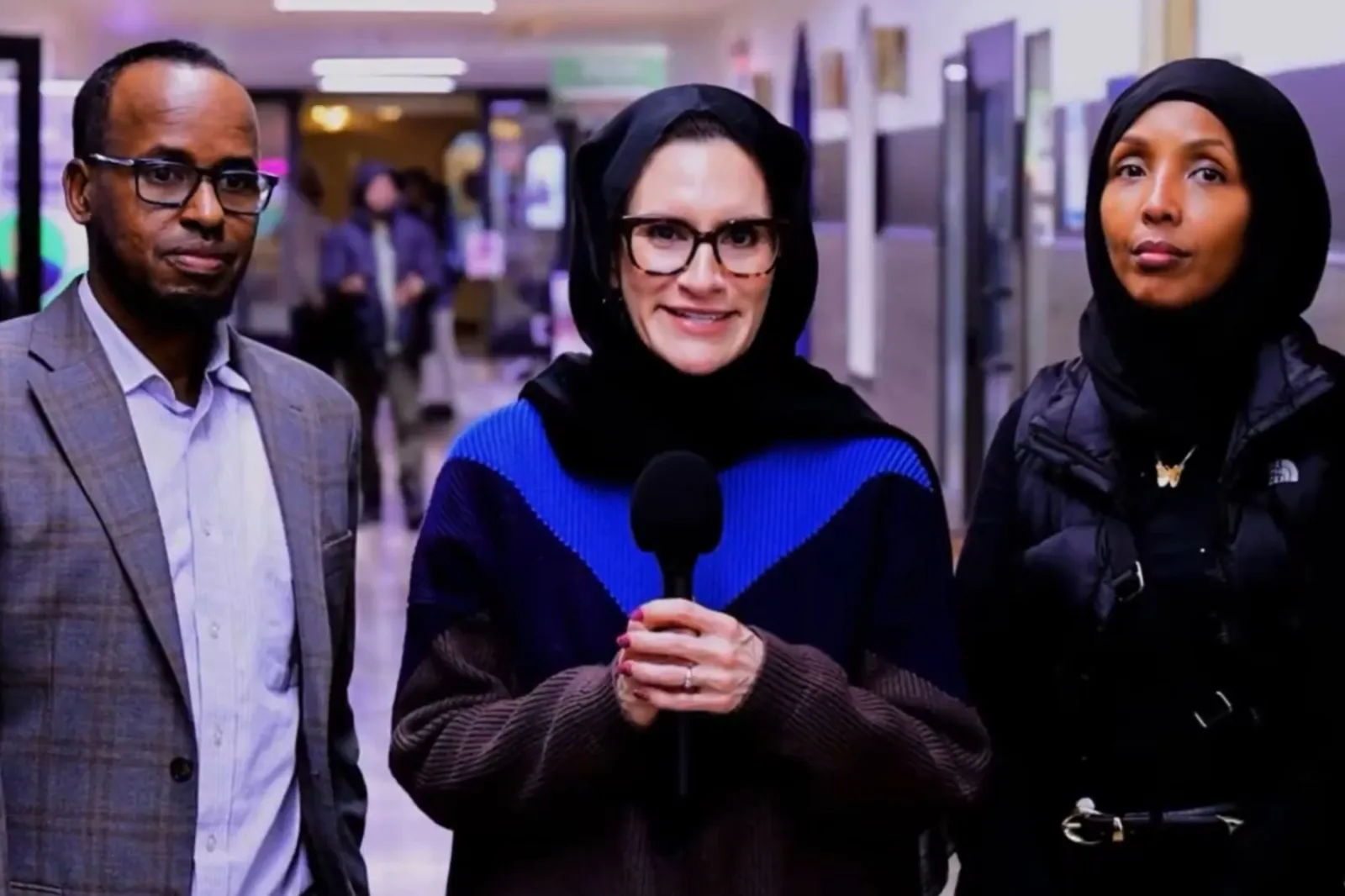

Minnesota Lieutenant Governor Peggy Flanagan is drawing sharp criticism from conservative commentators and political figures after she appeared in a hijab during a visit to the Karmel Somali Market in Minneapolis.
In video aired on Somali-language television, Flanagan stood alongside local Somali leaders, greeted viewers with “Salam alaikum,” and said the Somali community “is part of the fabric of the state of Minnesota.” She also encouraged Minnesotans to support Somali-owned businesses and immigrant neighbors, adding, “We’ve got your back.”
Why It Matters
The backlash comes amid heightened political attention on Somali Minnesotans following federal prosecutions tied to what officials describe as a major set of fraud investigations involving public programs. Flanagan is also among the leading Democratic contenders for the U.S. Senate seat expected to open in 2026 when Senator Tina Smith leaves office.
What Happened
During the market visit, Flanagan—who is Catholic and Native American—thanked the community for its friendship and spoke about the Somali community’s long presence in Minnesota. Her appearance, including the decision to wear a hijab, quickly became a flashpoint online.
The Criticism
Conservative voices framed the moment as political pandering and attacked the symbolism of the hijab.
Former Trump strategist Steve Bannon accused Flanagan of “bending the knee,” arguing on X that the appearance signaled religious and cultural submission. Far-right activist Laura Loomer said Flanagan’s actions should disqualify her from office, claiming that “any politician who embraces Islam must be removed from office.”
Commentator Amy Mek described the hijab as “a political uniform” and argued that the visit was aimed at appeasing a specific constituency rather than speaking to Minnesota voters broadly. Other critics compared the gesture to political symbolism seen during the 2020 George Floyd protests, including lawmakers wearing African kente cloth in the U.S. Capitol.
Minnesota Republican Representative Tom Emmer, speaking to Fox News Digital, called the appearance “a stunt,” saying Flanagan and U.S. Representative Angie Craig were trying to win over far-left voters in the Twin Cities.
Conservative commentator Eric Daugherty also criticized the move, portraying it as an appeal to a “foreign-language Islamic voting bloc,” and suggested it reflected deeper cultural and political divisions in the state.
Broader Context: Fraud Investigations and Community Tensions
Federal prosecutors have outlined a wide range of alleged fraud schemes involving Minnesota-administered aid programs, with estimates that losses could be extremely large. The cases have intensified political rhetoric, including attempts by some Republicans to link the investigations to Minnesota’s Democratic leadership and to Somali Minnesotans more broadly.
Experts and community leaders have pushed back on that framing. Ahmed Samatar, a professor at Macalester College, said many Somali Minnesotans believe individuals accused of wrongdoing should face the legal system. Yusuf Abdulle, a Minneapolis-based imam who leads the Islamic Association of North America, told the Associated Press that fraud should be viewed as individual wrongdoing—not a reflection of a community.
What People Are Saying
Flanagan posted on X on December 4: “Donald Trump’s attacks on the Somali community are not about safety. They’re about stoking division and fear.”
President Donald Trump, at a Cabinet meeting on Tuesday: “They contribute nothing. I don’t want them in our country. Their country is no good for a reason. Your country stinks and we don’t want them in our country.”
What Happens Next
Flanagan is running for the open U.S. Senate seat created by Senator Tina Smith’s decision not to seek re-election. She faces a competitive Democratic primary, with U.S. Representative Angie Craig expected to be a major rival.