One word dominated the latter half of 2025: affordability. It showed up on campaign signs, echoed through stump speeches, fueled viral clips and anchored focus groups. Democrats embraced it to win elections and reshape the economic argument.
As the calendar flipped to 2026 early Thursday, that same word surfaced in two very different moments. Zohran Mamdani was sworn in as New York City’s mayor, while enhanced Obamacare subsidies expired nationwide at midnight. The events were not formally linked, but both touched the same raw nerve: the rising cost of living and who has the credibility to confront it—or risks losing power trying.
At 34, Mamdani rode an affordability-focused message to a nearly ten-point victory in the highest-turnout mayoral election New York has seen in decades. His slogan, “a city we can afford,” quickly became shorthand for a broader Democratic strategy that would have seemed unlikely just months earlier, following the party’s disorienting loss in 2024.
Initially, many Democrats resisted the framing. But as Mamdani surged—buoyed by renters, commuters and working-class voters priced out of city life—“affordability” began to eclipse terms like “inflation” and “economic fairness” on the campaign trail. The same cost-of-living pressures that helped Donald Trump win the presidency in 2024 were now being claimed by Democrats, displacing the Biden-era focus on macroeconomic indicators and newer center-left arguments about economic abundance.
“It’s not just about inflation anymore,” said Todd Belt, director of the Political Management Program at George Washington University. “Prices are still high and people don’t feel their earnings keeping up. You can’t out-message what people are feeling in their pocketbooks.”
Mamdani didn’t merely adopt the language—he forced an internal reckoning. By August, Sen. Elizabeth Warren was calling affordability “the central issue, the central reason to be a Democrat.” Governors and mayors from California to Minnesota soon followed, folding the term into agendas on housing, health care and child care.
The shift was measurable. Analysts tracking congressional emails and speeches noted a sharp spike in references to affordability in late 2025, closely following Mamdani’s win. “All politics is affordability now,” analyst G. Elliott Morris wrote on X, observing that even Republican strategists were scrambling to adjust.
“Affordability can’t be a slogan,” Mamdani warned during a runoff debate, a pointed jab at party leaders who embraced the rhetoric only as his victory became inevitable. On the trail, he questioned whether national Democrats were serious about lowering costs or simply borrowing the language without committing to policy change.
Turning a Message Into Policy
Mamdani anchored his unlikely campaign around three specific pledges: freezing rent, making buses free and delivering universal child care. On election night, supporters chanted the promises back to him in unison.
Voters appear to agree on the priority, even if they remain divided over who can deliver. A December Ipsos–Reuters poll found that 67 percent of Democratic voters want affordability to be the party’s central focus, yet only 38 percent believe national leaders have a clear plan.
“Democrats entered 2025 depressed, powerless and directionless. Mamdani’s win provided a much-needed boost of optimism,” said Democratic strategist Doug Gordon. “More importantly, he gave the party a roadmap for how to run—and win—on the issue voters care about most: affordability.”
The concern extends beyond Democrats. Among independents, affordability ranked as the top economic issue, but fewer than one in three said they trust either party to improve the cost of living. A late-December Harris Poll showed that about 54 percent of independents felt their financial security was worsening, while 58 percent believed the country was in a recession.
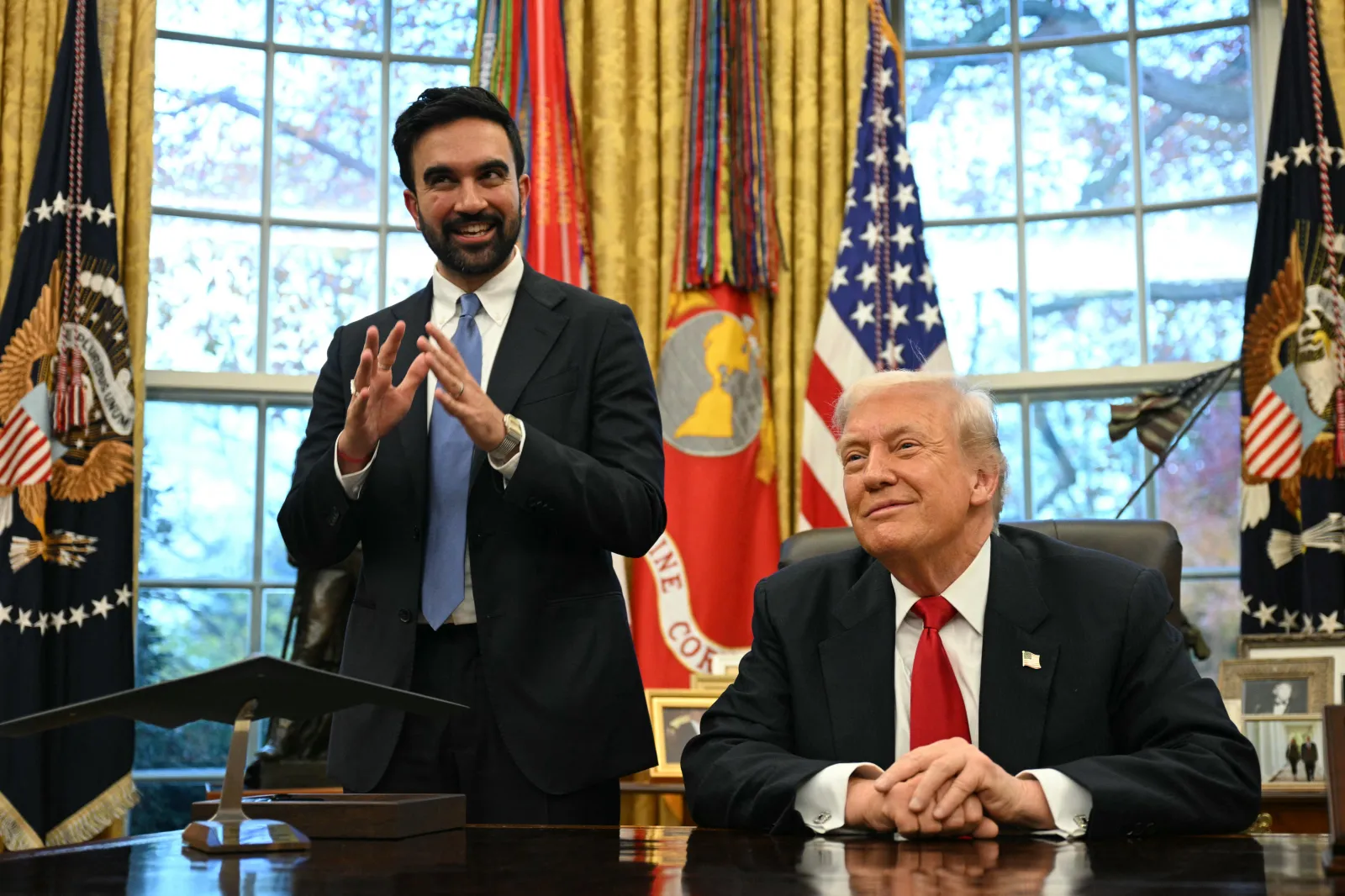
Those pressures pushed affordability into even unlikely conversations. In November, Trump met with Mamdani at the White House after months of sharp campaign attacks. The meeting, widely expected to be tense, instead focused on cost-of-living issues. Mamdani later said it largely sidestepped their disagreements.
“What I really appreciate about the president is that the meeting focused on our shared purpose in serving New Yorkers,” Mamdani said afterward. Trump was more blunt, noting that they discussed housing affordability and everyday costs and adding, “Some of his ideas are really the same ideas that I have.”
While Mamdani may lack unilateral authority to enact all his proposals—particularly on taxation—he enters office with momentum, analysts said. New York Gov. Kathy Hochul has already backed the most expensive of his initiatives, universal child care, signaling agreement on funding despite its hefty price tag.
Subsidies Expire, Stakes Rise
If 2025 marked affordability’s rise as the defining political word, 2026 is poised to test who truly owns it. As Mamdani took office in a long-abandoned subway station beneath Lower Manhattan, another reality set in nationwide: enhanced Obamacare subsidies expired at midnight. More than 20 million Americans now face the loss of expanded coverage and the prospect of sharply higher premiums.
The lapse followed a 43-day government shutdown that exposed deep divisions. Democrats refused to extend funding without renewing the subsidies. Republicans countered with a plan centered on tax credits and health savings accounts. Neither side yielded, and by the time the shutdown ended just before the holidays, the subsidies’ fate was effectively sealed.
For Democrats still reeling from last November, the expiration became an immediate campaign cudgel. They argue that the self-proclaimed party of affordability left voters exposed. The message has already shown results. In off-year elections last November, Democrats outperformed expectations, flipping governorships in New Jersey and Virginia and scoring surprise suburban wins while hammering Republicans on the cost of living. Post-election polling showed “affordability” overtaking “inflation” as the top concern among swing voters.
Trump, meanwhile, has bristled at watching the word slip away. “We are the ones that have done a great job on affordability, not the Democrats,” he said in November. As the new year begins, the White House is preparing its own counteroffensive.
Behind the scenes, aides have launched what they call an “affordability offensive.” The 2024 tax cuts took effect this month, boosting disposable income as campaign season ramps up. Trump has highlighted deals with drugmakers and circulated videos pointing to falling prices for groceries and gas, even as costs remain elevated in areas like housing and electricity.
Perhaps most consequentially, Trump is preparing to name a new Federal Reserve chair. His long-running feud with Jerome Powell has evolved into a calculated power play. After branding Powell “Too Late” for resisting rate cuts, Trump is expected to replace him when his term ends in the spring—a move that could shape borrowing costs and, by extension, the affordability narrative for the rest of his presidency.
Lower rates, rising paychecks and the promise of a cheaper America form the White House’s bet ahead of the midterms. But affordability, Belt cautioned, resists easy measurement. “It’s not a line on a graph,” he said. “It’s a feeling—and that makes it harder to control and easier to lose.”
The data complicates the pitch. The economy grew at a robust 4.3 percent annual rate in the third quarter, one of its fastest expansions in two years, yet relief has been slow to reach consumers. Inflation has climbed back to 3 percent since spring, a trend many economists attribute largely to new tariffs. Electricity and grocery prices remain high, and job growth has slowed sharply, with monthly hiring averaging just 51,000.
Polling underscores the disconnect. According to the latest Economist/YouGov survey, 60 percent of independents now say the economy is getting worse, even as GDP and the stock market rise—one of the highest levels of pessimism since 2022.
“Trump now finds himself defending elevated prices while arguing that conditions are improving,” said Lawrence J. White, an economist at NYU’s Stern School of Business. “That’s a difficult position to maintain.”