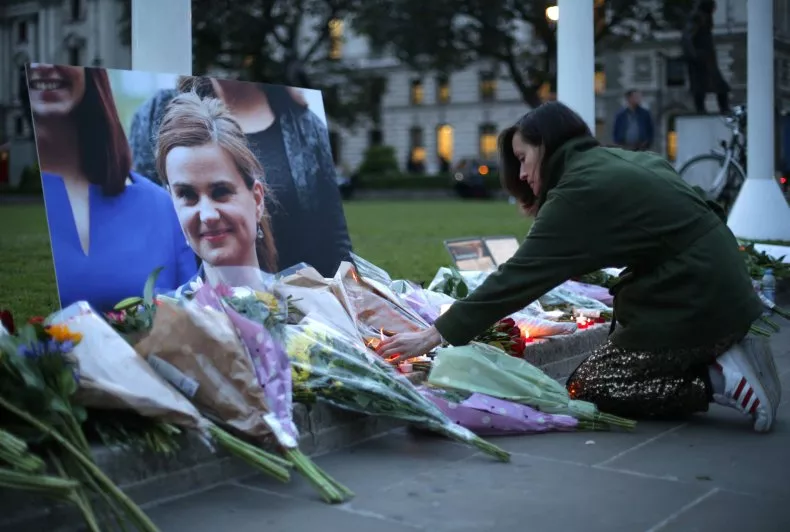

In June 2016, my close friend and former Oxfam colleague, British MP Jo Cox, was murdered outside her office in West Yorkshire. Jo was more than a rising political figure—she was a mother, a humanitarian, and a fearless advocate for justice. Her life was ended by a man fueled by hate, armed with a homemade gun, a knife, and a far-right ideology. I remember the phone call that day—the disbelief that someone could be so consumed by politics that they’d take another person’s life.
Every June, I mourn Jo. But this year, that sorrow turned to shock. In the U.S., political violence has claimed more lives: Minnesota State Representative Melissa Hortman and her husband Mark were killed. State Senator John Hoffman and his wife Yvette were critically wounded. The attack was as senseless as it was horrifying.
These tragedies must serve as a wake-up call.
Public servants should not fear for their families simply because they’ve chosen to serve. Political violence doesn’t just injure individuals—it erodes public trust, deters civic participation, and corrodes democracy from within.
Some responsibility for calming this climate lies squarely with the president and his administration. But instead of cooling tensions, this White House has often escalated them—vilifying critics, judges, civil servants, and political opponents alike. The message is clear: disagreement equals disloyalty, and dissent is dangerous.
By the time insurrectionists stormed the Capitol on January 6, 2021, the warning signs had been flashing for years: the 2011 shooting of Rep. Gabby Giffords; the 2017 baseball field ambush that nearly killed House Majority Whip Steve Scalise; the 2022 hammer attack on Speaker Nancy Pelosi’s husband. And just last year, former President Trump himself survived an assassination attempt during a campaign rally.
According to the U.S. Capitol Police, threats against members of Congress jumped from under 4,000 in 2017 to nearly 10,000 in 2021. Yet the underlying issues—radicalization, extremism, and rhetorical incitement—remain dangerously unresolved.
After Jo’s murder, the U.K. government acted swiftly: bolstered security at constituency offices, funding for MPs to install home protection systems. In the U.S., Congress passed a $2.1 billion post–Jan. 6 security package, and lawmakers now receive reimbursements for home security. These are sensible steps—but they treat the symptoms, not the cause.
What we need is a true national consensus that political violence is unacceptable—no matter who it’s directed at. That means federal leaders must prioritize prevention, not just response. It also means elected officials at every level must choose their words more carefully. Disagreements should never be allowed to turn into demonization.
No lawmaker should ever fuel hate or wink at violence. They must condemn it clearly and consistently—on social media, in press interviews, on the campaign trail. Silence enables. Words matter.
In her maiden speech to the U.K. Parliament, Jo Cox reminded us: “We are far more united and have far more in common with each other than things that divide us.” She believed in the possibility of a better politics—one rooted in dignity, mutual respect, and the defense of democracy itself.
That’s a vision worth protecting. And it’s on all of us to do the protecting—before we lose something we can’t get back.
Nicole Widdersheim served in the Bush, Obama, and first Trump administrations and is deputy Washington director at Human Rights Watch.