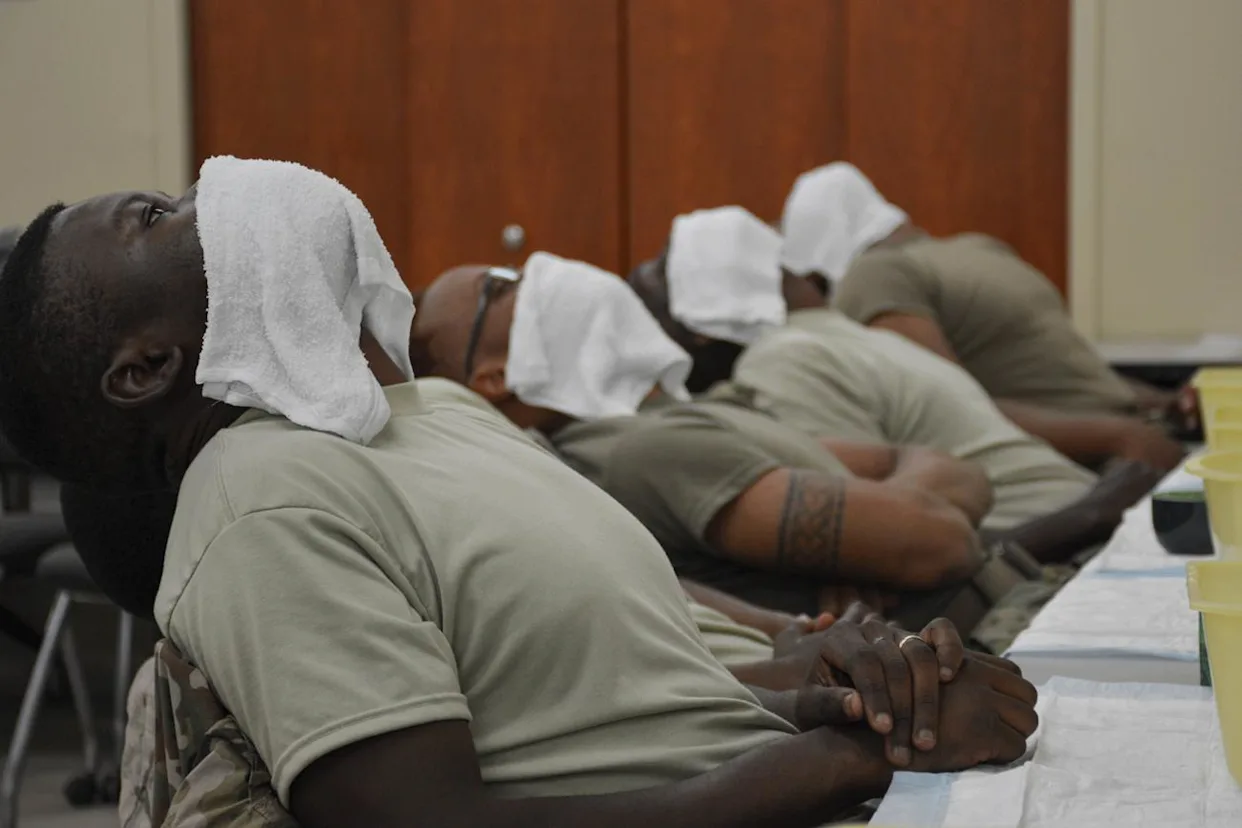

The U.S. Army is preparing to implement a new grooming policy that could lead to the discharge of soldiers suffering from a chronic skin condition that disproportionately affects Black men — raising concerns about fairness and racial bias within the ranks.
According to internal documents reviewed by Military.com, the policy — expected to take effect in the coming weeks — will eliminate permanent shaving waivers and require troops with medical shaving issues to undergo formal treatment plans. In cases where symptoms persist, soldiers may be pushed to undergo laser hair removal treatments, and those who require shaving exemptions for more than 12 months in a two-year period may face separation from the Army.
All Army units will be required to rebrief troops on grooming standards within 90 days of the rollout.
The move targets service members diagnosed with pseudofolliculitis barbae (PFB) — a painful condition in which coarse or curly hair grows back into the skin after shaving, causing bumps and scarring. While the Pentagon may cover the cost of laser treatments, those can cost thousands of dollars depending on the number of sessions needed and can lead to scarring or changes in skin color.
The American Osteopathic College of Dermatology estimates up to 60% of Black men are affected by PFB.
“This is absolutely racially motivated,” said one senior noncommissioned officer familiar with the policy, speaking anonymously to avoid retaliation. “There’s no tactical reason. You can still look professional with facial hair.”
The policy mirrors a similar move by the Marine Corps earlier this year, which also allows for separation of troops with persistent shaving-related conditions — a change that sparked backlash over racial disparities.
The Army has struggled with recruitment declines since the end of large-scale deployments in Iraq and Afghanistan. While Black Americans represent about 14% of the U.S. population, they account for roughly 25% of Army recruits, a number that’s grown steadily. But that may now be in jeopardy, especially as the Defense Department under Secretary Pete Hegseth has rolled back diversity initiatives and shifted recruitment efforts away from minority communities.
In 2018, more than 44,000 Army recruits identified as white. By 2023, that number had plunged to just over 25,000 — a 43% drop in five years. No other demographic group has seen such a steep decline.
The Army’s new crackdown is part of a broader review of grooming standards ordered by Hegseth, who has spoken out against what he views as relaxed discipline in the ranks.
“We used to kick soldiers out for inappropriate tattoos,” he said in March. “Now we’re excusing dreadlocks, man buns, obesity, and shaving waivers — all in the name of ‘equity.’ The standard has crumbled.”
But concerns about shaving and racial bias go back decades. In the 1970s, as the military began addressing racial inequality, then–Chief of Naval Operations Adm. Elmo Zumwalt allowed facial hair in part to help Black sailors suffering from PFB — a policy that clashed with the Navy’s strict grooming rules but recognized the medical and racial implications.
The main argument against facial hair in the military has long been the potential impact on gas mask seals. However, a 2021 study published in Military Medicine found no clear evidence that short, well-kept beards interfere with gas mask effectiveness — and noted that only a small portion of troops serve in environments where gas attacks are a realistic threat.
The military already allows grooming flexibility in extreme conditions. In Alaska, for example, soldiers are often told to skip shaving in winter due to the risk of frostbite, as shaving in sub-zero temperatures can cause serious injury.
Despite these realities, the Army appears set on tightening grooming enforcement. Critics argue this move could alienate and penalize some of its most loyal and historically underrepresented members — and may harm both recruitment and retention at a time when the Army can least afford it.