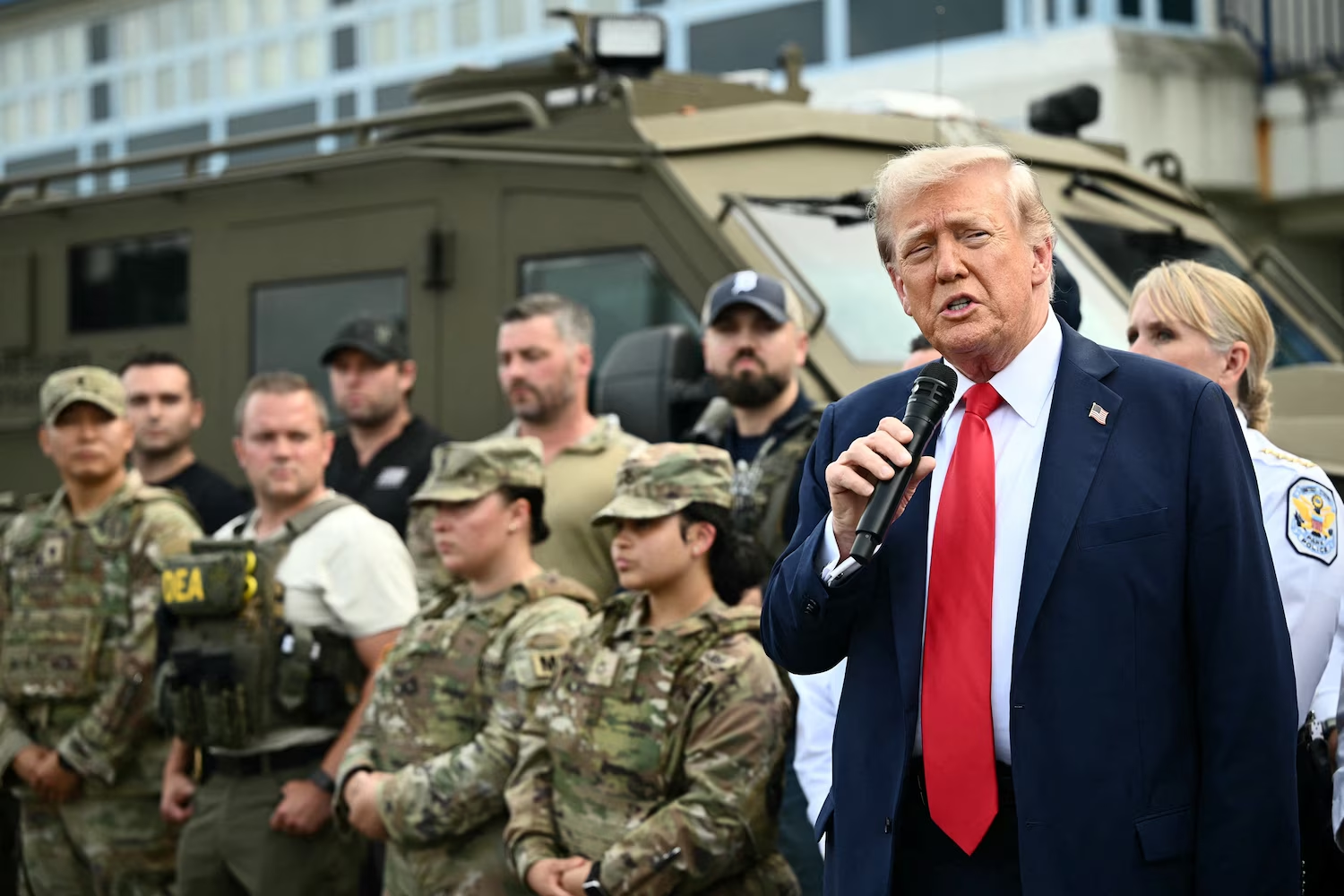

President Donald Trump met with police and military personnel in Washington, D.C., on Thursday to review the surge in federal law enforcement and National Guard forces, citing what he calls a crime emergency in the city.
Trump visited the U.S. Park Police Anacostia Operations Facility in Southeast D.C., the central hub for all agencies involved in the operation. He thanked officers and members of the military and handed out hamburgers from the White House and pizza during his visit.
Departing the White House in the presidential limousine—nicknamed “the Beast”—Trump was accompanied by U.S. Attorney General Pam Bondi and White House deputy chief of staff Stephen Miller on the trip to the facility.
“I just want to thank everybody very much for being here,” Trump said. “We’ve had some incredible results that have come out, and it’s like a different place. It’s like a different city. It’s the capital. It’s going to be the best in the world.”
Speaking to the assembled personnel, Trump highlighted his anti-crime initiative.
“You got to be strong, you got to be tough,” he said. “You got to do your job. Whatever it takes to do your job.”
Earlier Thursday in a radio interview, Trump mentioned he would be “going out tonight” with law enforcement and the military, though he returned to the White House after visiting the facility.
The president deployed the National Guard a week ago to assist police, citing rising crime. Officials clarified that Guard members are not making arrests but may briefly detain individuals before transferring them to law enforcement.
Violent crime levels in the city have declined compared to previous years, down 26% since 2024, marking a 30-year low according to the city’s Metropolitan Police Department.
Trump told radio host Todd Starnes that the D.C. deployment was “sort of a test” and suggested the approach could be expanded to other cities nationwide.
“It’s working unbelievably, much faster than we thought. We’ve arrested hundreds of criminals, hardline criminals, people that will never be any good,” he said.
He also indicated that Memphis would be one of the next cities to see a similar operation.
“And, you know, unfortunately, we have a lot of cities like that. But I love Tennessee. You know, I won Tennessee by many, many, many points. So it was a landslide, far greater than even, you know, the Republican. Republicans do good in Tennessee, but, I mean, my number was like 35 points, and I’m glad you tell me that I can put that early on a list, and I’m sure that people would love it,” Trump added.
In June, Trump deployed the California National Guard to Los Angeles during protests against immigration raids conducted by Immigration and Customs Enforcement (ICE). Democratic Gov. Gavin Newsom filed a lawsuit claiming the move violated the Posse Comitatus Act, which prohibits the use of the military as a domestic police force; a ruling is still pending.
Trump said he “straightened out crime in four days in DC” and pushed back against critics, calling the allegations of authoritarianism unfounded.
“And all I do, all they do is they say ‘He’s a dictator, he’s a dictator’—the place, people are getting mugged all over the place, and they give you phony records, like, it’s wonderful and it’s worse than it ever was, but we’ve got it going. People are so happy. They’re going out to restaurants again,” he stated.
The remarks came a day after Vice President JD Vance, Defense Secretary Pete Hegseth, and White House deputy chief of staff Stephen Miller visited the National Guard at Union Station, where they were met with protests.
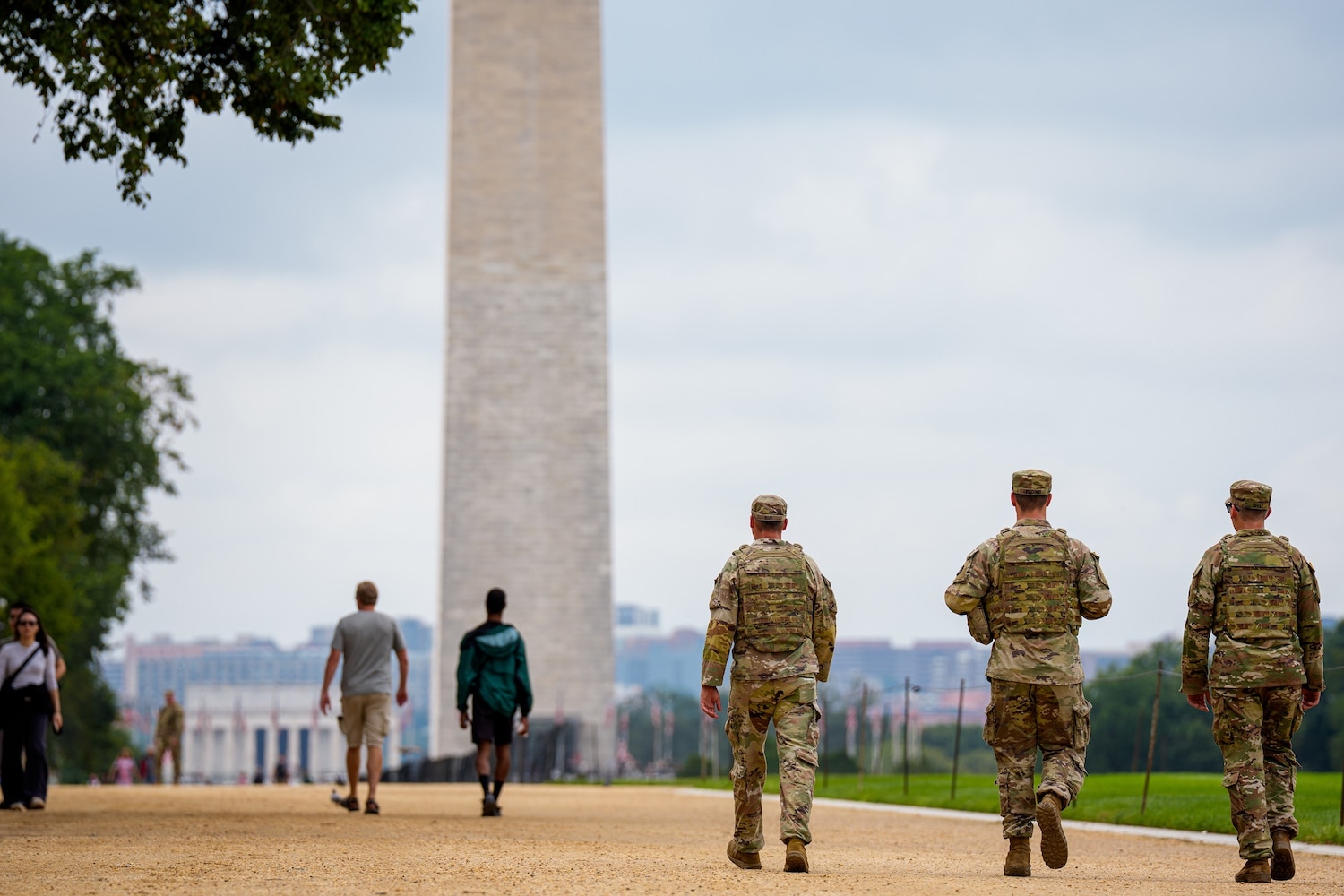
Nearly 2,000 guardsmen from D.C. and six states have been mobilized to support Trump’s operation in the capital. They remain unarmed for now, though officials indicated that could change.
Troops have been stationed outside high-profile locations, including the National Mall and Union Station, where crime is generally lower than in other parts of the city. Trump and other officials have not provided a timeline for the troop deployment.
Vance dismissed crime statistics showing fewer incidents at Union Station, arguing that they do not reflect the full scope of crime in D.C.
Washington, D.C., Mayor Muriel Bowser criticized the federal surge as politically motivated and disconnected from actual crime patterns.
“This doesn’t make sense. The numbers on the ground and the district don’t support 1,000 people from other states coming to Washington, D.C.,” Bowser said.