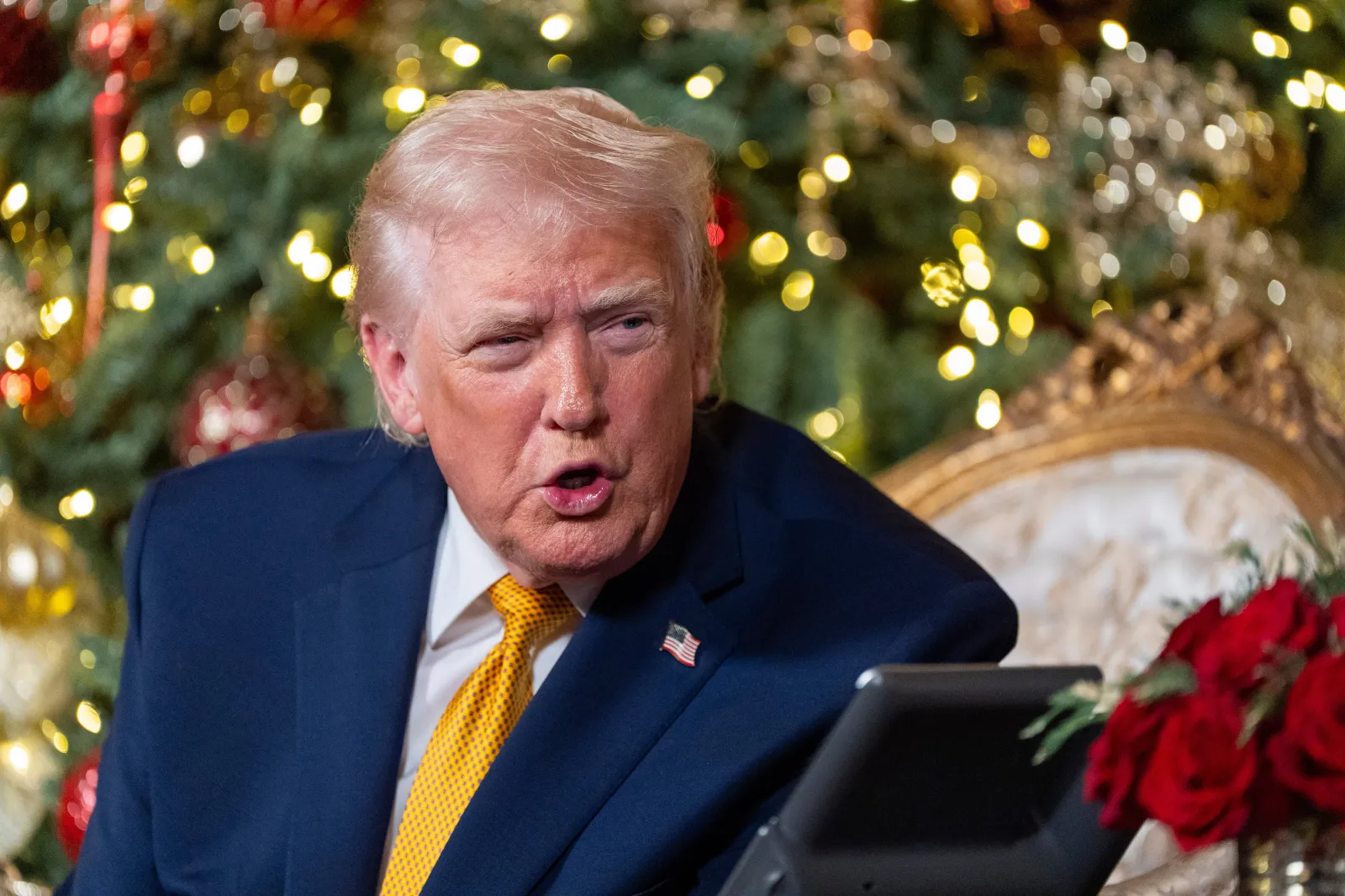

As President Donald Trump grapples with Americans’ rising concerns about everyday costs, he’s received an unexpected note of sympathy from an economist who served in the Obama administration.
Jason Furman, a professor at Harvard Kennedy School and former chair of the Council of Economic Advisers under President Barack Obama, said on CNBC’s “Squawk Box” on Wednesday that many downbeat consumers are overlooking a key bright spot: gasoline prices. That blind spot, he suggested, makes the politics of affordability even harder.
Data from motor club AAA shows gas prices in December were the lowest of the year. Nationally, unleaded gasoline is about $0.18 cheaper than this time last year, and the national average hit its lowest point on Monday at $2.85 per gallon. Still, consumer confidence has slid to its weakest level since April, and approval ratings suggest more Americans disapprove of how Trump is handling the economy.
“I’ve been puzzled,” Furman said. “When you’re in government, you’re told, politically, the one price that matters is the price of gasoline. That’s the one price that’s been great this year. And I sort of feel a tiny bit bad for President Trump that he doesn’t get any credit for that.”
Trump, meanwhile, has sent mixed messages about the affordability crunch. In a primetime address last week, he said he inherited an economic “mess” from the Biden administration, floated the idea of sending checks to millions of military personnel to help with housing costs, and also described the economy as the strongest it has been.
Furman argues that Trump is facing a tough audience: Inflation scars and sticker shock—especially at the grocery store—are shaping perceptions. Grocery prices are up nearly 30% over the past five years, he noted, making it difficult to calm anxieties even when some indicators look better.
“Consumers are just in this sort of, whatever the highest price is, is the price they’re going to focus on and be upset about,” Furman said. “And that’s a really hard problem to solve economically or politically.”
Conflicting indicators add to the confusion
Furman said the mixed signals extend well beyond household prices. The U.S. recorded its strongest growth in two years last quarter, with GDP up 4.3%—beating prior analysts’ expectations. But the labor market is showing more strain: The unemployment rate rose to 4.6% in November, according to the Bureau of Labor Statistics, up from 4.2% a year earlier and above the roughly 4% level many consider healthy.
“If all you had were the jobs numbers, we’d all be doing our recession probabilities right now—Is it 30%? Is it 50%? Is it 70%?” Furman said. “But then we have this GDP growth number, and that just gives us our boom probability.”
Unlike economists who describe today’s economy as “K-shaped”—where higher-income Americans pull further ahead while lower-income groups fall behind—Furman said he’s not fully convinced. Alongside pockets of lower prices like gasoline, he pointed to continued wage growth, which typically supports consumer spending and productivity.
At the same time, the Federal Reserve Bank of Atlanta Fed’s wage tracker shows wage growth for the lowest-paid quartile has cooled sharply—from about 7.5% in 2022 to roughly 3.5% now, the slowest pace in a decade.
“I’m less convinced about this K-shaped recovery than other people are,” Furman said. “Everyone wants prices to be 25% lower. Nobody wants their wages to be 25% lower.”
Others see the K-shape more clearly. KPMG chief economist Diane Swonk told Fortune the strong GDP figure can still fit a divided economy: consumer spending has held up, corporate profits have surged, and many companies are finding ways to expand output without adding workers—boosting margins while keeping headcount flat. That dynamic, she warned, could intensify if AI accelerates job displacement.
“We are seeing most of the productivity gains we’re seeing right now as really just the residual of companies being hesitant to hire and doing more with less,” she said.