
Developing Venezuela’s oil industry after the removal of President Nicolás Maduro would take sweeping legal and commercial changes, Exxon Mobil CEO Darren Woods told President Donald Trump.
In a candid assessment, Woods said that—under today’s rules and operating environment—Venezuela’s oil sector is effectively “uninvestable.” His message landed as the Trump administration signaled interest in a major push to rebuild production in a country often described as holding the world’s largest proven reserves.
Energy analyst Thomas O’Donnell told Newsweek on Saturday that one realistic path forward would be incremental: start with smaller, lower-cost projects that can raise output quickly, then move toward fields that require large, long-term capital commitments.
When asked for comment, the White House told Newsweek in a Saturday statement following Maduro’s arrest that Trump “brokered a historic energy deal to further strengthen America’s national security in the Western Hemisphere.”
Why It Matters
Venezuela is widely believed to sit atop enormous reserves, but the infrastructure needed to produce and export oil at scale has deteriorated severely. Restoring output would require not only equipment and technical expertise, but also a stable legal framework that gives companies confidence their investments will be protected.
After the U.S. captured Maduro last week, Trump said U.S. oil producers were prepared to spend $100 billion or more to rebuild the country’s oil infrastructure—an effort he framed as potentially delivering prosperity for Venezuela while creating profitable opportunities for energy firms.
What To Know
During a livestreamed White House event with leaders from companies including Exxon Mobil, Chevron, and ConocoPhillips, Woods said Venezuela would not be a credible investment target unless the country’s legal and commercial architecture changes.
He pointed to two key requirements: durable investment protections and reforms to Venezuela’s hydrocarbon laws. Without that, Woods said, the frameworks governing the sector make the country “uninvestable” unless there are “significant changes.” Still, he suggested the U.S. could help drive those reforms, and said Exxon would likely deploy a technical team to Venezuela soon to assess conditions on the ground.
Trump ally Harold Hamm, a prominent fracking executive, told the meeting Venezuela’s challenges were substantial—but manageable with industry know-how.
Chevron remains the only major U.S. oil company still operating in Venezuela. Its vice chairman, Mark Nelson, told the gathering the company sees a path to boost production by 50 percent over the next two years from its current 240,000 barrels per day, alongside state-run partner Petróleos de Venezuela SA (PDVSA).
Separately, Jeffery Hildebrand, CEO of independent producer Hilcorp Energy, said his company is “fully committed and ready to go” to help rebuild Venezuela’s infrastructure.
Different Approaches
O’Donnell, who publishes Globalbarrel.com, told Newsweek that rebuilding Venezuela’s oil sector doesn’t have to begin with massive, high-risk bets in the biggest fields. He argued it could be staged.
He said production could rise quickly—potentially by as much as 40 percent—simply by allowing foreign companies broader access and letting them bring in modest equipment to execute smaller projects. Early wins, he suggested, could create momentum and confidence before companies commit to larger investments.
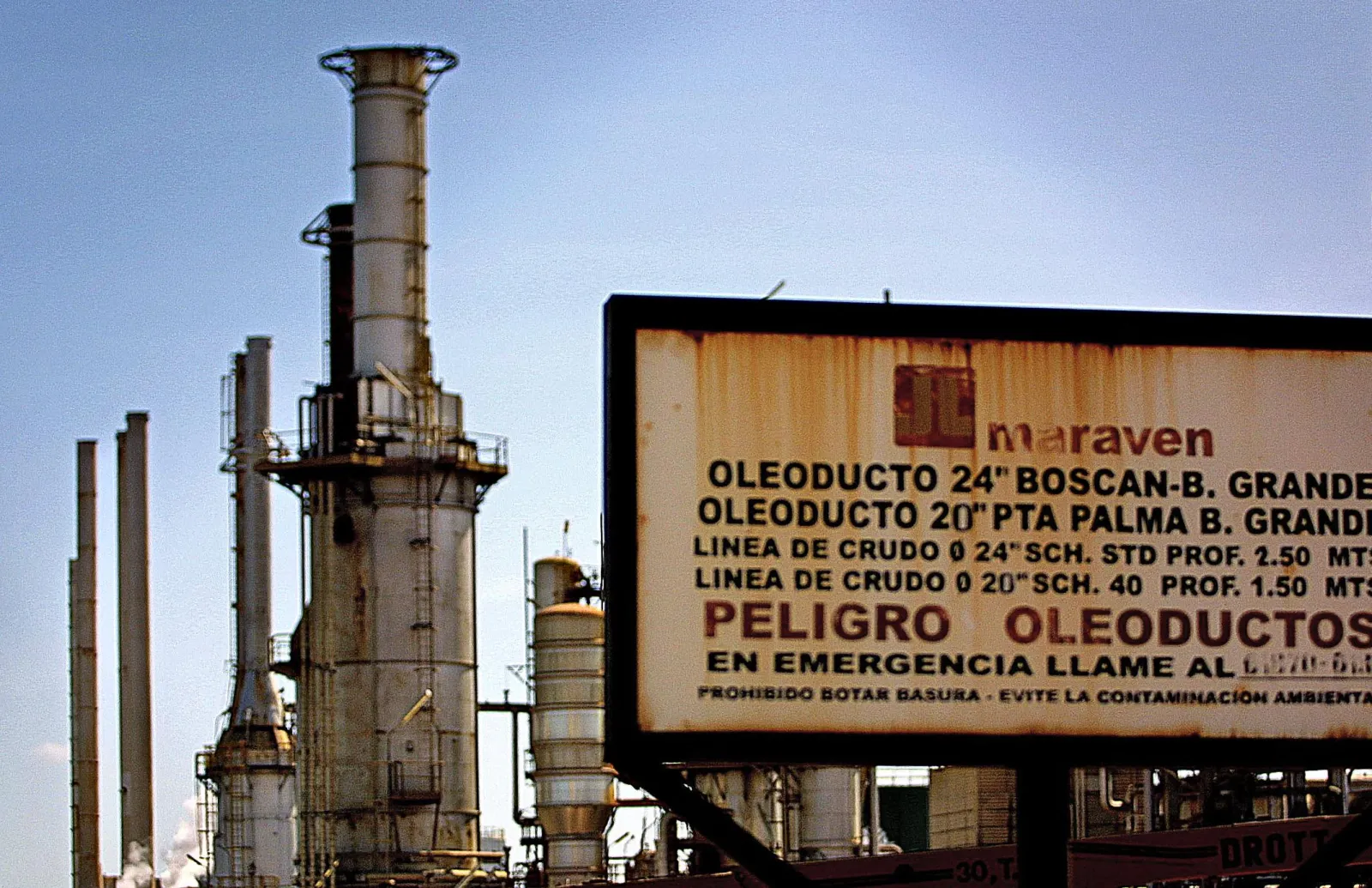
Another option, he said, is to focus on areas around Lake Maracaibo. Many fields there were developed decades ago and later abandoned; O’Donnell argued some were not truly depleted, but instead fell offline due to missing capacity, equipment, and maintenance. In his view, smaller operators could restore output from these mature fields relatively quickly, though pipelines and related systems would still need upgrades to move oil efficiently to export terminals.
O’Donnell added that recovering production from these zones could generate meaningful revenue and buy time to tackle more complex regions that demand billions in long-term investment—particularly the Faja del Orinoco, home to extra-heavy oil.
Companies can enter those heavy-oil areas now, he said, but they face processing and transport challenges. Extra-heavy crude often needs to be upgraded or blended so it can move through pipelines and be refined. One starter strategy, he noted, would be to extract heavy oil, mix it with diluents, and send it to U.S. refineries—while longer-term repairs and modernization of high-tech facilities continue.
What People Are Saying
President Donald Trump: “Our giant oil companies will be spending at least $100 billion of their money, not the government’s money.”
Exxon CEO Darren Woods: “If we look at the legal and commercial constructs and frameworks in place today in Venezuela today, it’s uninvestable.”
He added: “There has to be durable investment protections, and there has to be a change to the hydrocarbon laws in the country.”
Fracking executive Harold Hamm: “It is a very exciting country and a lot of reserves—it’s got its challenges and the industry knows how to handle that.”
White House spokesperson Taylor Rogers told Newsweek in a Saturday statement: “Immediately following the successful arrest of narcoterrorist Maduro, President Trump brokered a historic energy deal to further strengthen America’s national security in the Western Hemisphere and help restore Venezuela as a responsible, prosperous ally of the United States. This is one of the countless good energy deals President Trump has brokered to restore American energy dominance that will benefit the American people, American energy companies, and the Venezuelan people.”
Energy analyst Thomas O’Donnell: “There’s a process. It’s not just a matter of going into the big fields, making big investments, big commitments. You can begin gradually.”
What Happens Next
Despite the caution from oil executives, the Trump administration is expected to prioritize Venezuela’s energy potential. Energy Secretary Chris Wright said the $100 billion figure Trump cited was an estimate for the scale of reconstruction needed—rather than a firm commitment by oil companies to spend that amount.