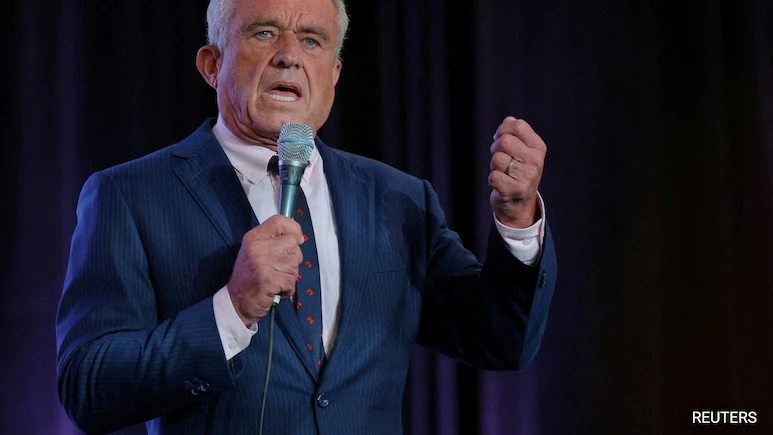

When Robert F. Kennedy Jr. was appointed Secretary of Health and Human Services, critics warned that his long-standing embrace of conspiracy theories—particularly regarding vaccines—could cause significant harm. His recent moves are proving those fears well-founded. After sparking outrage among pediatricians for attempting to rewrite U.S. immunization schedules, Kennedy has now taken aim at the global vaccine alliance GAVI, announcing a halt to U.S. funding that could result in devastating consequences for millions of children around the world.
Founded in 2000 through cooperation between the U.S., U.K., and philanthropic institutions such as the Bill & Melinda Gates Foundation, the Global Alliance for Vaccines and Immunization (GAVI) was created to expand access to vaccines for children in low-income countries. While it hasn’t been without flaws—particularly during the COVID-19 pandemic—GAVI remains one of the most effective examples of international collaboration in recent decades.
Its impact is measurable: a study published in the British Medical Journal found that GAVI-supported immunization programs have reduced infant mortality by over 9% and under-five deaths by 12% globally. During the pandemic, GAVI helped coordinate the COVAX initiative, which eventually delivered 2 billion COVID-19 vaccine doses to developing nations, narrowing a staggering gap in access.
Kennedy’s decision to pull U.S. support from GAVI isn’t just shortsighted—it’s morally indefensible. It will almost certainly lead to preventable deaths and deepen resentment over global health inequities, further damaging U.S. credibility and influence, especially in comparison to rivals like China.
Kennedy frames the move as a principled stand against what he perceives as corporate profiteering and global overreach. But in reality, his decision echoes conspiracy-driven nationalism, prioritizing ideological purity over human lives. According to Médecins Sans Frontières (Doctors Without Borders), who have criticized GAVI for being too generous to vaccine developers, half of the vaccines MSF distributes each year are funded by GAVI. After Kennedy’s decision, the organization warned that “countless children will die from vaccine-preventable diseases.”
The consequences won’t stop at humanitarian loss. GAVI operates on principles the U.S. helped design—market-driven mechanisms, intellectual property protection, and international cooperation. Undermining this system threatens global respect for U.S. pharmaceutical rights, potentially encouraging emerging economies to disregard IP protections in healthcare. That ripple effect could extend to other American industries, weakening economic influence in the very regions that represent the next wave of global growth.
Moreover, pulling back from GAVI contradicts hard-learned pandemic lessons: disease doesn’t respect borders, and weakening global health infrastructure puts everyone at risk—including Americans. Kennedy’s war on science and international engagement isn’t just harmful abroad. It risks leaving the U.S. more isolated, less respected, and more vulnerable—while millions of children across the Global South lose their only lifeline to a healthy future.
In short, this isn’t just a bureaucratic budget cut. It’s a decision that could cost lives, unravel years of progress in global health, and undermine U.S. interests at home and abroad.Tools